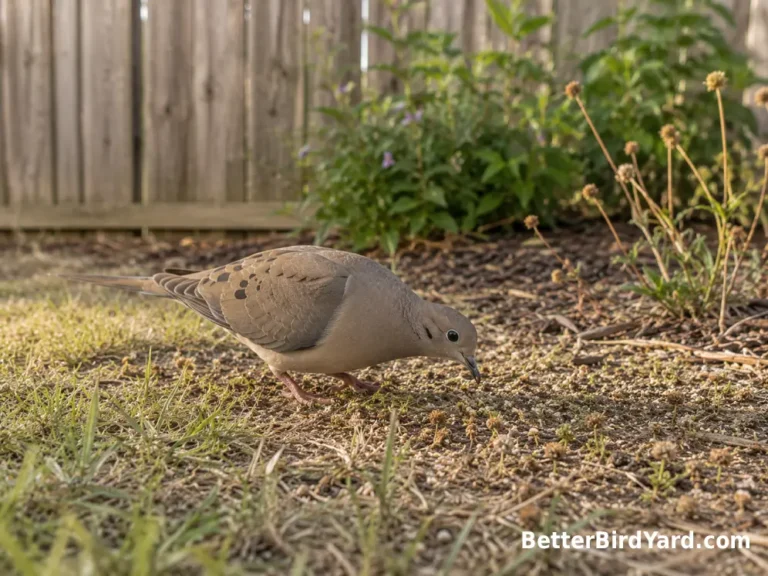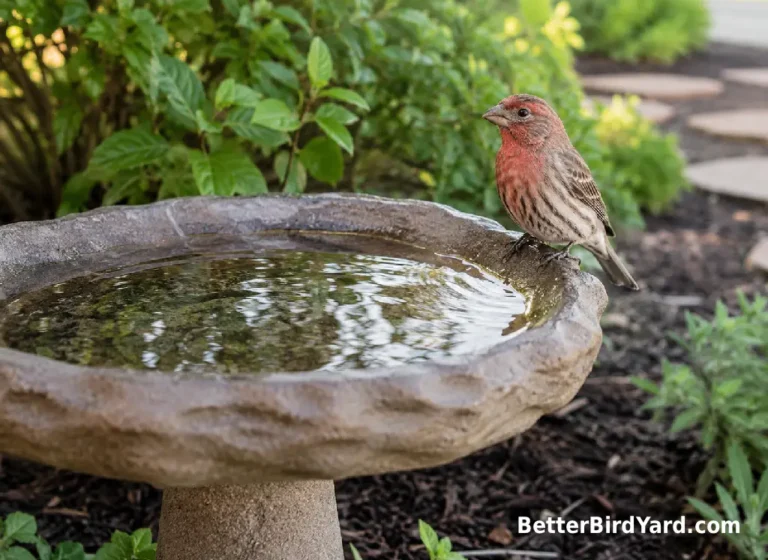
What Do Toucan Birds Eat? A Practical Wildlife Guide
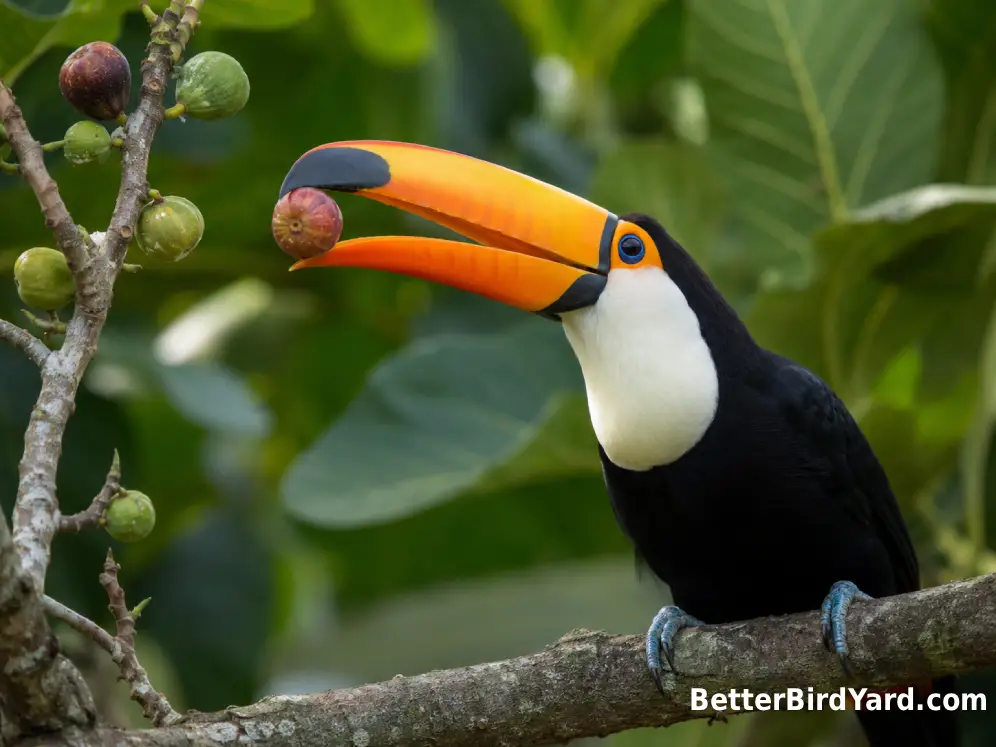
What does a toucan bird eat? Fruit makes up most of the natural diet of many toucan species, but these tropical birds are not strict fruit eaters. Depending on the species, habitat, and available food, toucans may also eat insects, other invertebrates, eggs, nestlings, and small animals such as lizards or frogs.
That combination makes most toucans best described as fruit-dominated omnivores. Cornell Lab observations of Keel-billed Toucans, for example, describe a diet centered on fruits and seeds from many trees, supplemented by insects, reptiles, eggs, and occasionally young birds. The Smithsonian National Zoo reports a similarly varied menu for Green Aracaris, smaller members of the toucan family.
The exact menu is not identical for every toucan. More than one kind of bird is covered by the name “toucan,” including large toucans, smaller toucanets, and aracaris living in different tropical habitats. The useful quick answer is simple: fruit is usually the main course, while animal foods provide an opportunistic supplement.
The Quick Answer: What Do Toucan Birds Eat?
A typical wild toucan diet can include:
- Ripe fruits and berries from forest trees, palms, and shrubs
- Insects and other small invertebrates
- Seeds or nuts consumed by certain species
- Bird eggs and nestlings on occasion
- Small lizards, frogs, snakes, or similar prey when available
Animal Diversity Web, an educational resource of the University of Michigan Museum of Zoology, describes Toco Toucans as canopy fruit eaters that also feed opportunistically on insects and bird eggs. Other toucan species show a comparable pattern, although the balance between fruit and animal food varies.
BetterBirdYard Editorial Note: If you remember one detail, make it this—fruit is the headline of a toucan’s diet, but it is not the entire menu.
Which Fruits Do Toucans Eat?
Wild toucans eat the fruits available in their particular region rather than following one universal list. Documented foods include figs and fruits from Cecropia, palm, nutmeg-family, and other tropical trees. A single bird may move among several fruiting plants as different crops ripen.
Toucans can swallow some small fruits whole. Larger pieces may be plucked, repositioned in the bill, and tossed toward the throat. Because they travel between feeding trees, many toucans also help disperse seeds through tropical forests. Studies and species accounts identify several toucans and toucanets as important seed carriers for native trees.
The supermarket image of a toucan eating only papaya, banana, or melon is therefore incomplete. Those fruits may appear in zoo diets or wildlife photographs, but a wild toucan’s natural menu is much broader and changes with local fruiting seasons.
Why A Toucan May Eat Fruit Upside Down
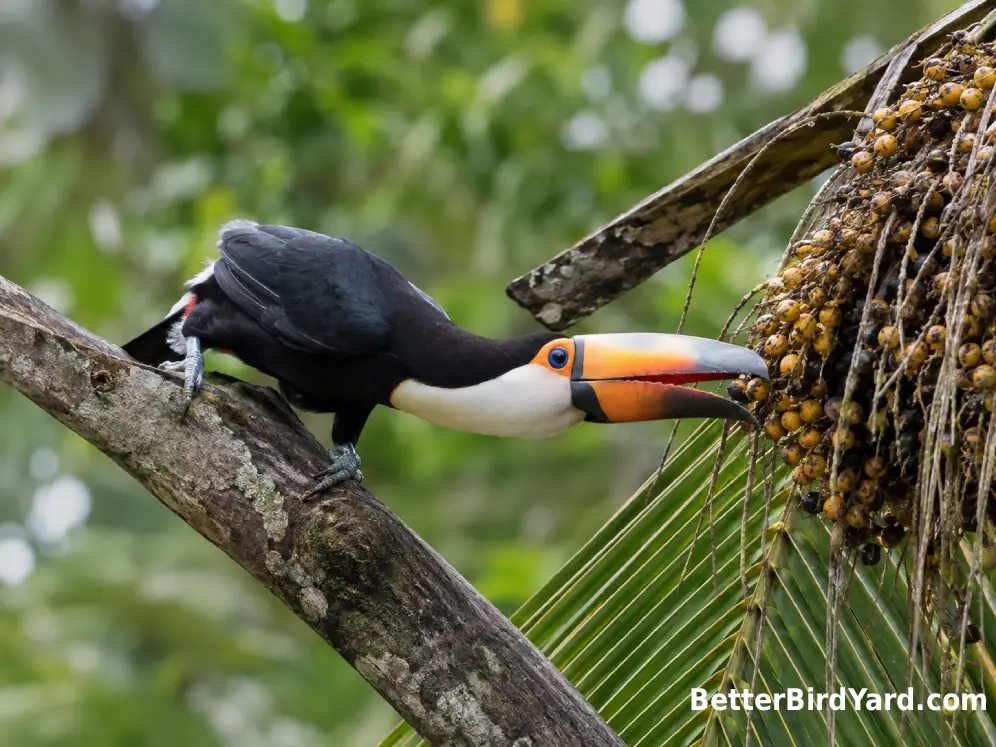
A toucan eating fruit upside down is usually reaching for food that would otherwise be difficult to grasp. Some species can lean far from a perch or briefly hang beneath a branch while feeding. Grey-breasted Mountain Toucans, for example, have been observed feeding while upside down.
Once a toucan has the fruit, another distinctive movement often follows. It grips the food near the end of its long bill, raises or flicks its head, and sends the item toward the back of its mouth. Research describes this as a rapid, ballistic form of food transport. The large bill also lets the bird reach fruit on neighboring twigs without placing its full weight on a thin branch.
This behavior can look playful in a short video, but it is practical foraging. Hanging, stretching, and tossing allow the bird to collect food while remaining on a stronger perch.
Do Toucans Eat Insects, Eggs, Or Other Birds?
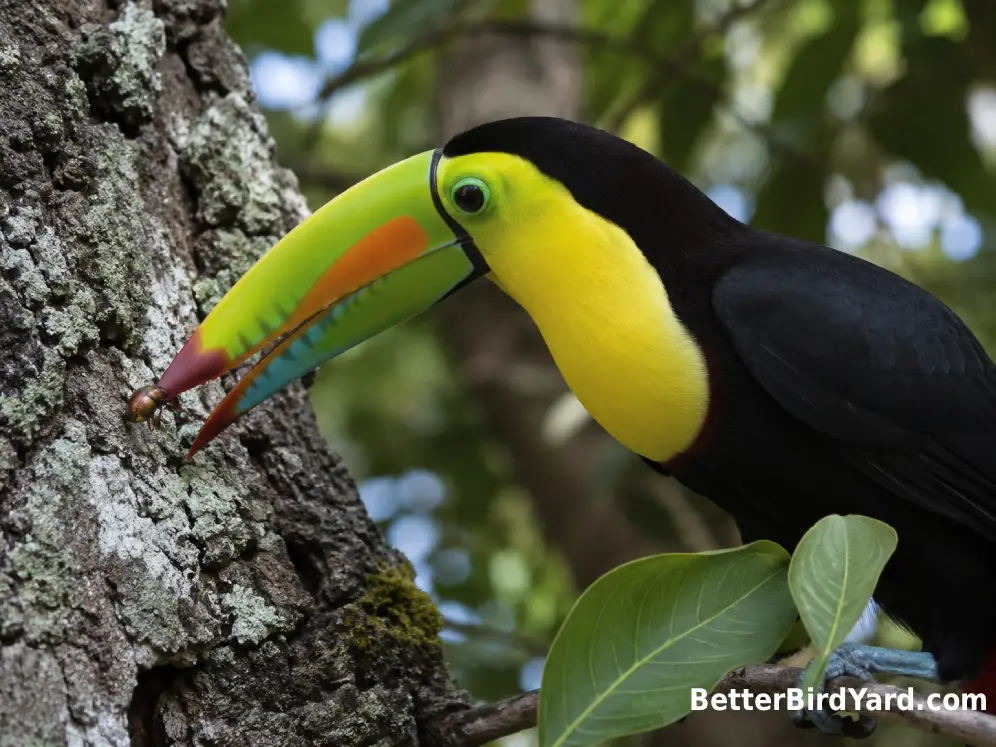
Yes. Many toucans supplement fruit with insects, and some species take larger animal foods when an opportunity appears. Records include beetles and other invertebrates, small reptiles, frogs, snakes, eggs, and nestlings.
Toucans may investigate nest cavities with their long bills, which can bring eggs or young birds within reach. This does not mean that every toucan regularly hunts other birds. In most of the better-documented large species, fruit remains the dominant food, while nest predation and small-animal feeding are occasional parts of a flexible diet.
This flexibility helps explain why a toucan can live in habitats where the available fruit crop changes throughout the year. It can shift among fruiting trees and take other foods rather than relying on one plant species every day.
What Eats a Toucan?
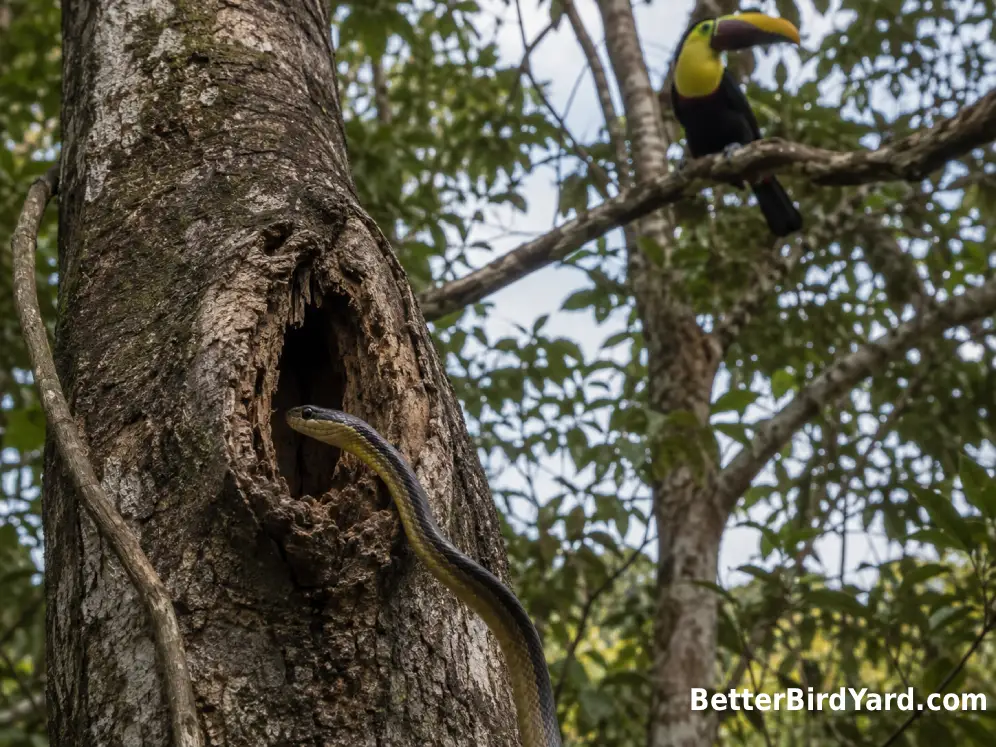
Toucans are predators of some small animals, but they are also part of the tropical food web. Their eggs and chicks are particularly vulnerable because toucans usually nest in tree cavities that may be reached by climbing snakes and mammals.
Predators differ among toucan species and regions. Reported predators of Toco Toucans include snakes, coatis, eagles, jaguars, and other animals capable of reaching or ambushing them. Large raptors are a threat to exposed birds, while snakes and climbing mammals may be more important around nest cavities.
Adult toucans have several advantages: they spend much of their time above the ground, can move through the canopy, and have a large bill that may help them defend themselves. Even so, a bright bill does not make a toucan immune to predation. Forest cover and secure nesting cavities remain important.
Can You Attract Toucans To A U.S. Backyard?
A wild toucan is not a normal visitor to a backyard in the United States. Toucans are native to tropical parts of the Americas, with different species occurring from southern Mexico through Central America and across much of South America. They are not native feeder birds in the continental U.S.
Putting papaya or bananas on a platform feeder will not bring toucans to an ordinary U.S. patio. It may instead attract insects, rodents, raccoons, or other nuisance wildlife if food is left outside too long.
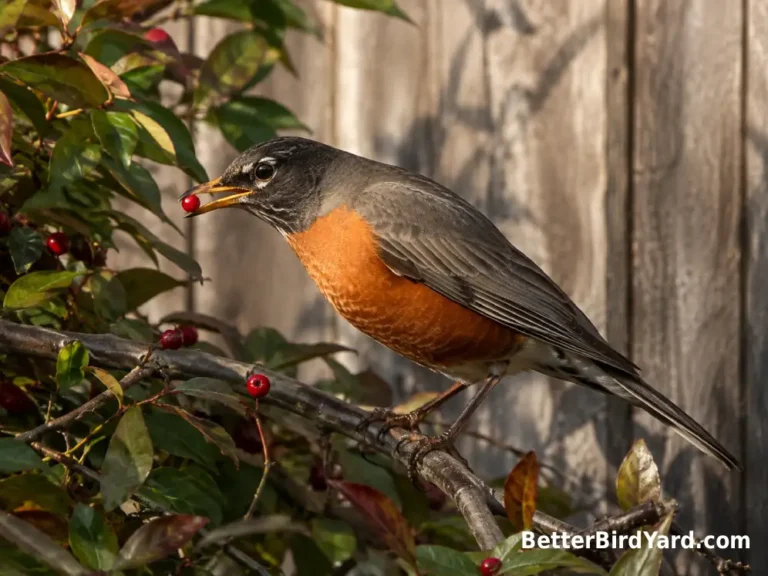
For a similar fruit-feeding experience, focus on birds that naturally occur in your region. Depending on your location and season, native berry-producing plants may support waxwings, thrushes, mockingbirds, catbirds, or orioles. Start with plants recommended by your state extension service or native plant society rather than importing tropical plants that may not suit your climate.
- Choose locally appropriate native berry or fruit plants.
- Leave fruit on the plant rather than scattering it on the ground.
- Remove any supplemental fruit promptly if it becomes spoiled or moldy.
- Keep feeding areas away from windows or add effective collision prevention.
Captive Toucans Need A Professionally Planned Diet
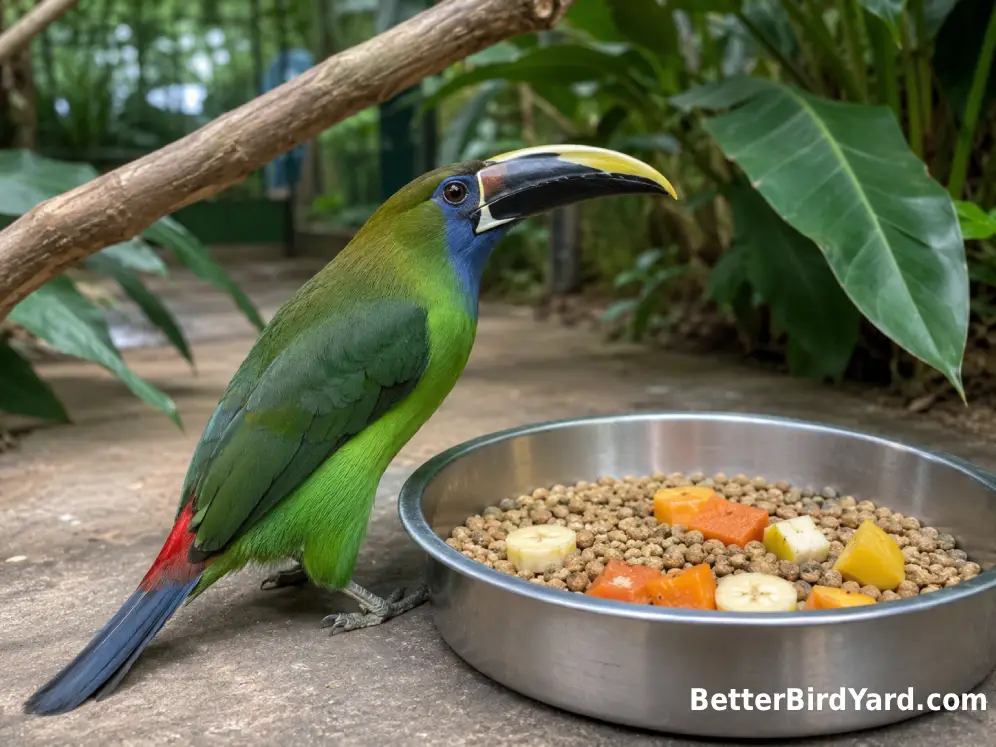
A list of wild foods is not a safe recipe for feeding a captive toucan. A bowl filled only with supermarket fruit does not reproduce the nutritional balance, variety, or feeding conditions found in the wild.
Professional facilities formulate diets for the species and individual bird. The Smithsonian National Zoo, for example, describes feeding its Green Aracaris a balanced combination that includes formulated bird food and selected produce rather than fruit alone.
Anyone responsible for a captive toucan should work with an avian veterinarian or qualified exotic-bird nutrition professional. Do not use a general wildlife article to choose supplements, restrict nutrients, or treat a suspected health problem.
If a toucan unexpectedly appears in a U.S. neighborhood and seems lost, confined, or at immediate risk, observe from a safe distance and contact local animal control or an experienced avian rescue organization. Avoid chasing, grabbing, or experimenting with an improvised diet.
The Simple Takeaway
Most toucans eat a fruit-heavy diet supplemented by insects and other opportunistic foods. Some also take eggs, nestlings, or small vertebrates, but that does not turn them into primarily carnivorous birds. Their large bills help them reach, grasp, and toss food from branches that may be too thin to support their bodies.
A toucan hanging upside down to reach fruit is displaying a practical canopy-feeding technique, not an unusual dietary need. Likewise, the answer to what eats a toucan depends on its age, species, and habitat: snakes and climbing mammals can threaten nests, while large raptors and other predators may take older birds.
For U.S. backyard bird watchers, toucans are best appreciated through responsible travel, reputable wildlife cameras, zoos, and natural-history resources. At home, the most useful approach is to support the fruit-eating birds that already belong in your region with native plants, clean water, safer windows, and carefully maintained feeding areas.