Male vs Female Eastern Bluebird: 5 Key Differences to Know
Male and female Eastern Bluebirds are fairly easy to tell apart once you know where to look. The biggest difference is color intensity: an adult male usually has vivid blue upperparts and a rich rusty-orange throat and breast, while an adult female is much softer in color, with grayish-brown upperparts, blue in the wings and tail, and a subdued orange-brown breast.
The trick is not to judge a bird simply by how blue it looks. Lighting can dramatically change the appearance of bluebird plumage, and even a bright adult male can look surprisingly gray at a distance or in poor light. Juveniles add another layer of confusion because young Eastern Bluebirds have spotted plumage and variable amounts of blue.
For reliable Eastern Bluebird male vs female identification, start with the overall plumage pattern, then use color intensity and breeding behavior as supporting clues.
Eastern Bluebird Male Vs Female At A Glance
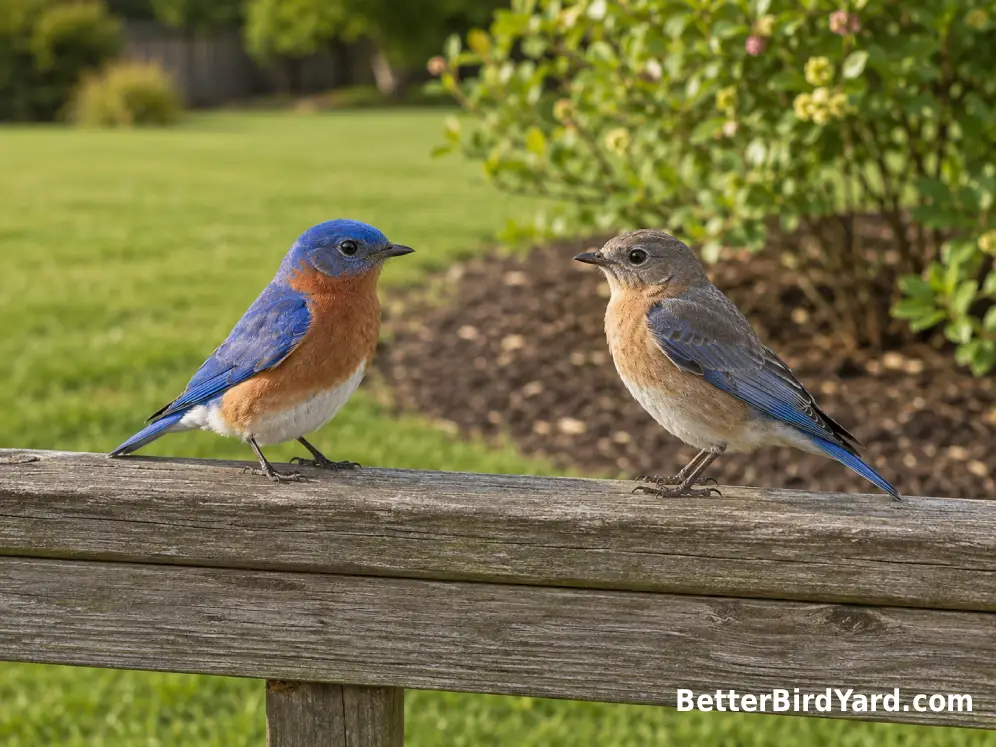
The easiest identification feature is the contrast between the sexes. Cornell Lab of Ornithology describes adult males as deep blue above with a rusty or brick-red throat and breast, while females are grayish above with bluish wings and tail and a more subdued orange-brown breast.
| Feature | Adult Male | Adult Female |
|---|---|---|
| Head and back | Vivid deep or royal blue | Mostly grayish to brownish-gray |
| Wings and tail | Strong blue | Noticeable but usually softer blue |
| Throat and breast | Rich rusty or brick-red | Paler, subdued orange-brown |
| Belly | Whitish | Whitish |
| Size and shape | Small, round-headed thrush | Very similar in size and shape |
| Best ID clue | Bright blue upperparts | Grayish head and back with blue wings and tail |
Color is much more useful than size. Male and female Eastern Bluebirds have broadly similar proportions, so trying to identify sex because one bird looks slightly larger is unreliable. Audubon’s field guide likewise describes the sexes as similar in size while noting the female’s paler coloration.
What Does A Male Eastern Bluebird Look Like?
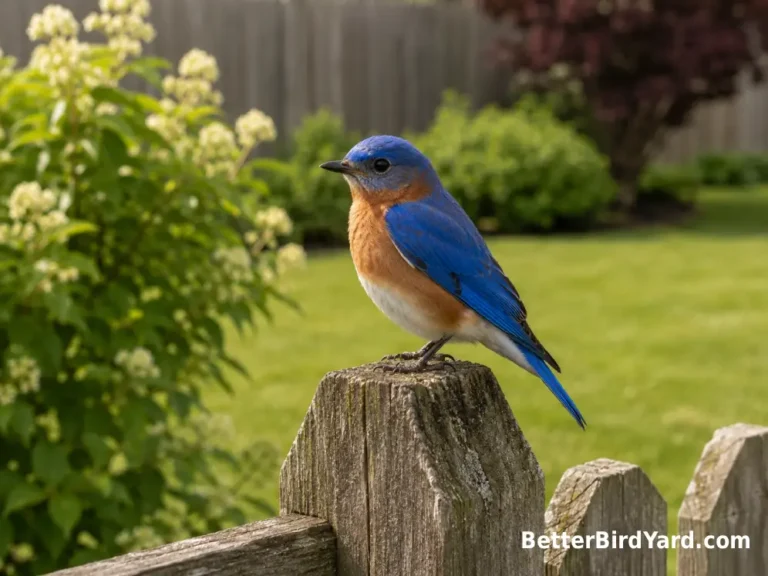
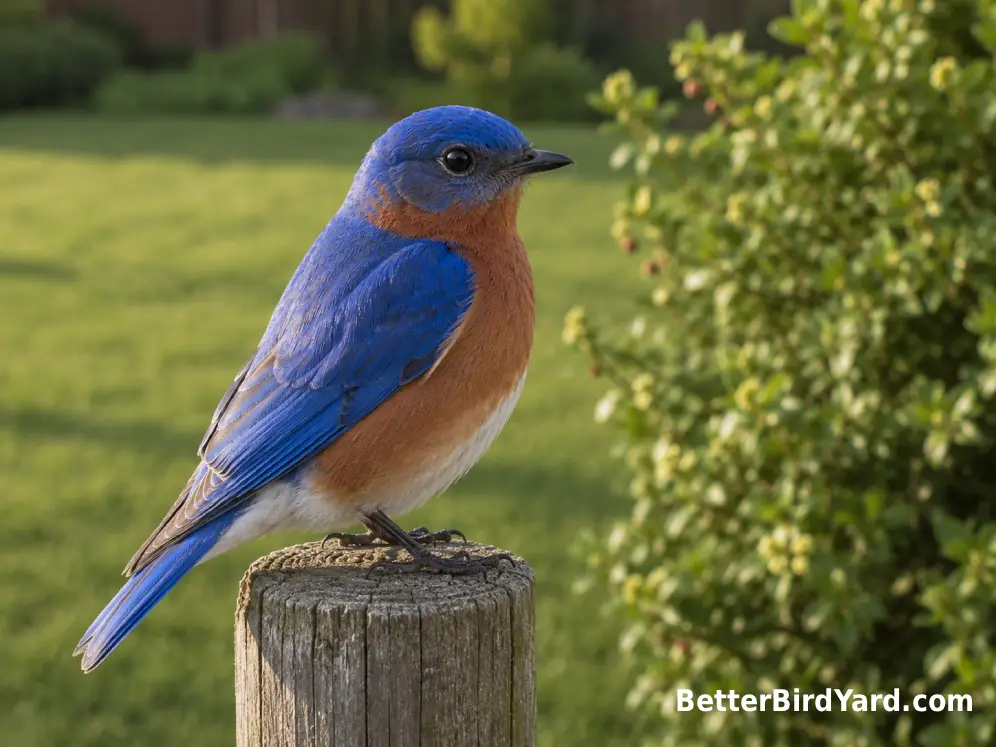
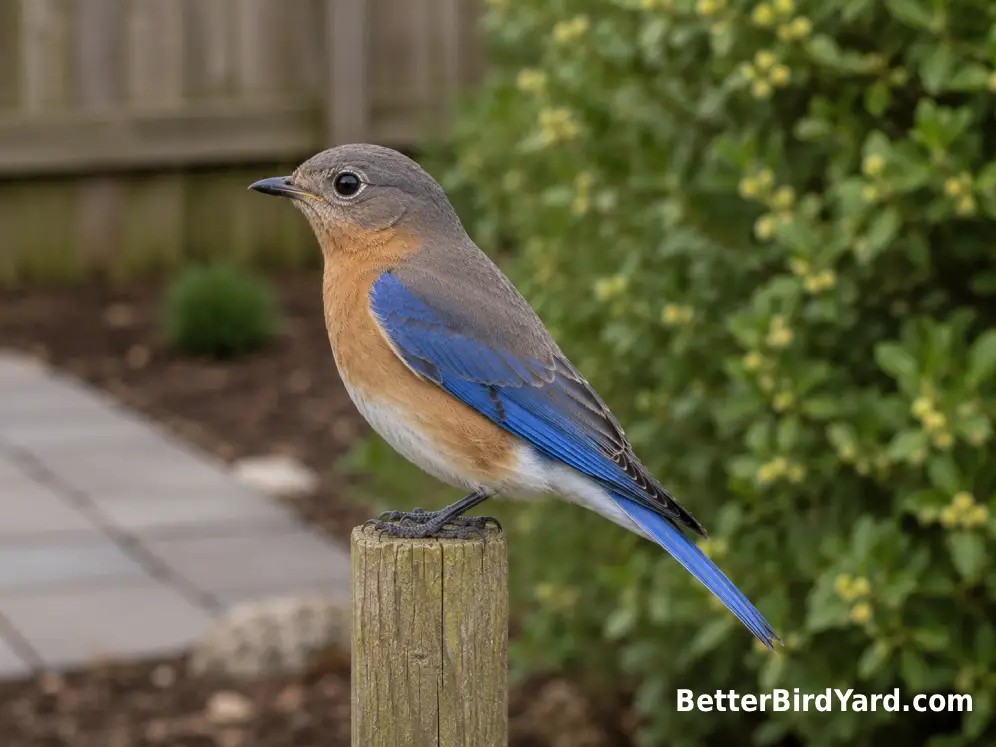
An adult male Eastern Bluebird usually gives you the classic bluebird look: strong blue across the head, back, wings, and tail, paired with a warm rusty-orange throat and breast. The orange coloration also extends toward the sides of the neck. The lower belly is pale or white.
A good backyard view can make the male look almost electric blue, but that brightness is not constant. Cornell specifically notes that bluebird color depends heavily on lighting and that males can look plain gray-brown from a distance.
That makes pattern more dependable than brightness. If you are unsure, look for these features together:
- blue covering most of the head and back;
- strong blue wings and tail;
- a rusty-orange throat as well as breast;
- a clean transition toward a whitish lower belly.
A male seen in shade may briefly resemble a dull female, especially through a window or at long range. Wait for him to turn toward better light before making the call.
What Does A Female Eastern Bluebird Look Like?
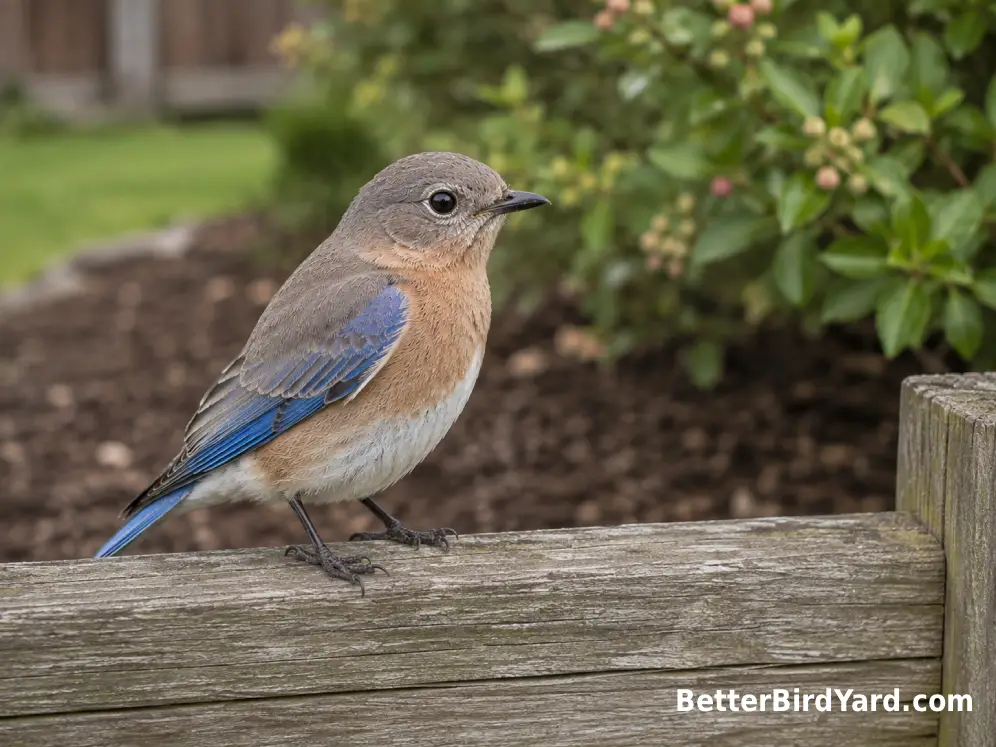
A female Eastern Bluebird is not simply a brown version of the male. She normally has visible blue, especially on her wings and tail. Her head and back are much more muted, however, often appearing gray, gray-brown, or dull bluish-gray. Her breast is orange-brown rather than the deeper rusty color typical of an adult male. Cornell’s identification material emphasizes these blue tinges in the wings and tail as a useful feature of the grayer female.
For beginners, the blue tail is one of the most useful details. A bird facing you may show mostly a gray head, orange breast, and pale belly. When it turns sideways or flies to another perch, the blue wings and tail can become much more obvious.
Female Eastern Bluebirds also vary somewhat in how colorful they appear. One female may show quite a bit of blue, while another looks noticeably grayer. That is why a bright patch of blue alone does not make a bird male.
If you have a pair side by side, identification becomes much easier: the male generally looks much more saturated, while the female has the same basic blue-and-orange theme in softer tones.
How Are Juvenile Eastern Bluebirds Different?
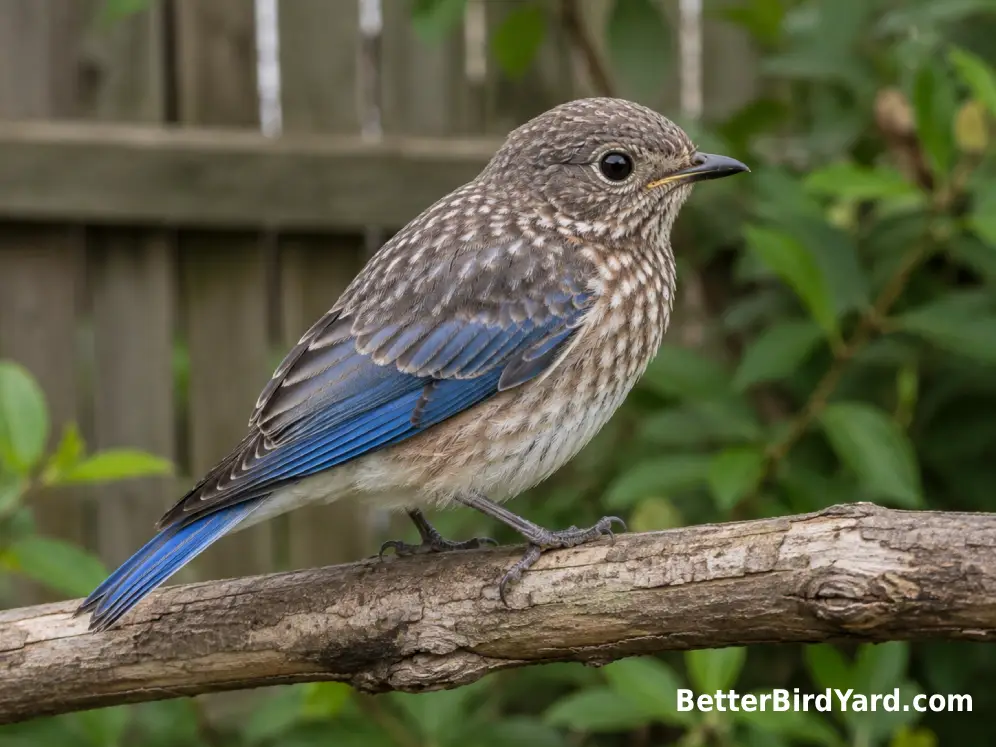
Juveniles are responsible for many mistaken female Eastern Bluebird identifications. A recently fledged Eastern Bluebird looks quite different from either adult sex: young birds have obvious spotting on the back and chest, along with variable amounts of blue in their wings and tail.
The spotting is the important clue. An adult female may look muted, but she does not have the strongly spotted juvenile pattern. If the bird looks brownish or grayish and has pale spots or mottling across its chest and upperparts, age should be your first consideration before sex.
If you are trying to identify a female juvenile Eastern Bluebird specifically, be cautious about assigning sex from a quick backyard view. Juvenile plumage does not offer the same straightforward male-versus-female contrast you see in adults. A dull young bird should not automatically be labeled female, and blue beginning to show in the wings does not by itself settle the question either.
For everyday bird watching, it is perfectly useful to record the bird as a juvenile Eastern Bluebird and wait for later plumage to make sex identification easier.
Can Nesting Behavior Help Tell Males And Females Apart?
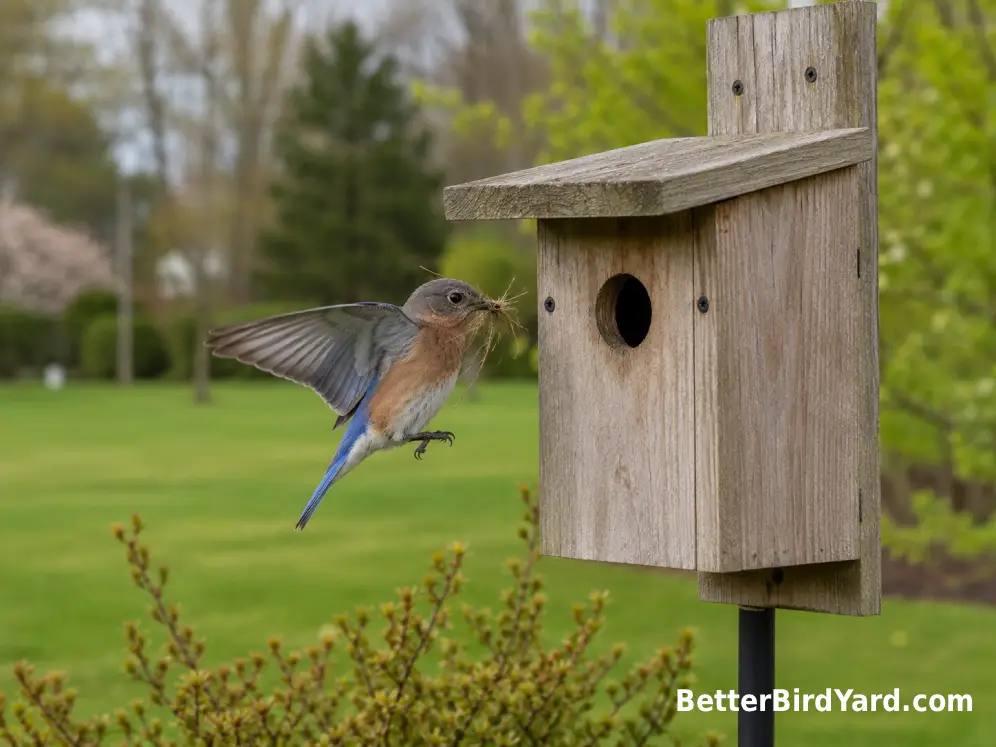
During nesting season, behavior can support a plumage identification. Cornell reports that the male may display around a potential nest cavity by carrying nesting material to the opening, moving in and out, and fluttering his wings. Once a female accepts the site, she does the actual nest construction and incubates the eggs.
That means repeated observation can provide useful clues. A bird regularly carrying grasses or pine needles into the box and arranging the nest is likely the female. A brighter bird displaying prominently around the cavity may be the male.
Behavior should still be a supporting clue rather than your only identification method. Ordinary activities such as sitting on a fence, hunting insects, visiting a bird bath, or defending space do not give a beginner a dependable male-versus-female answer.
If bluebirds are using a box in your yard, watch from a comfortable distance rather than repeatedly approaching the nest just to identify the adults. Cornell’s NestWatch guidance emphasizes minimizing disturbance and recommends structured monitoring practices for anyone checking active nests.
If you want to provide suitable nesting habitat rather than simply identify visiting birds, see our Eastern bluebird nest box guide for a practical setup.
Common Eastern Bluebird Identification Mistakes
Most mistakes happen because the observer focuses on one feature instead of the whole bird. Bluebirds are especially vulnerable to this because their blue coloration can look very different as the bird moves between sun, shade, and different viewing angles.
- Do not assume every intensely blue bird is male without checking the head, back, and breast together.
- Do not assume a dull bird is female until you have ruled out a juvenile or a poorly lit male.
- Do not use body size as your main clue; the sexes are too similar in size for that to be dependable in ordinary backyard viewing.
- Do not call a spotted young bird an adult female. Juvenile spotting is a much stronger age clue.
- Do not identify sex from a single behavior such as visiting a feeder or catching insects.
Another common mistake is trying to determine sex before confirming that the bird is actually an Eastern Bluebird. This matters most where other bluebird species occur. For example, Cornell notes that an adult male Western Bluebird has a blue throat, whereas the adult male Eastern Bluebird has an orange throat.
A Simple Three-Step Way To Identify Your Bluebird
When an Eastern Bluebird lands in your yard, you usually do not need to analyze every feather. Use the same quick sequence each time:
- First, check for spotting. Heavy spotting on the chest and back points toward a juvenile rather than a typical adult.
- Next, look at the head and back. Strong blue usually supports adult male; grayish or brownish-gray upperparts support adult female.
- Finally, check the wings, tail, and breast. Females still show blue in the wings and tail, but their orange-brown breast and overall coloration are normally softer.
Binoculars help, but even from a kitchen window you can often get the information you need by waiting for the bird to turn sideways. A side profile shows the back, wing, breast, and tail at once, which is much more useful than a straight-on view.
If you would like to see more bluebirds around your property, focus on suitable habitat rather than expecting a particular feeder to guarantee visits. Eastern Bluebirds favor fairly open areas with perches for scanning the ground and suitable nesting cavities or boxes. Cornell also notes that they may visit feeders offering mealworms. Results naturally vary with location, season, habitat, and the birds already using your area.
The Difference Gets Easier Once You Know Where To Look
For an adult Eastern Bluebird male and female, the simplest distinction is this: the male wears the brighter version of the blue-and-rust color pattern, while the female has a softer gray, blue, and orange-brown version of the same general palette.
Look beyond brightness, though. A female Eastern Bluebird should normally show some blue in the wings and tail, while an adult male has much more extensive blue over the head and back. If the bird is heavily spotted, think juvenile first. And when poor light makes the colors ambiguous, waiting for a clearer view is more reliable than guessing.
After you have watched a pair for a while, these differences become surprisingly easy to recognize. The muted female beside a brilliant male, the spotted youngster following its parents, and the female carrying nesting material are all useful pieces of the same identification puzzle.
Start with plumage, confirm with a good side view, and use behavior only as supporting evidence. That simple approach is usually all a backyard bird watcher needs to tell male and female Eastern Bluebirds apart confidently.