Male vs Female American Robin: The Clues That Actually Help
Trying to tell a male vs female robin apart can be surprisingly tricky. Male and female American Robins look much more alike than the sexes of birds such as Northern Cardinals or Red-winged Blackbirds, so there is rarely one dramatic feature that settles the question.
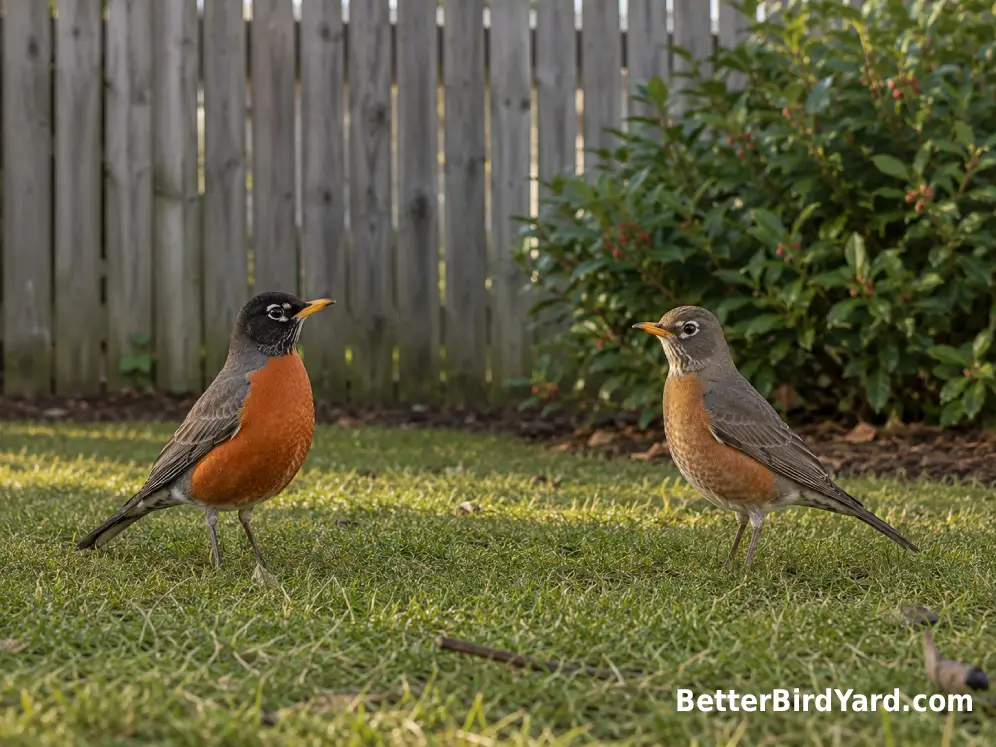
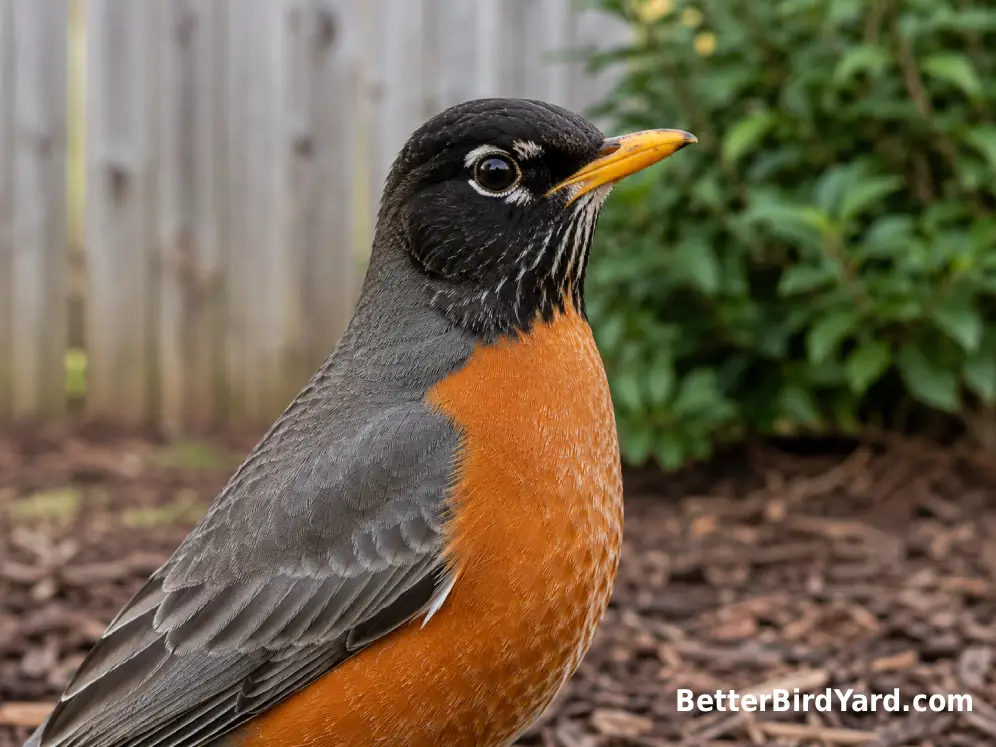
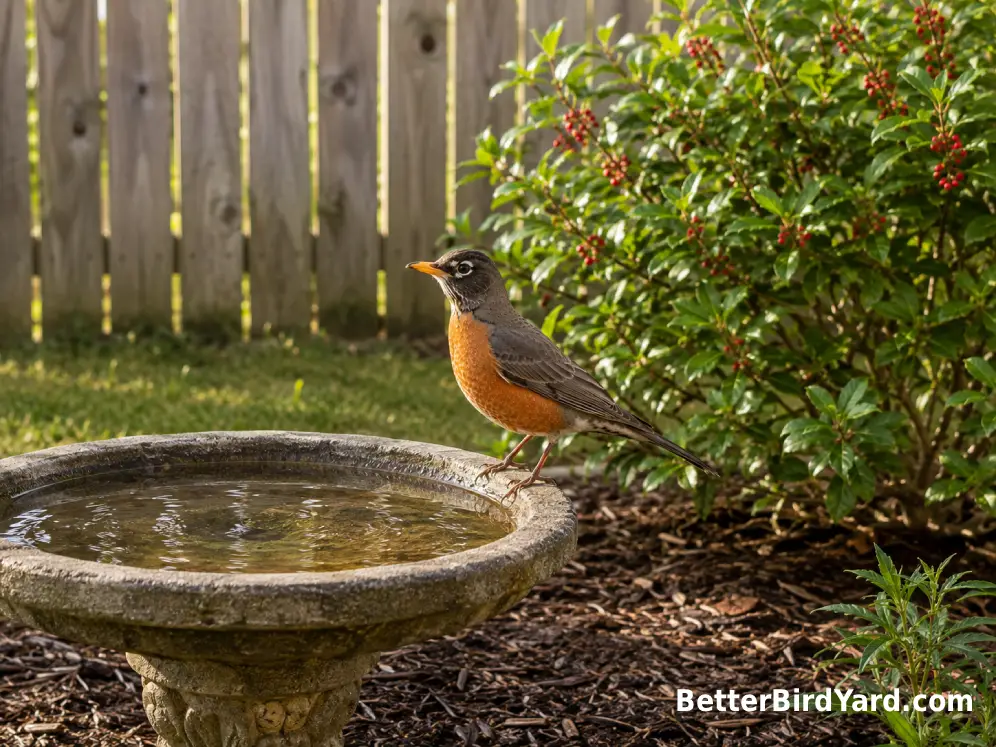
The best place to look is the head. An adult male American Robin usually has a darker, sometimes nearly black-looking head that contrasts strongly with his gray back. A female American Robin generally has a paler gray or gray-brown head with less contrast between the head and back. Males also tend to show richer overall coloring, but breast color alone is less dependable than many beginners expect. Cornell Lab notes that some individuals are not easily separated by sex, and regional and individual plumage differences can make identification harder.
In this guide, robin means the American Robin, Turdus migratorius, the familiar large thrush seen on lawns and in yards across much of North America.
Male vs Female Robin At A Glance
If you have two adult robins in similar light, the differences can become easier to see. The comparison is usually about degree rather than completely different colors.
| Feature | Adult Male American Robin | Adult Female American Robin | How Useful Is It? |
|---|---|---|---|
| Head | Usually dark charcoal to blackish | Usually paler gray or gray-brown | One of the best visual clues |
| Head-To-Back Contrast | Often obvious | Usually softer and less distinct | Very useful when lighting is good |
| Breast | Often richer rusty orange | Often somewhat paler or duller | Helpful, but not reliable alone |
| Back | Generally gray, sometimes appearing darker overall | Generally gray-brown or slightly paler | Best judged with the head |
| Size | Similar overall size | Similar overall size | Poor field clue |
| Yellow Bill | Present | Present | Useful for identifying the species, not the sex |
Audubon describes the sexes as similar and notes that males usually have a blacker head and somewhat richer coloration. Cornell likewise emphasizes the female’s paler head and weaker contrast with the gray back.
The Head And Back Are Usually Your Best Plumage Clues
If you are looking at one robin and have only a few seconds to decide, compare the head with the upper back rather than concentrating on the orange breast.
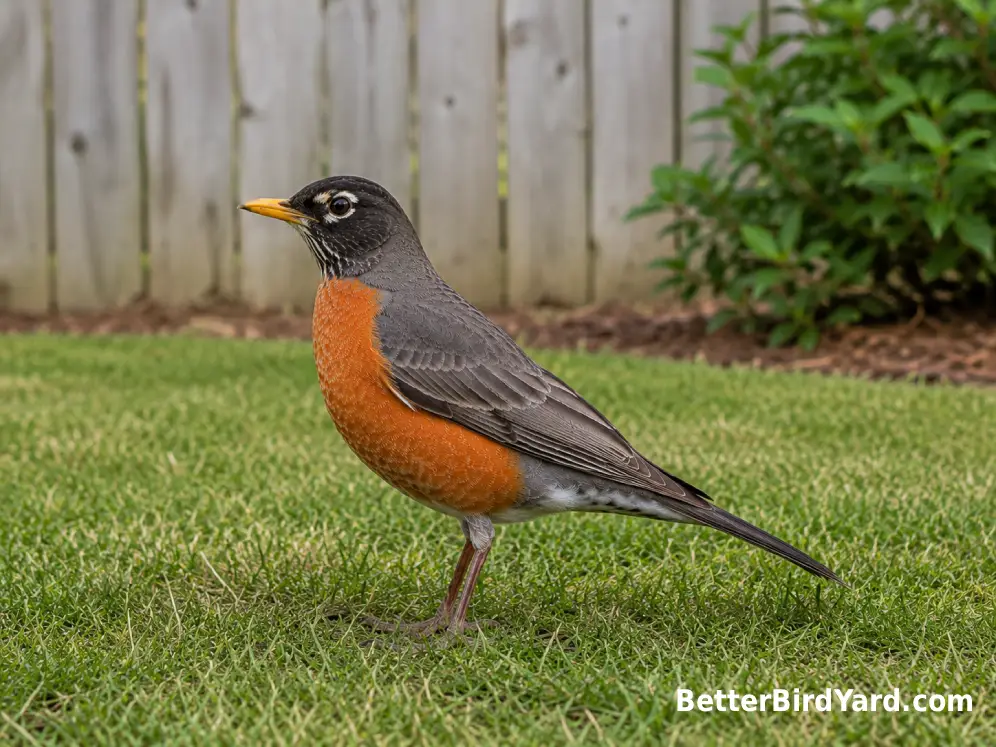
A typical adult male has a distinctly dark hood-like appearance. His head can look charcoal gray to nearly black, while the back remains gray. On a strongly marked male, that boundary is easy to notice even without binoculars.
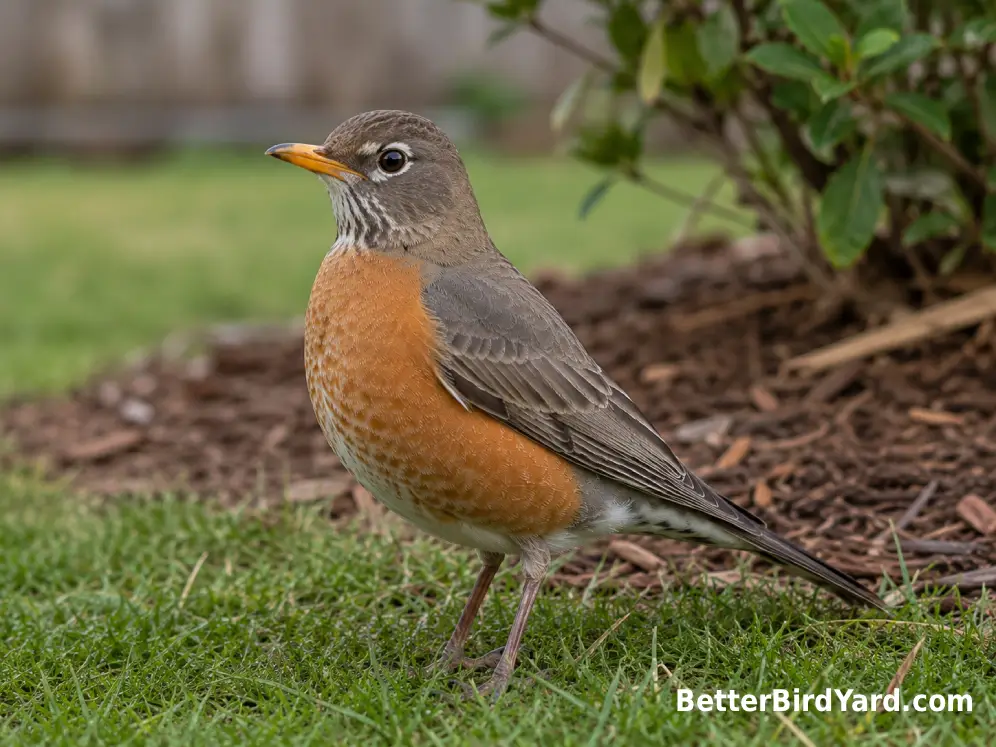
A typical adult female robin looks more blended. Her head is usually gray or gray-brown rather than strongly blackish, so there is less of a jump in color between her head, nape, and back. Cornell uses this reduced head-to-back contrast as one of the primary differences between the sexes.
Good lighting matters. A robin in deep shade can look much darker than the same bird in open morning light. Before deciding that a dark-looking bird is male, watch it move into more even light or change your viewing angle. If two robins happen to be together, comparing them directly is often more useful than trying to match either bird to an imagined perfect male or female.
This is also why photographs can be deceptive. Exposure, shadows, wet feathers, and camera processing can all make subtle plumage differences look stronger or weaker than they did in the yard.
Why Breast Color Can Mislead You
A common beginner assumption is that a bright orange robin must be male and a dull robin must be female. There is some truth behind the pattern—males often look richer overall—but it is not a dependable one-feature test.
A female American Robin can still have a noticeably orange or reddish-orange breast. Conversely, not every male looks exceptionally dark or richly colored. Cornell specifically notes individual variation and reports that some robins cannot be easily separated by sex from their appearance alone. Birds in western parts of the range may also look paler overall than birds in some other regions.
For a better decision, combine several clues:
- Check whether the head looks strongly dark or softly gray-brown.
- Compare the head with the back instead of judging either color separately.
- Use breast richness as supporting evidence rather than the deciding feature.
- Observe the bird in neutral daylight when possible.
- Leave the identification as uncertain when the clues conflict.
BetterBirdYard editorial note: If the breast says male but the head looks decidedly female, we would not force an identification. A probable answer is more useful than false certainty.
Nesting Behavior Can Give You A Second Set Of Clues
During the breeding season, behavior can sometimes support what you see in the feathers. It should not replace plumage identification, but certain activities are strongly associated with one sex.
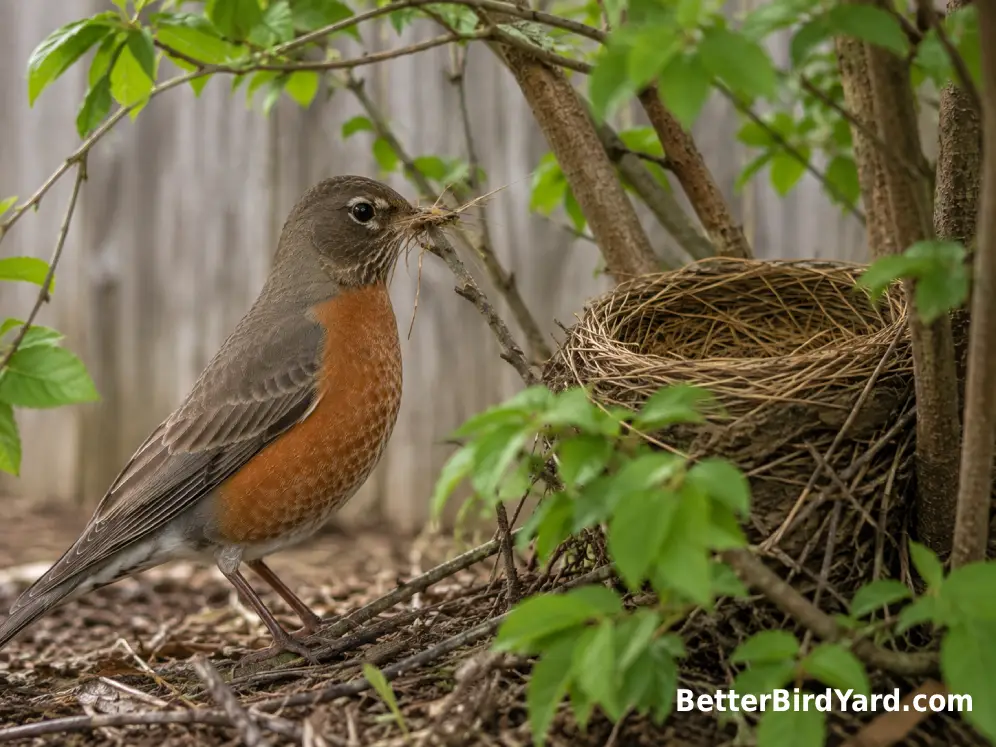
Female American Robins do the nest building described by Cornell Lab, forming the cup from grasses and twigs and reinforcing it with mud. Audubon also identifies the female as the incubating parent. Males, meanwhile, are especially conspicuous singing and defending breeding territories during spring courtship.
Once young hatch, however, feeding a nest is not a male-only or female-only clue. Both parents bring food to nestlings. Audubon notes that both sexes participate, although the female may do more of the feeding.
That gives you several useful observations: a robin repeatedly constructing the nest is likely the female, while a robin giving sustained territorial song nearby during the breeding season is likely the male. A bird carrying food to chicks could be either parent.
Watch from a comfortable distance rather than moving close to the nest to confirm a bird’s sex. A pair going about its normal routine is much more informative—and much better for the birds—than behavior altered by a person standing beside the nest.
Do Not Mistake A Young Robin For A Female
One of the easiest robin identification mistakes has nothing to do with male versus female adults. A young American Robin can look much duller and more patterned than either parent.
Juveniles show conspicuous spotting on the breast and also have mottling on the back. Cornell highlights those spots as a key juvenile feature, while Audubon describes young robins as heavily spotted below with a mottled back and paler facial markings.
So a brownish robin with a spotted chest is not simply a dull-colored female robin bird. Age is the more important clue.
For beginners, this is a useful shortcut: first decide whether you are looking at an adult or juvenile. Only then try to separate an adult male from an adult female. Attempting to sex a young robin based on adult plumage rules usually creates more confusion than answers.
Use This Four-Step Backyard Robin ID Check
You do not need to memorize a long field-guide description. For a robin in your yard, this simple sequence handles most reasonable identification attempts:
- First, check for juvenile spotting. A strongly spotted breast points toward a young bird rather than an adult female.
- Next, study the head. A strongly dark head supports male; a paler gray-brown head supports female.
- Then compare the head with the back. Strong contrast favors male, while a more blended appearance favors female.
- Finally, add supporting clues such as breast richness or breeding behavior—but do not let one weak clue override the rest.
If the bird lands under a tree for five seconds and disappears, uncertain is a perfectly respectable identification. Cornell’s own American Robin photo guide includes adults that are not easily separated by sex, which is a good reminder that bird identification has limits even when you know what to look for.
Binoculars can help, but the easiest backyard trick is often simpler: watch the same robins repeatedly. A bird that visits the lawn every morning may eventually stand beside its mate, move into better light, begin territorial singing, or start building a nest. Those extra observations can turn a guess into a much stronger identification.
Common Robin Sexing Mistakes To Avoid
The biggest mistake is treating one feature as absolute. American Robins show enough overlap that a single quick clue can be misleading.
- Do not assume every intensely orange robin is male.
- Do not assume every pale robin is female.
- Do not use body size as your primary male-versus-female test.
- Do not mistake juvenile breast spots for ordinary female coloration.
- Do not judge subtle feather colors from a strongly shaded or heavily backlit view.
The yellow bill and familiar white markings around the eye may help you recognize an American Robin, but they are not useful stand-alone clues for distinguishing the sexes. Audubon describes these features as characteristics of the species while describing the sexes themselves as similar.
Another easy mistake is comparing a bird in your yard with one unusually dramatic photograph online. Individual birds vary, and Cornell notes geographic variation as well. Use photographs to learn the overall pattern, but expect real robins to fall somewhere along a range rather than into two perfectly separated color categories.
Get A Better Look Without Disturbing Your Backyard Robins
The easiest way to improve your male and female robin identification skills is to create opportunities for calm, repeat observations rather than trying to get physically closer to the birds.
American Robins commonly forage on the ground, including lawns, and they also make substantial use of fruit, especially outside the peak warm-season invertebrate period. Cornell describes them as ground foragers and notes their seasonal use of fruiting trees.
A clean water source and suitable shrubs can make a small yard or patio garden more useful to birds while giving you natural places to watch them. Our bird bath guide covers practical water setup and maintenance.
If robins regularly forage on your lawn, be cautious with pesticides and other yard chemicals. Cornell notes that their ground-foraging habits can expose robins to pesticide poisoning.
For identification, a window view, porch chair, or pair of binoculars is usually enough. Watch the bird’s head in good light, compare several observations, and give active nests plenty of space.
The Bottom Line: Look For A Pattern, Not A Perfect Trait
The difference between male and female American Robins is subtle but learnable. Start with the head: males usually look darker, while females generally have a paler head that blends more smoothly into the back. Then consider overall color, especially the richness of the breast, as supporting evidence rather than proof.
During nesting season, behavior can add context. Females build nests and incubate eggs, while males are especially noticeable singing and defending territories; both parents can feed young. Juveniles are a separate identification challenge and are best recognized by their conspicuously spotted plumage.
Most importantly, allow for uncertainty. Some robins simply do not show a strong enough plumage difference for confident sexing from one backyard view. Once you begin comparing the head, back, breast, lighting, age, and behavior together, though, those familiar lawn birds start revealing differences that are easy to overlook at first.