Eastern Bluebird Nest Box: Build a Better Backyard Nesting Spot
An Eastern Bluebird nest box does not need fancy trim, a decorative perch, or a miniature porch. What matters is much more practical: the right entrance opening, enough interior space, drainage and ventilation, a safe mounting system, and a location that gives bluebirds the open habitat they prefer.
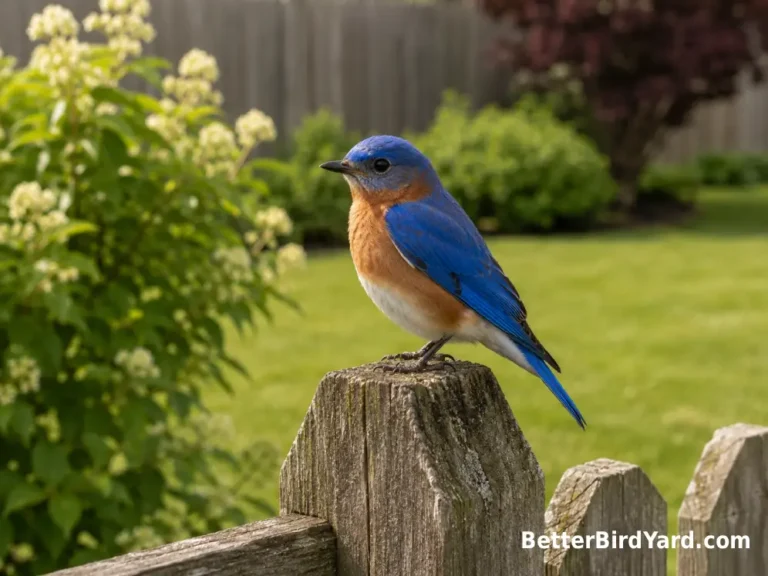
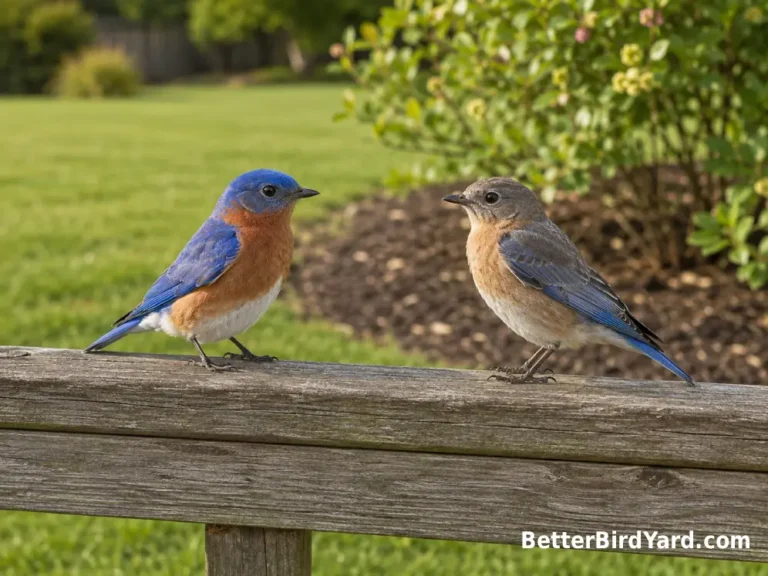
Eastern Bluebirds are cavity nesters. Cornell Lab describes them as birds of open country, including pastures, field edges, parks, and backyards with scattered trees and relatively sparse ground cover. They readily use properly designed nest boxes when suitable habitat is available.
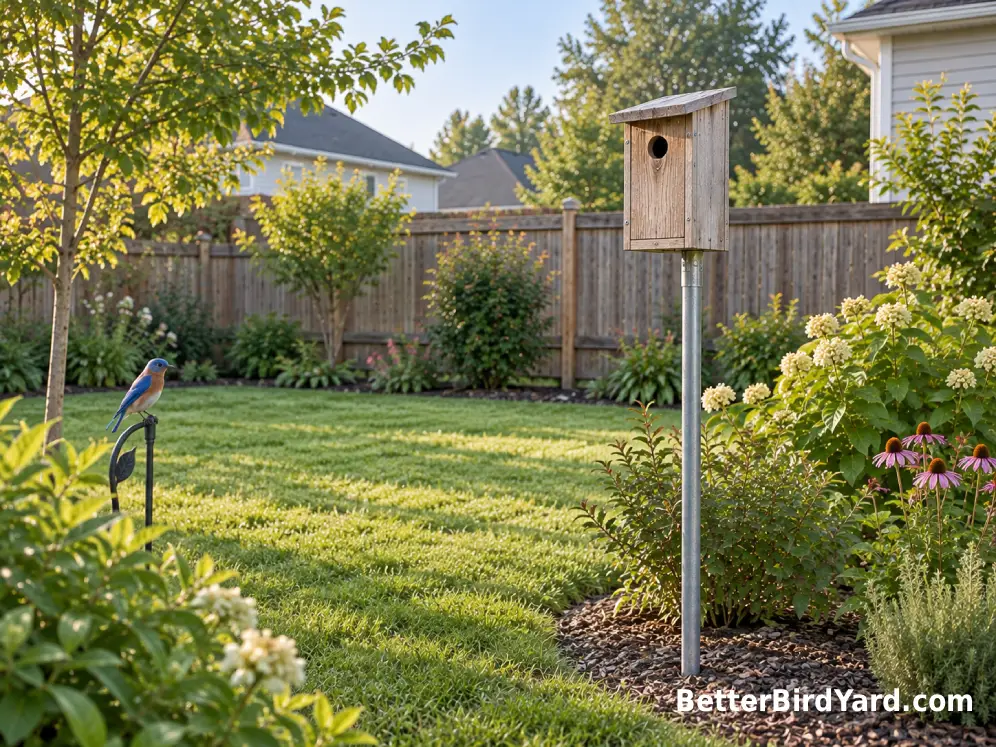
For most backyard setups, start with a wooden box with a 1 1/2-inch round entrance, mount it roughly 4 to 6 feet above the ground on a free-standing pole, add predator protection, and aim the entrance toward open habitat. Then monitor the box instead of simply hanging it and forgetting it.
A nest box can provide a useful nesting cavity, but it cannot make an unsuitable yard attractive to bluebirds. Habitat, competition, predators, weather, and the local bluebird population all affect whether a box gets used.
Eastern Bluebird Nest Box Dimensions That Matter
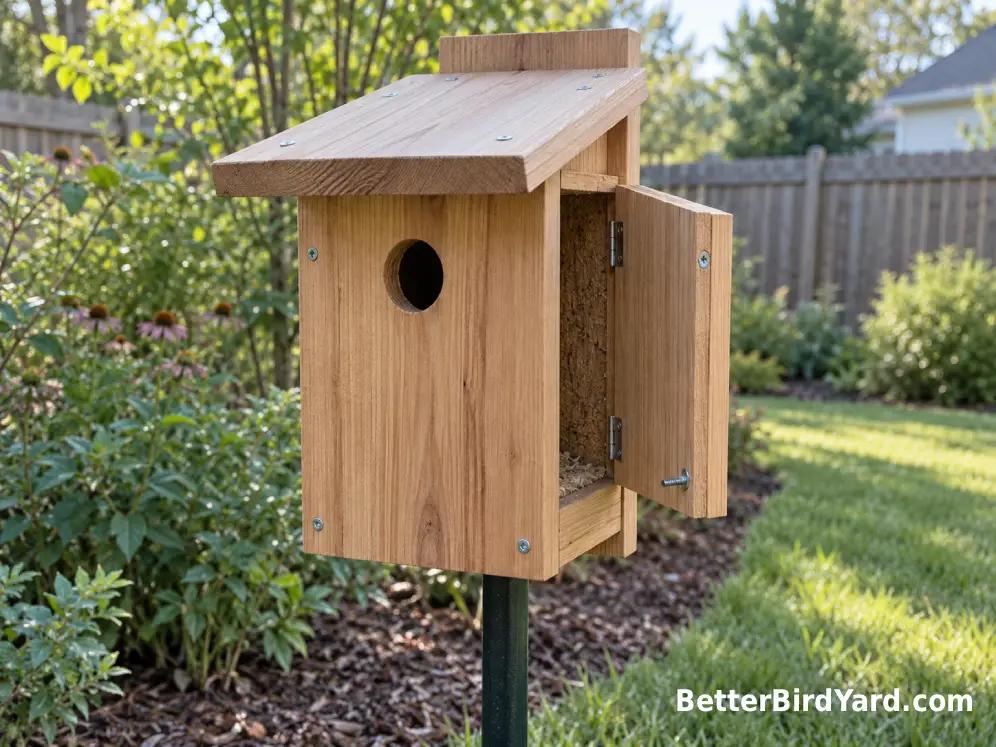
The entrance opening is the first specification to check when buying or building an Eastern Bluebird nesting box. A 1 1/2-inch round entrance is a widely recommended size for Eastern Bluebirds. Bluebird plans also use carefully sized oval or slot entrances, but a standard round opening is usually the simplest choice for a beginner.
| Feature | Practical Starting Point | Why It Matters |
|---|---|---|
| Round Entrance Hole | 1 1/2 inches | Appropriate for Eastern Bluebirds while helping exclude larger European Starlings |
| Floor | About 4 1/2 to 5 1/2 inches square | Provides a useful cavity without making the box unnecessarily oversized |
| Entrance Above Floor | About 6 to 8 inches | Keeps the nest well below the opening |
| Interior Depth | Roughly 8 to 9 inches | Provides sufficient nesting depth in common bluebird designs |
| Mounting Height | About 4 to 6 feet | Fits Cornell NestWatch placement guidance and remains practical to monitor |
There is more than one successful Eastern Bluebird nest box plan, so small differences in floor size or overall dimensions are normal. That is a better reason to follow a complete, established plan than to mix measurements from several different birdhouse designs. Cornell NestWatch and the North American Bluebird Society both provide bluebird-specific plans.
What A Good Eastern Bluebird Bird House Should Include
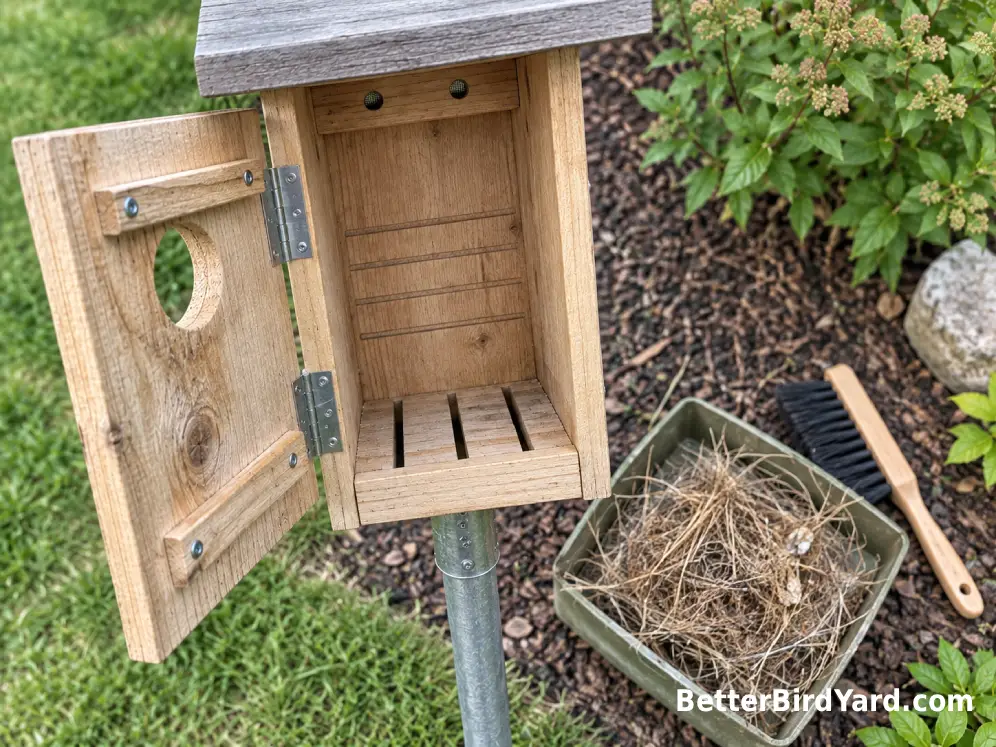
A good birdhouse for an Eastern Bluebird should function more like a simple weather-resistant cavity than a decorative garden ornament. Untreated solid wood is a practical material because it provides insulation and gives nestlings a surface they can grip. A hinged side or front makes monitoring and end-of-season cleaning much easier.
Look for these features:
- Drainage openings in the floor so rainwater cannot collect inside.
- Ventilation near the upper sides of the box, protected by adequate roof overhang.
- A roof that extends beyond the entrance and wall edges.
- A side or front panel that opens and closes securely.
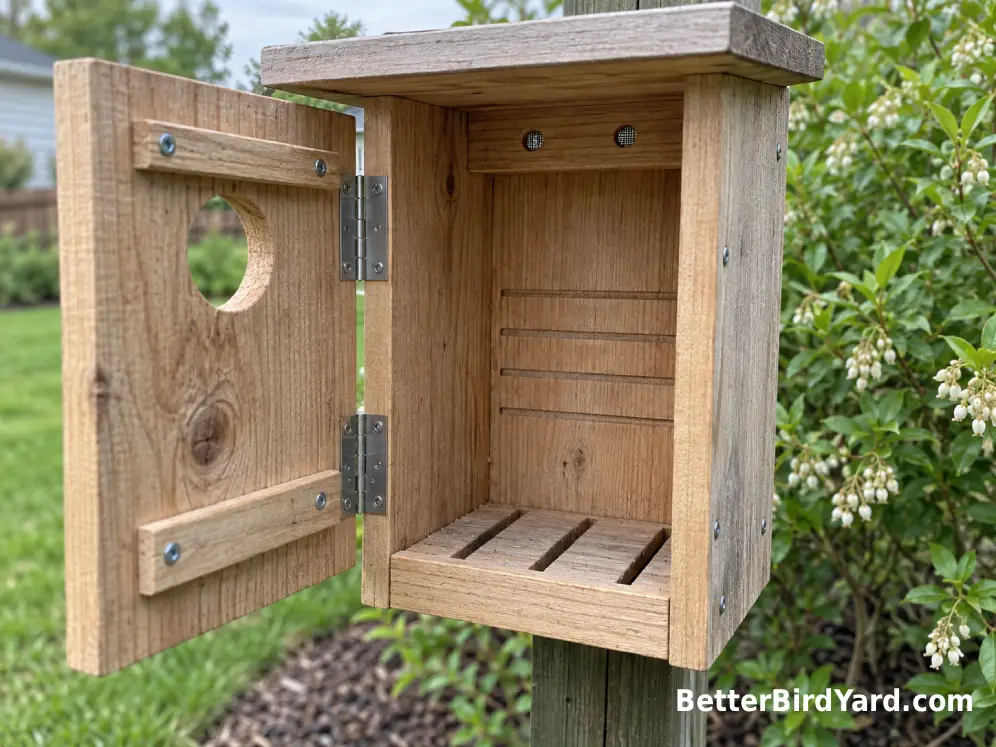
- A roughened interior surface or shallow grooves beneath the entrance to help young birds climb toward the opening.
- No exterior perch below the entrance hole.
Cornell NestWatch specifically recommends rough interior walls or shallow horizontal grooves beneath the entrance on boxes intended for birds such as bluebirds and swallows.
The missing perch is intentional. Bluebirds do not need one to enter the cavity, and established bluebird designs generally omit it. The North American Bluebird Society likewise recommends nest boxes without perches.
If you want to build rather than buy, use one complete set of established Eastern Bluebird nest box plans. The proportions of the roof, floor, entrance height, ventilation, and access door are designed to work together.
Where To Put An Eastern Bluebird Nesting Box
Placement can make a beautifully built box useful—or nearly irrelevant. Eastern Bluebirds forage in open areas, frequently dropping from a low perch to catch insects on or near the ground. A box beside open lawn, meadow, pasture, orchard, cemetery, park-like yard, or similar open habitat generally makes more sense than one buried inside dense woods or thick shrubbery.
Cornell NestWatch lists roughly 4 to 6 feet as the normal placement range for an Eastern Bluebird box and recommends facing the entrance toward open habitat, with east as a preferred direction.
East-facing is a useful starting point, not a promise of occupancy. The practical goal is a box that opens toward usable habitat while avoiding an exposed position where prevailing storms or intense afternoon heat repeatedly hit the entrance.
Keep the immediate flight path clear. A branch, shed wall, dense hedge, or fence directly in front of the opening can make an otherwise promising location less suitable.
If you have enough property for multiple Eastern Bluebird nest boxes, do not simply line them up a few yards apart. Cornell lists about 300 feet between separate bluebird boxes. Where Tree Swallows compete for cavities, pairing two boxes roughly 15 to 25 feet apart can sometimes allow a swallow pair and bluebird pair to occupy neighboring boxes while pairs are spaced farther apart.
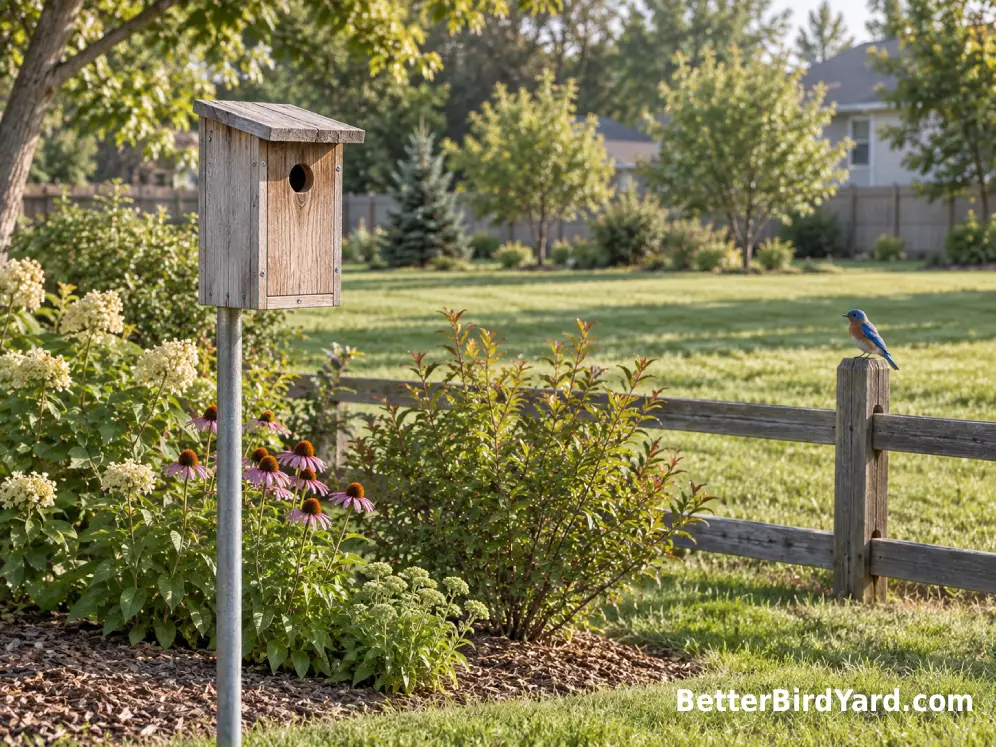
How To Install A Bluebird Nest Box In Six Steps
A box is easier to manage when the mounting system is planned before the nesting season. Cornell NestWatch favors free-standing smooth poles or pipe because they make effective predator guards easier to install. Trees and rough wooden fence posts give many climbing predators more opportunities to reach a box.
- Choose an open location with suitable bluebird habitat.
- Install a sturdy free-standing metal or smooth pole.
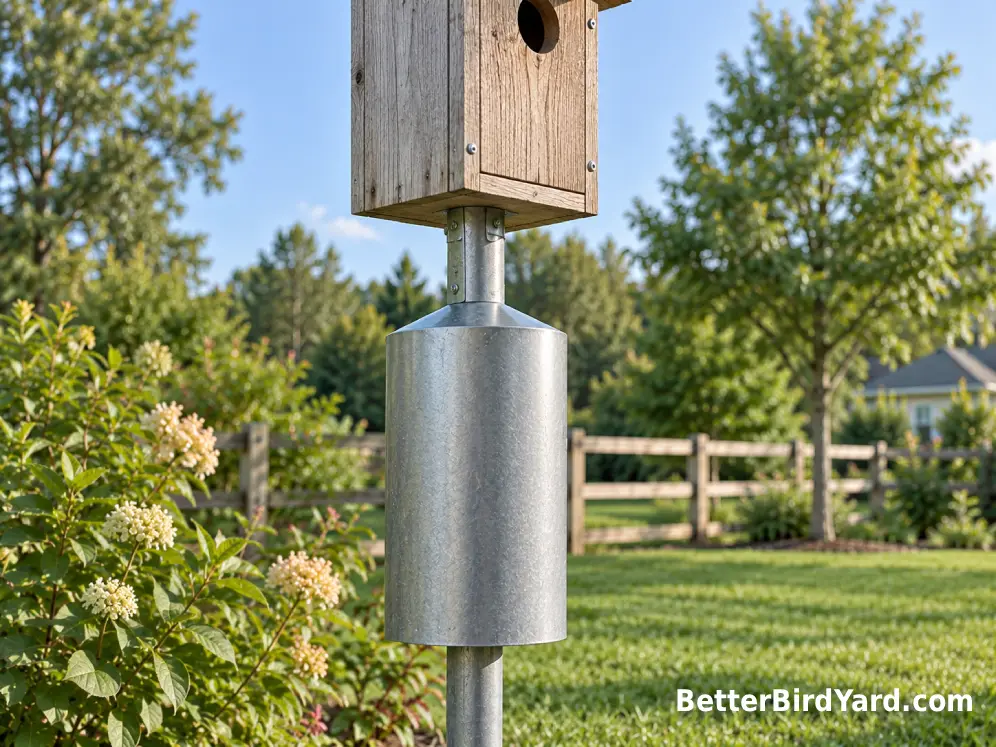
- Add an appropriate predator baffle or guard before nesting begins.
- Mount the box around 4 to 6 feet above the ground.
- Turn the entrance toward open habitat, using an easterly direction where it fits the site.
- Check that the box is stable, drains properly, opens easily, and has a clear flight path.
Place the pole far enough from trunks, fences, sheds, and overhanging branches that an animal cannot easily bypass the baffle by jumping or dropping onto the box. Cornell specifically recommends keeping pole-mounted boxes away from adjacent structures that could provide another route for predators.
A common mistake we see is treating the predator baffle as an optional accessory to add after a problem occurs. It is much easier to build protection into the original setup than to redesign an occupied nest-box site.
Before digging or driving a pole into the ground, follow normal property-safety practices and check for underground utilities where appropriate.
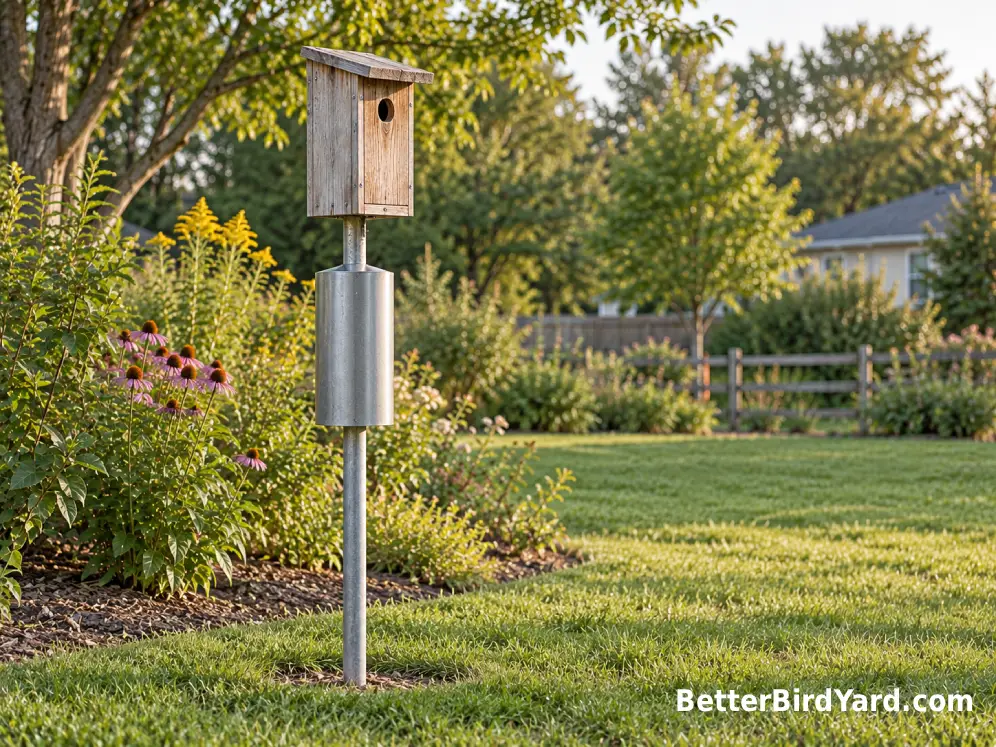
Protect The Box From Predators And Nest-Site Competition
Raccoons, snakes, cats, squirrels, and other animals can prey on eggs or young in nest boxes. Cornell NestWatch recommends predator guards and notes that smooth pole-mounted boxes are especially well suited to cone or stovepipe-style baffles.
Keep pet cats indoors rather than relying on the box alone to protect nesting birds. Also avoid leaving pet food or spilled bird food near the nesting site where it could attract animals to the area.
Competition needs a different kind of management. Tree Swallows, chickadees, wrens, and other native cavity-nesting birds may legitimately choose a nest box. If another native species has an active nest, do not try to evict it simply because you hoped for bluebirds.
House Sparrows are a more difficult competitor because they can enter standard Eastern Bluebird boxes; changing a normal bluebird entrance to a smaller round hole would also exclude the bluebirds you are trying to accommodate. European Starlings are larger, which is one reason the carefully sized Eastern Bluebird entrance matters.
If an unfamiliar bird begins using your box, confirm the species before taking action. Nest rules and wildlife regulations can vary, and active nests of native birds should not be disturbed casually. Check Cornell NestWatch and your state wildlife agency for current guidance if you are unsure what you are seeing.
Monitor The Nest Box Without Constantly Disturbing It
Putting up a box creates a responsibility to keep an eye on it. You do not need to hover around the entrance every day, but periodic checks can reveal damaged hardware, unwanted occupants, predator problems, or an active nesting attempt.
Cornell NestWatch recommends checks about every 3 to 4 days for people actively monitoring nests, with weekly checks still useful when more frequent monitoring is not practical. Visits should be brief, and waiting for an adult to leave on its own is preferable to deliberately flushing it from the box.
Avoid opening an active box:
- in the early morning;
- during cold, wet, or otherwise poor weather;
- when an adult is reluctant to leave;
- when fully feathered young appear close to fledging.
Young birds close to fledging can leave prematurely if disturbed, so the later part of the nesting cycle is a good time to switch to watching from a distance.
Clean And Maintain The Box At The Right Time
The most important cleaning rule is simple: do not dismantle or clean a box while a nesting attempt is active.
Once you are certain the box is inactive, old material can be removed as part of routine maintenance. Cornell NestWatch considers end-of-season cleanout a reasonable approach and notes that cleaning between broods should only be done when there is absolutely no sign of breeding activity. If you are unsure, leave the box alone and check again later.
While the box is empty, check:
- whether the entrance has been enlarged or damaged;
- whether screws, hinges, and latches remain secure;
- whether drainage openings are clear;
- whether the roof is leaking or badly warped;
- whether the pole and predator guard are still stable.
This is also the best time to move a poorly placed box. Cornell advises waiting until birds have fledged or the nesting season is over before relocating a box that has been actively used.
When Should You Put A Bluebird Box Up?
Install the box before local breeding activity is well underway rather than waiting until you see bluebirds searching for a cavity. Cornell NestWatch suggests having boxes in place by February in southern areas and by mid to late March in northern regions. Exact timing naturally varies with latitude and local weather.
There is no need to remove a sound box simply because nesting season ends. A nest box can remain mounted year-round, provided you continue checking its condition. Cornell notes that boxes may also be used as roosting sites outside the breeding season.
If a box goes unused for a season, resist the urge to immediately buy a more decorative model. First reconsider the site. Is the yard open enough? Does the entrance face a clear approach? Check whether thick vegetation surrounds the box. Also consider whether predators can easily reach the mounting location. Sometimes moving an unused box after the season is more useful than replacing it.
Can A Small Yard Or Rental Property Support A Bluebird Box?
A suburban yard does not need to be enormous, but it does need the right character. Cornell notes that Eastern Bluebirds use backyards and other open landscapes, and Audubon points out that even some smaller yards can work when enough open space and insect-rich foraging habitat are available.
A heavily wooded postage-stamp yard surrounded by buildings may simply be a poor bluebird nesting site. In that situation, adding native plants, reducing pesticide use, improving water and cover for other backyard birds, or choosing nest boxes suited to species already present may provide more realistic benefits.
A patio or balcony by itself usually does not recreate the open feeding territory associated with Eastern Bluebirds. Renters should also get the appropriate property-owner or management permission before permanently attaching poles or structures and should check lease, HOA, and local requirements where applicable.
If your space is small, concentrate on habitat quality rather than adding multiple boxes. One well-sited, protected, monitored box is more useful than several decorative birdhouses crowded together.
Give Bluebirds A Safe Cavity, Then Let The Habitat Do Its Part
The best Eastern Bluebird nest box is not necessarily the prettiest one. It is the box whose dimensions fit the bird, whose roof keeps weather out, whose opening has no unnecessary perch, whose side opens for monitoring, and whose pole makes predator protection practical.
If you only change one thing, start with placement. Put a properly designed box in genuinely open bluebird habitat, mount it securely around 4 to 6 feet high, protect it from climbing predators, and keep the entrance approach clear. Cornell Lab, NestWatch, Audubon, and bluebird organizations repeatedly emphasize these practical details because a correct box in the wrong location is still the wrong setup.
Then monitor calmly. Some boxes are occupied quickly; others may sit empty while birds choose natural cavities or other sites nearby. An unused box is not automatically a failure, and no nest box can guarantee Eastern Bluebirds.
What you can provide is a safer nesting option: good dimensions, open habitat, predator protection, responsible monitoring, and a yard managed with birds in mind. That combination is far more useful than simply hanging another birdhouse on a tree.