Bird Bath Fountain Tips For A Cleaner Backyard Water Station
A bird bath fountain can be a simple upgrade for a backyard, patio, or small garden, but the best setup is not always the tallest spray or the fanciest bowl. Birds need shallow, clean water they can approach safely. The fountain part is most useful when it adds gentle movement, soft sound, and visible ripples without turning the bath into a splashy, deep, or hard-to-clean feature.
For most beginner and intermediate backyard bird watchers, the sweet spot is a shallow basin with textured footing, nearby escape cover, and a small solar water fountain for a bird bath, water wiggler, dripper, or low bubbler. Cornell Lab of Ornithology notes that dripping or moving water can make a birdbath more attractive, while National Wildlife Federation recommends shallow water and textured footing so small birds can bathe safely.
This guide focuses on practical bird bath fountains for ordinary US yards: what to buy, how to set one up, what to avoid, and how to keep the water fresh enough to help birds instead of creating a dirty backyard puddle.
Quick Answer: What Makes A Good Bird Bath Fountain?
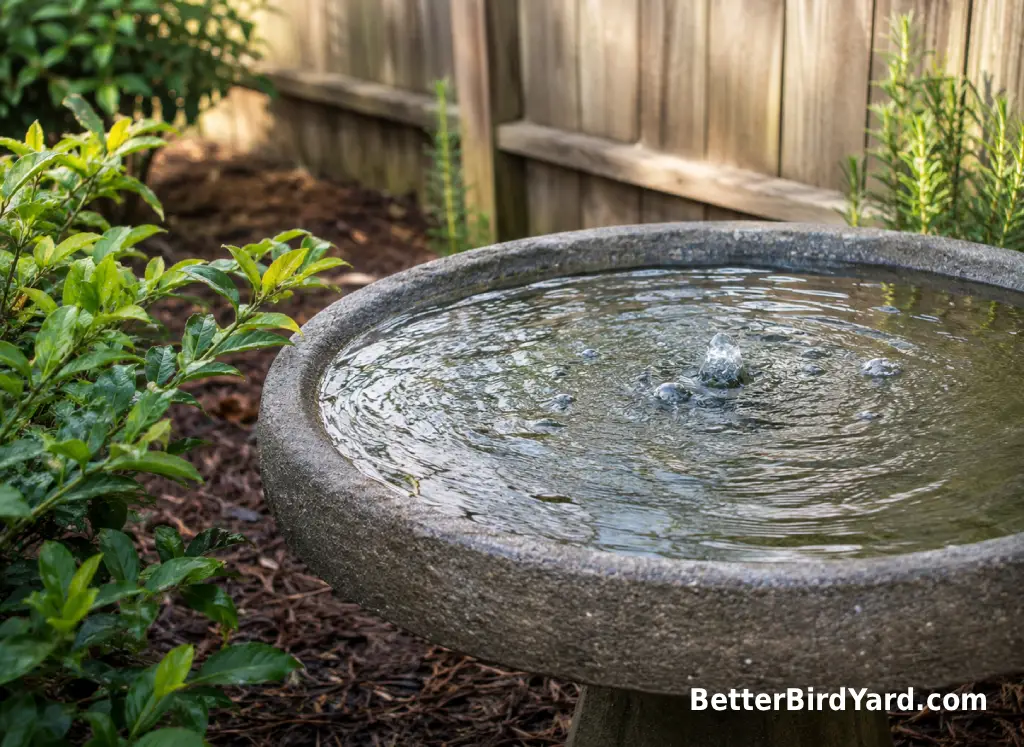
A good bird bath fountain is shallow, stable, easy to clean, and gentle enough for small birds to use. The water should look inviting rather than turbulent. Think soft ripples, a low bubbler, or a light trickle instead of a high spray that empties the basin or scares off cautious birds.
The best bird bath fountains usually have four things in common:
- A basin that is shallow enough for small birds to stand comfortably.
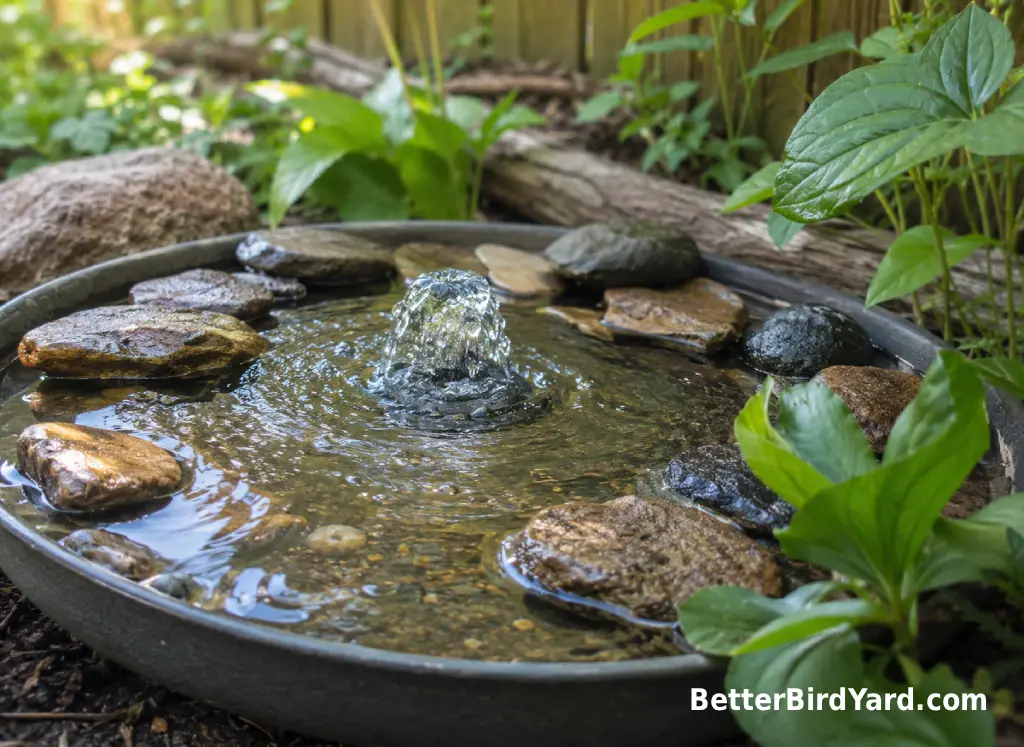
- A textured surface, stones, or a sloped edge so birds are not slipping on smooth ceramic or plastic.
- Moving water that stays mostly inside the bath.
- A design you can empty, scrub, rinse, and refill without dreading the job.
For a small patio, a simple birdbath fountain with a compact solar pump may be enough. For a shaded yard, a battery-assisted solar pump, water wiggler for bird bath use, or plug-in outdoor-rated pump may be more reliable. If you already have a bird bath you like, you may not need a new bath at all; adding a small pump or dripper can create the movement birds notice.
Why Moving Water Helps Birds Find The Bath
Moving water is easier for birds to notice. A shimmer on the surface, a few droplets, or a quiet trickle can stand out in a yard much more than still water in a plain bowl. Cornell Lab of Ornithology specifically recommends dripping water as a way to make a birdbath more attractive to birds.
That does not mean a fountain guarantees more birds. Bird activity still depends on your region, season, nearby habitat, predators, weather, and what natural water is available. In some yards, robins and House Finches may investigate quickly. In other yards, birds may take days or weeks to trust a new water source.
Choose Between A Solar Pump, Water Wiggler, Dripper, Or Built-In Fountain
Birdbaths and fountains come in several styles, and each one has tradeoffs. The right choice depends less on looks and more on sun, shade, water depth, cleaning access, and how much maintenance you will realistically do.
| Option | Best For | Main Tradeoff |
|---|---|---|
| Solar Water Fountain For Bird Bath | Sunny patios, decks, and open garden beds | May stop or weaken in shade, clouds, or low winter sun |
| Solar Water Pump For Bird Bath With Battery Backup | Yards with mixed sun and shade | Usually costs more and still needs regular cleaning |
| Water Wiggler For Bird Bath | Gentle ripples without spray | Moves water but does not create a fountain sound |
| Dripper | Natural-looking slow movement birds can notice | May need a water source, reservoir, or more refilling |
| Built-In Bird Bath With Fountain | People who want one finished feature | Can be harder to scrub if the design has tight crevices |
For beginners, we usually like the simplest setup that still moves water: a shallow basin plus a small solar powered water fountain for bird bath use, or a wiggler if splashing is a problem. If the bath is under a tree or covered balcony, solar may frustrate you unless the panel can be placed in direct sun.
Set Up A Bird Bath With Fountain Safely
Set up the fountain for bird comfort first and decoration second. A bath that looks beautiful but is slippery, deep, loud, or hard to clean is not a very useful water station for backyard birds.
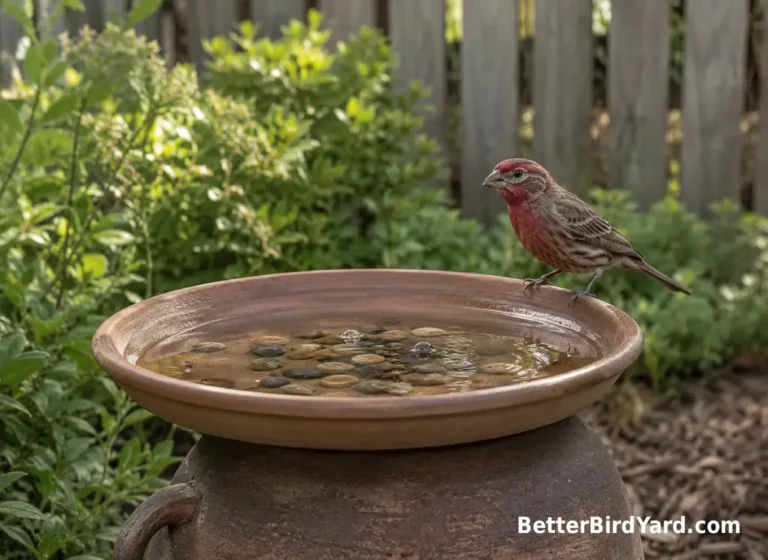
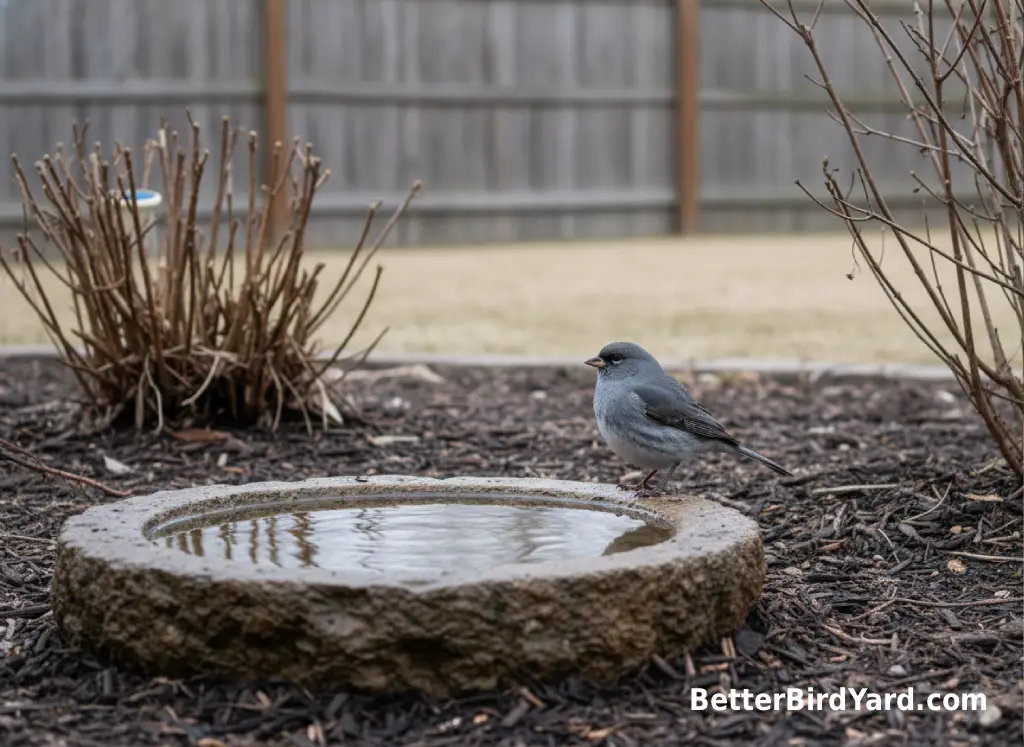
- Start with a shallow basin. Audubon suggests a simple birdbath depth of about 1 to 1.5 inches, and National Wildlife Federation advises keeping baths no more than 3 inches deep for small birds.
- Add footing if the surface is slick. A few flat stones can help birds judge depth and stand securely.
- Test the spray before leaving it outside. If water lands outside the basin, switch to a lower nozzle or a bubbler head.
- Keep cords and panels practical. Use only outdoor-rated electrical equipment, follow the manufacturer’s instructions, and avoid creating a trip hazard.
- Refill before the pump runs dry. Many small pumps can be damaged if they run without enough water.
After the fountain is running, watch it for a few minutes. The water should stay in the bath, the pump should remain submerged as directed, and birds should have quiet edges where they can drink without standing directly under the spray.
Place The Fountain Where Birds Feel Safe
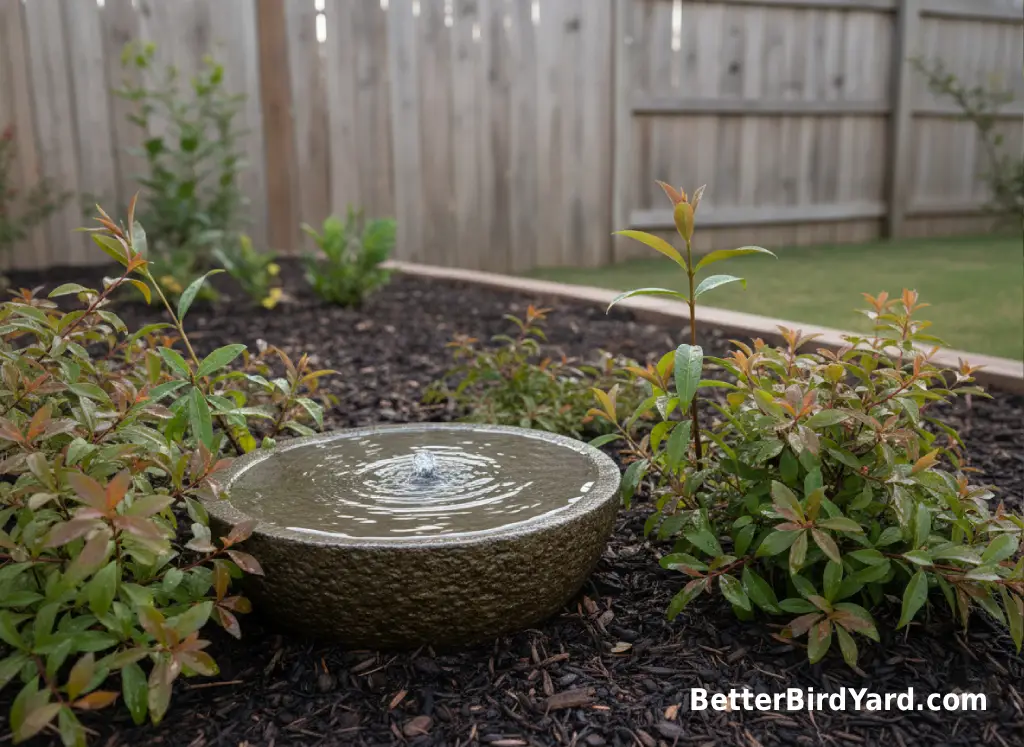
Placement affects whether birds use the fountain and whether the bath stays clean. Birds often like nearby shrubs or small trees because cover gives them a quick escape route. At the same time, the bath should not be tucked so tightly into dense cover that a cat or other predator can hide right beside it.
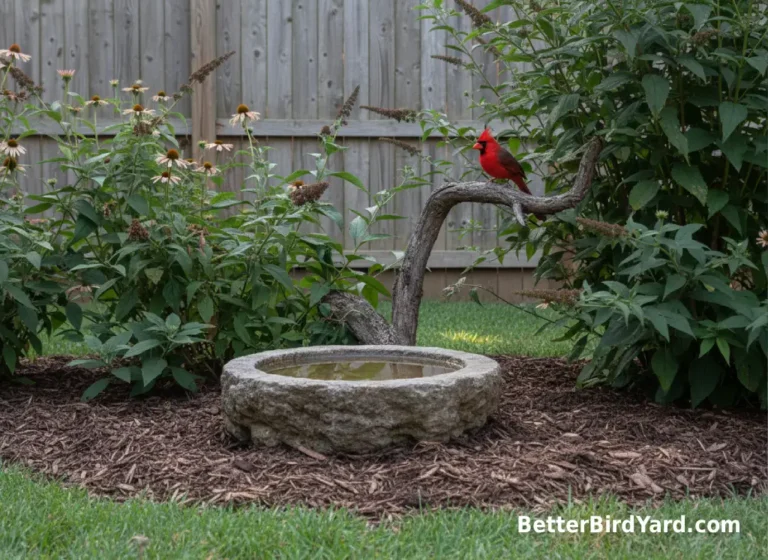
Audubon recommends placing a birdbath on level ground with shrubs or evergreens nearby and where you can watch from a window. That is a good backyard balance: visible enough for bird watching, sheltered enough for birds to feel comfortable, and accessible enough for cleaning.
In a small yard or patio, keep the fountain close to the door you actually use. If it is easy to reach, you are more likely to dump, scrub, and refill it. For renters, a low basin on a patio table or sturdy plant stand may work better than a heavy pedestal bath, as long as it is stable and allowed by your lease, balcony rules, or HOA guidelines.
Avoid putting the bath directly under feeders if seed hulls and droppings are falling into the water. If you need help planning the full setup, our How To Attract Birds To Your Yard Guide walks through feeder and water placement together.
Cleaning And Maintenance Matter More Than The Fountain Style
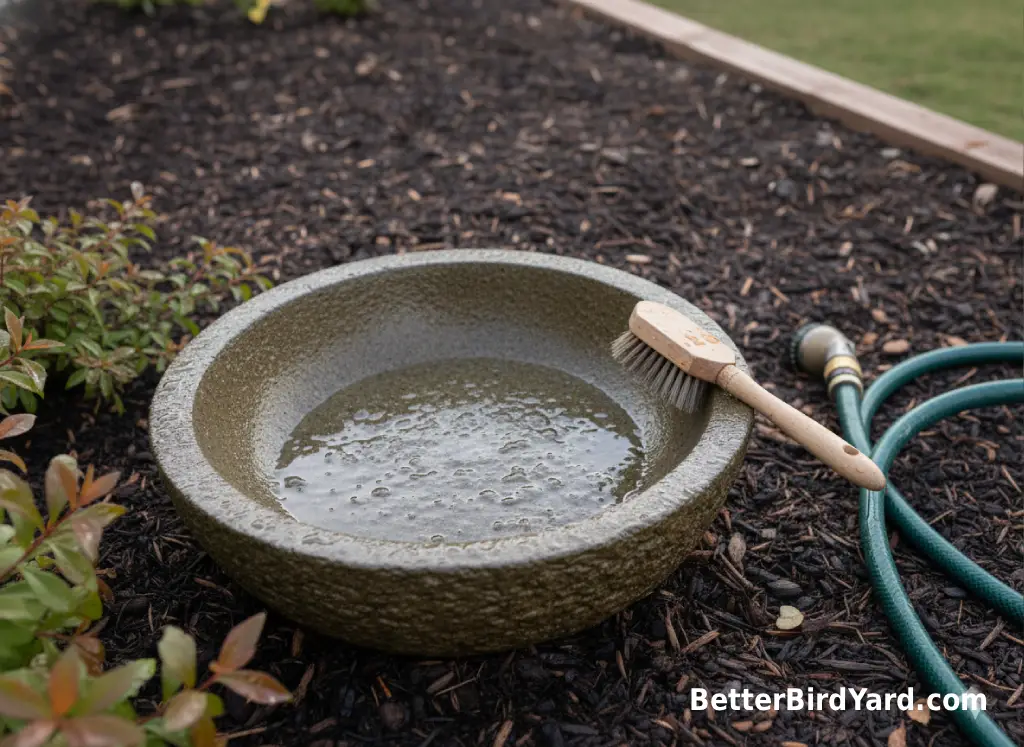
A bird bath fountain still needs hands-on cleaning. Moving water can look fresh while algae, droppings, biofilm, pollen, and debris build up on the basin and pump parts. Audubon recommends rinsing and scrubbing birdbaths, using a vinegar-and-water approach for freshness, skipping synthetic soaps and cleansers, and refilling regularly.
For everyday backyard use, keep the routine simple:
- Dump and refill water often, especially in hot weather or when the bath looks cloudy.
- Scrub the basin whenever it feels slippery or shows algae, droppings, or debris.
- Clean pump intakes and small fountain parts so they do not clog.
- Rinse thoroughly before refilling.
- Pause the fountain if you cannot keep up with cleaning for a while.
The CDC also recommends emptying and scrubbing water-holding containers such as birdbaths once a week to help reduce mosquito breeding around the home. A fountain or wiggler can help keep the surface moving, but it is not a reason to ignore the weekly dump-and-scrub habit.
Editorial note: if you only change one thing, make the bath easier to clean. A plain shallow basin with a modest bubbler is usually better for birds than a complicated fountain with hidden cavities you rarely scrub.
Common Bird Bath Fountain Mistakes To Avoid
The most common bird bath fountain problems are easy to miss at first because they often look like design issues, not bird issues. A tall spray may look pleasant from the kitchen window, but if it empties the basin by noon, birds lose their water source and the pump may run dry.
Watch for these beginner mistakes:
- Using a spray pattern that splashes most of the water out of the bath.
- Choosing a basin that is too deep or too slippery for small birds.
- Letting algae or pump slime build up because the water is moving.
- Placing the bath directly under feeders, sap-dripping trees, or messy perches.
- Putting the bath where outdoor cats can stalk from dense cover.
- Assuming solar pumps will run well in shade all day.
There is also a bird-watching patience mistake: moving the bath every day because birds have not found it yet. Give birds time to notice the sound and movement. If the setup is shallow, clean, and safely placed, small adjustments are better than constant relocation.
Small-Yard, Patio, And Balcony Tips
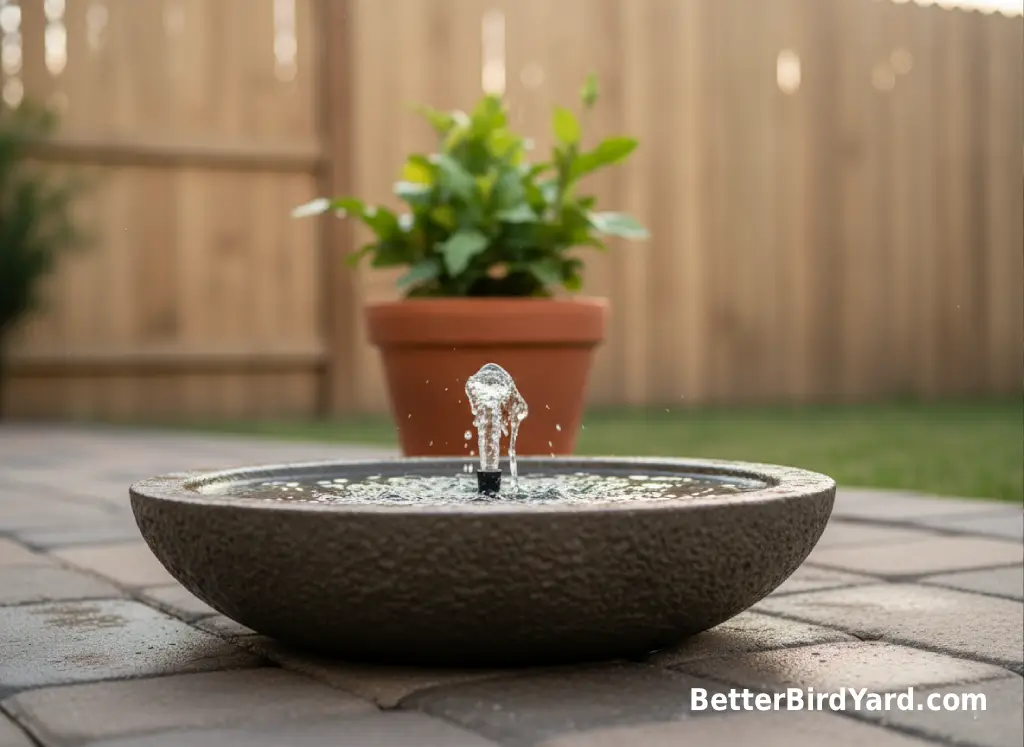
You do not need a large yard for a water fountain for birds. In fact, a modest patio bath can be easier to maintain than a heavy pedestal fountain at the far end of the lawn. The key is stability, shallow water, and quick cleaning access.
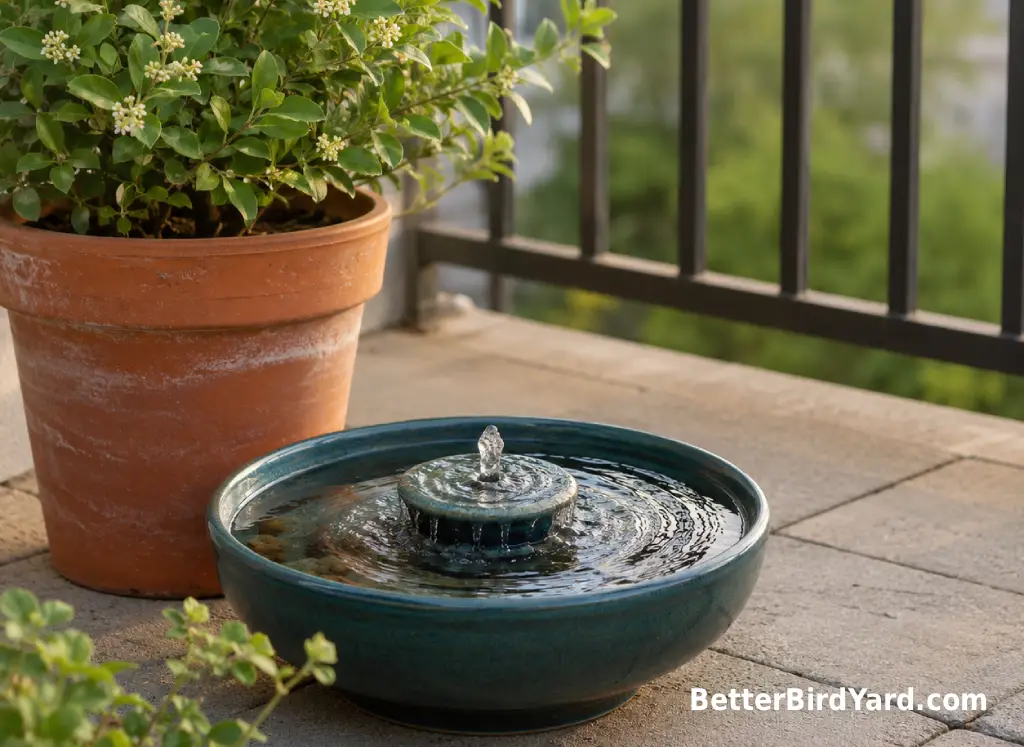
For balconies and small patios, choose a wide, low basin rather than a narrow, top-heavy feature. Add a few flat stones for footing and to reduce the visual depth of the water. If you use a solar pump, make sure the panel receives direct sun for part of the day; many small solar units slow down or stop when a cloud passes or the balcony is shaded.
Renters should also think about neighbors below. A fountain that sprays over the rim can drip onto another balcony, stain surfaces, or create complaints. A water wiggler or low bubbler is often a better small-space choice because it creates movement without sending droplets everywhere.
Check lease terms, balcony weight limits, HOA rules, and local guidance if your building has restrictions on standing water, outdoor electrical cords, or wildlife feeding. Rules vary by city, county, state, and property.
Seasonal Care For Bird Bath Fountains
Bird bath fountains change with the seasons. In summer, evaporation, algae, pollen, and mosquito concerns usually mean more frequent refilling and scrubbing. The CDC’s mosquito guidance is especially relevant during warm months because birdbaths are one of many small water-holding containers around homes that should be emptied and scrubbed regularly.
In fall, leaves can clog small pumps quickly. A fountain placed under a tree may need daily debris checks even when the water still looks clear from a distance. In winter, freezing is the main issue in many parts of the US. Some fountain materials can crack if water freezes, and many small pumps are not designed to run in icy conditions.
If you want to provide winter water, use equipment designed for outdoor winter use and follow the manufacturer’s instructions carefully. Do not add salt, antifreeze, glycerin, or other chemicals to a bird bath. When freezing weather makes safe maintenance difficult, it is better to empty and store the fountain than leave birds with dirty or unsafe water.
When To Pause The Fountain Or Get Local Help
Pause the bird bath fountain if the water is dirty and you cannot clean it, if the pump is malfunctioning, if the basin is freezing and cracking, or if you notice birds that appear sick, unusually weak, disoriented, or unable to fly normally. Do not try to diagnose a wild bird from backyard symptoms.
If you see sick or dead birds around feeders or baths, clean and remove shared water and feeding stations as a precaution, keep pets away, and check guidance from your state wildlife agency or local wildlife officials. During a regional bird illness event, USGS and partner agencies have advised ceasing feeding, cleaning feeders and bird baths, rinsing well, and avoiding direct handling of birds unless necessary.
BetterBirdYard is not a wildlife rehabilitation, veterinary, legal, or public health service, so our role is to help you make safer backyard choices and know when local help is the right next step.
Final Thoughts On Bird Bath Fountains
A bird bath fountain works best when it is built around bird comfort, not just backyard decoration. Keep the water shallow, give birds secure footing, use gentle movement, and place the bath where birds have visibility and nearby escape cover. A solar water fountain for bird bath use can be a good choice in sunny spots, while a water wiggler, dripper, or low bubbler may be better for patios, shaded yards, or splash-prone basins.
The real test is maintenance. If the fountain is easy to empty, scrub, rinse, and refill, you are more likely to keep it useful through hot weather, leaf drop, and everyday backyard mess. Clean water will do more for birds than an elaborate fountain that rarely gets cleaned.
Start simple, watch how birds respond, and adjust one thing at a time. A modest, well-kept bird bath with fountain movement can become one of the most enjoyable parts of a bird-friendly yard.