Dark-Eyed Junco: How to Recognize and Support This Winter Visitor
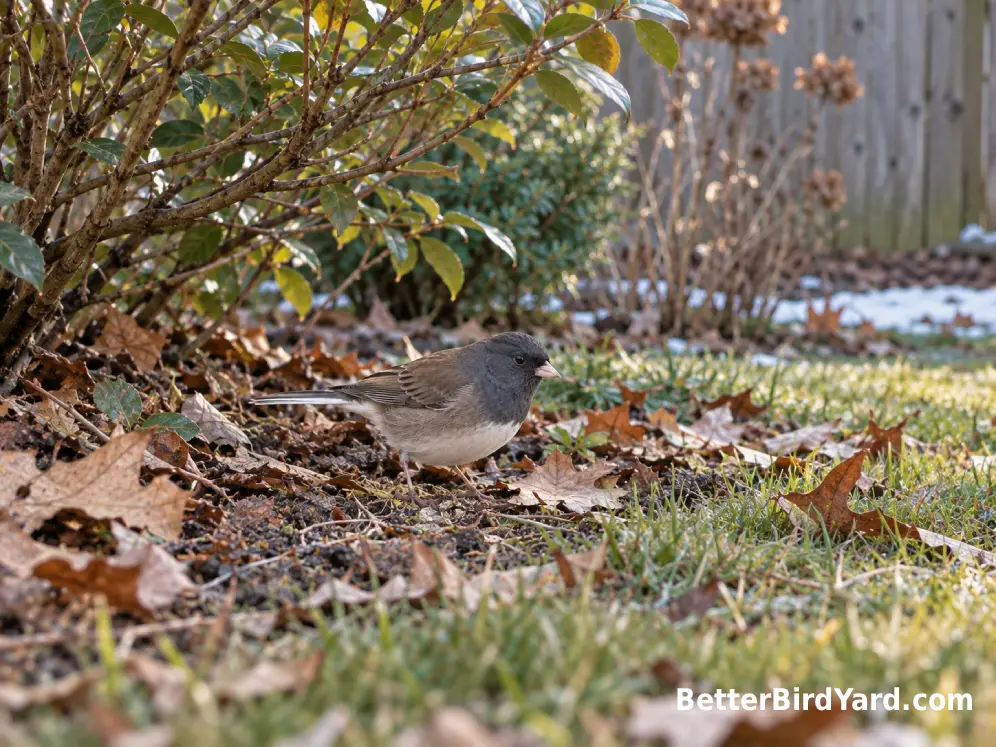
A Dark-eyed Junco can be easy to overlook at first. Instead of landing dramatically on a feeder, this small sparrow often spends its time hopping beneath it, quietly picking through fallen seed. Then it flies, flashes bright white outer tail feathers, and suddenly becomes much easier to recognize.
Dark-eyed Juncos occur widely across North America, but their appearance and seasonal movements vary considerably by region. In much of the United States they are especially familiar during the cooler months, earning a reputation as winter backyard birds. Elsewhere, including parts of the West and mountain regions, some populations remain through the year. Cornell Lab describes them as ground-foraging sparrows associated with forests as well as winter fields, parks, gardens, and backyards.
You may also hear the bird called a black eyed junco, but the standard English name used by major ornithological references is Dark-eyed Junco. More important than the name is learning the combination of shape, pale bill, ground-feeding behavior, and flashing white tail feathers that ties its many different-looking forms together.
How To Identify A Dark-Eyed Junco
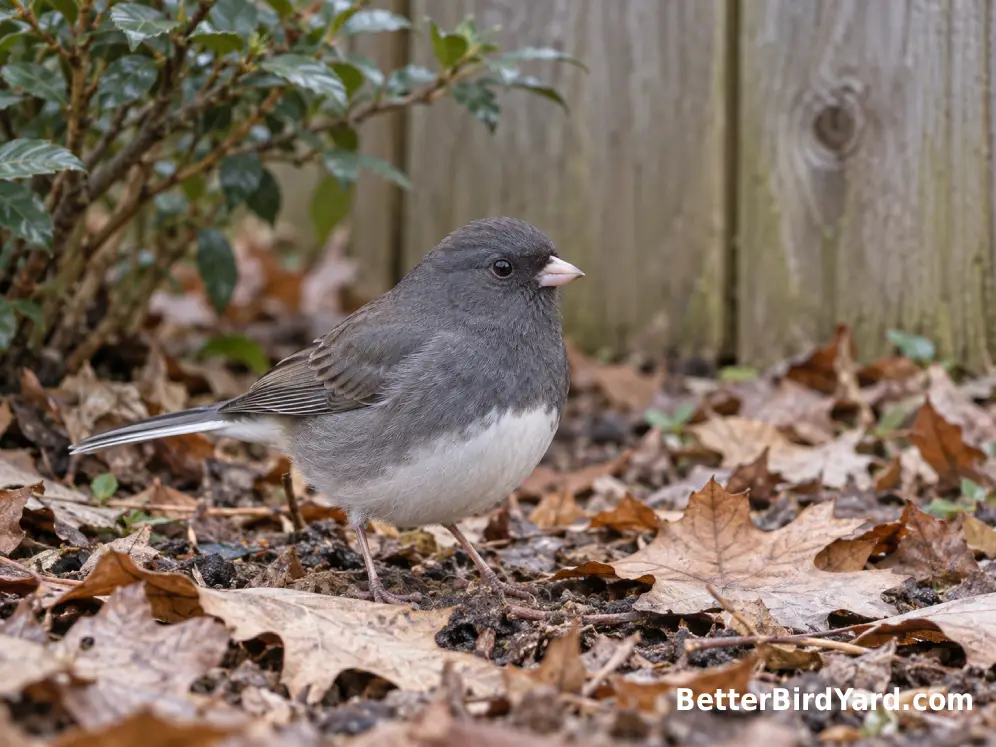
Start with shape rather than color. A Dark-eyed Junco is a compact, sparrow-sized bird with a rounded head, fairly long tail, and a short, stout bill. Cornell Lab gives an adult length of about 5.5 to 6.3 inches and a wingspan of roughly 7.1 to 9.8 inches.
The most useful field marks are surprisingly consistent even though junco plumage varies across the country. Look for a pale, often pinkish bill and white outer tail feathers. Those white feathers can be difficult to see while the bird is feeding, but they often flash conspicuously when a junco takes off.
In much of the East, the familiar Slate-colored form has smooth gray upperparts contrasting with a pale or white belly. Females and immature birds may look browner, so a brownish bird under your feeder should not be dismissed just because it does not match the classic gray-and-white picture. In western yards, the differences can be much more obvious.
- Notice the pale bill.
- Watch for white outer tail feathers when the bird flies.
- Look for a rounded, compact sparrow shape.
- Pay attention to ground-hopping behavior beneath shrubs and feeders.
A dark eye alone is not a useful identification feature. Many backyard birds have dark eyes; the combination of body shape, tail pattern, bill color, behavior, and regional plumage is much more dependable.
Why Juncos Look Different Across The U.S.
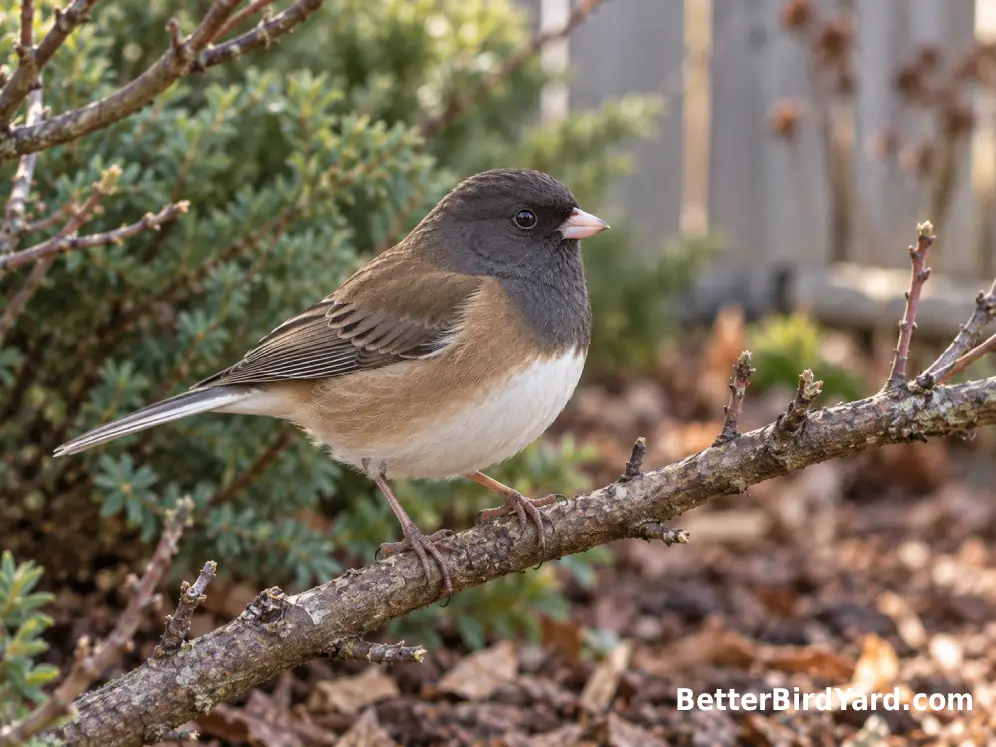
One reason junco identification can feel confusing is that Dark-eyed Juncos show striking geographic variation. Cornell Lab describes several recognizable forms, some of which were historically treated as separate species. That is why two completely legitimate Dark-eyed Junco pictures can seem to show different birds.
| Form | Typical Appearance | Where You May Encounter It |
|---|---|---|
| Slate-colored | Mostly gray above with a pale or white belly | Especially widespread in the East and across much of Canada |
| Oregon | Dark hood, warm brown back, buffy or rusty-toned sides | Common across much of western North America |
| Pink-sided | Gray head with brown back and pinkish-brown sides | Associated mainly with parts of the Rockies and nearby regions |
| Gray-headed | Gray head and body with a reddish-brown back | Seen in portions of the interior West and Southwest |
| Red-backed | Gray head with darker face and bright reddish-brown back | More restricted in the Southwest |
| White-winged | Pale gray overall with subtle pale wing markings | Most associated with parts of the northern Great Plains and Rockies |
The exact boundaries and plumages are more complicated than a backyard guide needs to make them. For most observers, the useful lesson is simple: do not expect every junco to look like the eastern gray-and-white version. Cornell Lab’s regional comparison material is especially useful when a bird looks right in shape and behavior but wrong in color.
When And Where To Look For Juncos
For many backyard bird watchers, the first juncos of the season arrive with cooler weather. Cornell Lab notes that across much of the eastern United States they appear as winter sets in and move northward again in spring. Audubon likewise describes winter flocks around woodland edges, brush, and suburban yards.
That pattern is not universal. Some western, mountain, and coastal populations may be present year-round or move shorter distances between seasons and elevations. A junco disappearing from one yard in spring does not mean the species has vanished from the entire region.
Habitat can be as important as geography. During winter, look along woodland edges, brushy corners, parks, gardens, roadsides, and yards that combine open feeding space with nearby shelter. Juncos spend much of their time close to the ground, so scan beneath feeders and shrubs before concentrating on the feeder ports themselves.
In a small patio garden, even one dense container shrub or a planted edge can make the space feel more usable to birds than an entirely exposed patch of pavement. The National Wildlife Federation notes that native plants can provide food and cover even in small outdoor spaces, although the best plant choices depend on your region.
What Dark-Eyed Juncos Eat
Seeds make up a major part of the Dark-eyed Junco’s diet. Cornell Lab reports that juncos consume many kinds of small seeds and also eat insects, particularly during the breeding season. At feeders, Cornell notes a preference for millet over sunflower seed, while Project FeederWatch identifies millet as a useful food for small ground-foraging birds such as juncos.
That does not mean you need a specialized junco mix. A practical feeding setup can be quite simple:
- Offer white proso millet or a seed blend that contains a useful amount of millet.
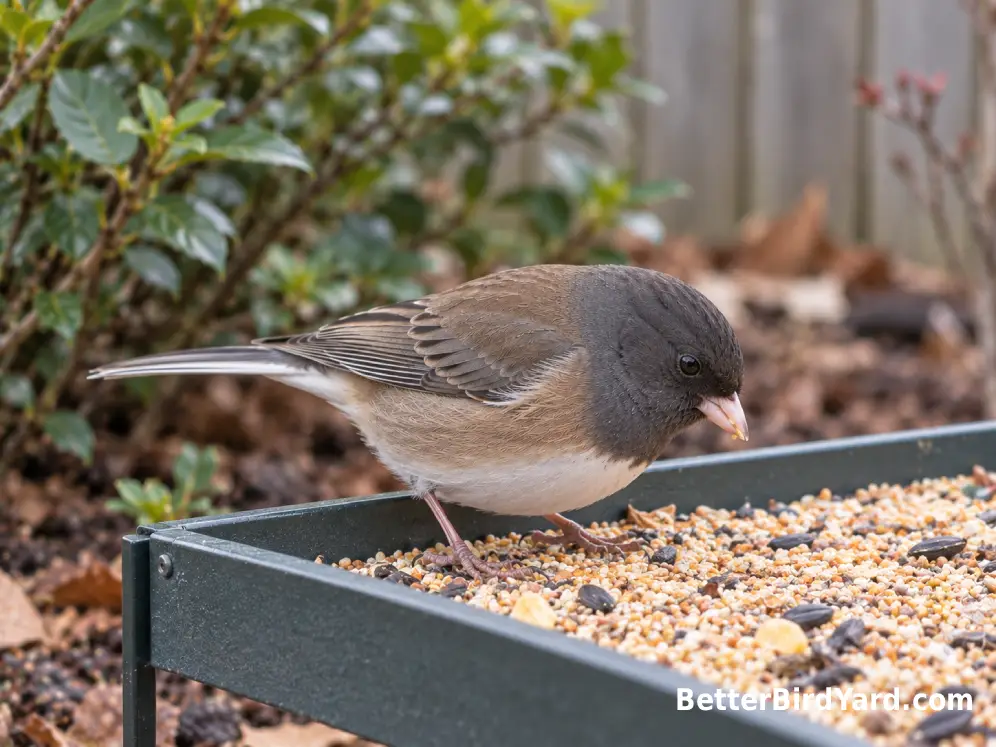
- Use a clean platform or tray where small seeds remain easy to reach.
- Allow a modest amount of suitable fallen seed beneath another feeder if you can keep the area sanitary.
- Keep seed dry and discard anything that becomes wet, moldy, clumped, or spoiled.
Audubon notes that juncos commonly forage beneath feeding trays rather than depending entirely on elevated feeder ports.
If you are comparing seed choices, our backyard bird seed guide can help you build a mix that works for juncos without turning the feeding area into a catch-all pile of unwanted grain.
How To Make A Yard Or Patio More Junco-Friendly
You do not need a large property to make space more useful to juncos. Their ground-oriented behavior means a modest yard, townhouse garden, or patio edge can work if it combines accessible food with nearby cover.
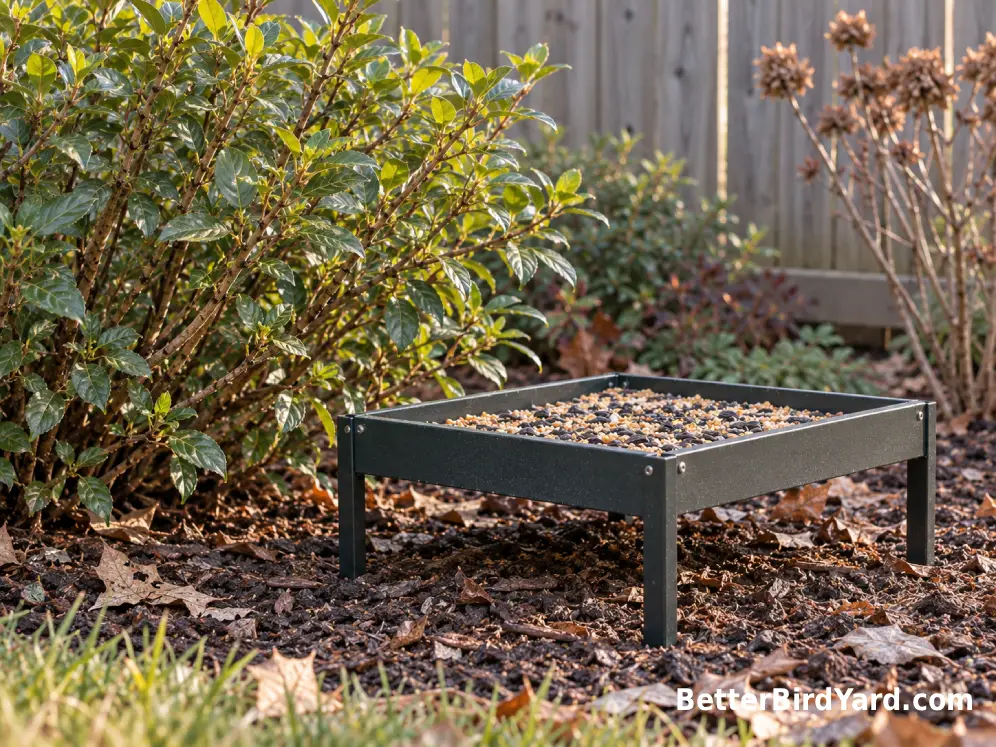
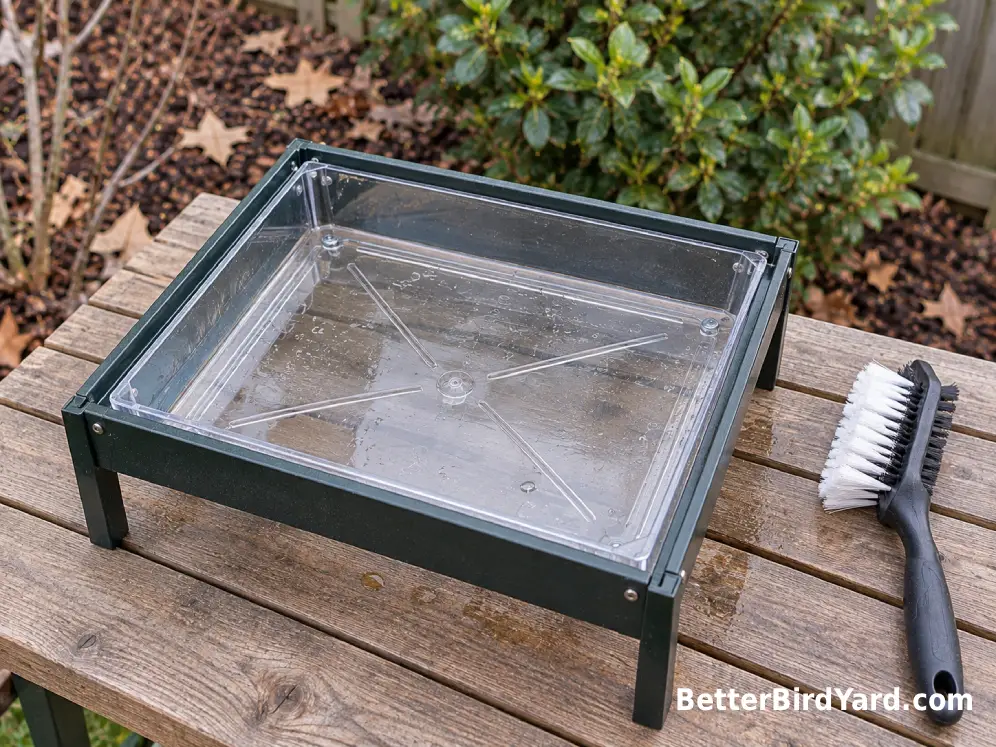
- Choose a low platform, tray, or other feeder that gives ground-feeding birds easy access.
- Place it where birds have a clear view of their surroundings but can reach shrubs or other cover quickly.
- Offer a small quantity of suitable seed rather than spreading food over a large area.
- Keep the ground beneath the feeder free of heavy accumulations of old seed and droppings.
- Add regionally appropriate native shrubs or container plants where space allows.
Project FeederWatch recommends keeping feeding areas tidy because old food and droppings can accumulate beneath feeders, while scattered seed may also attract rodents. The National Wildlife Federation notes that even balconies and patios can contribute habitat through appropriate container plants and small-space landscaping.
For a renter, I would keep this especially simple: one washable tray feeder, one container shrub suited to your climate, and a routine for sweeping up old seed is more useful than filling a tiny patio with several hard-to-maintain feeders. Check lease, building, HOA, and local rules before putting out food where wildlife feeding is restricted.
What Junco Behavior Looks Like At Ground Level
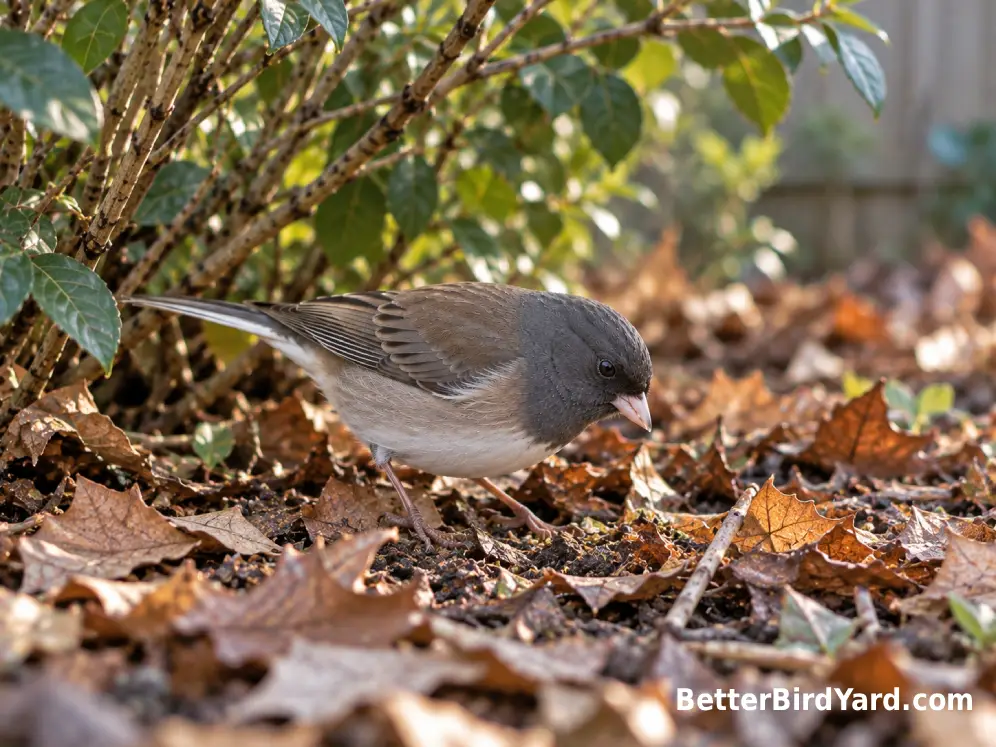
Once you know how juncos move, they become easier to notice. Cornell Lab describes them as birds that typically hop along the ground, pecking or scratching through leaf litter. They may also forage very low in shrubs and undergrowth.
Watch a feeder area for a few minutes and you may notice that a junco often behaves differently from a chickadee or finch. Instead of flying repeatedly to a small feeder port, it may remain below, moving from one fallen seed to the next. If startled, it often makes a short flight into nearby cover, revealing those bright white outer tail feathers on the way.
Juncos can also occur in flocks, particularly outside the breeding season. Their small chip notes may give away their presence before you have a clear view. Audubon describes winter birds feeding on the ground around woodland edges and suburban yards while keeping in contact with calls.
This is one of those details that matters more than beginners expect: when watching for juncos, spend as much time looking underneath the feeder as looking at the feeder itself.
Common Junco Feeding Mistakes To Avoid
Because juncos are adaptable ground foragers, attracting them is usually less about buying another feeder and more about removing a few practical problems.
- Using only narrow hanging feeders: Juncos may visit them, but platform and ground-level feeding opportunities fit their normal foraging style better.
- Dumping excess seed on the ground: Large quantities can spoil, create mess, and attract rodents. Keep portions modest and remove leftovers.
- Leaving wet seed in place: If seed becomes moldy, spoiled, or badly clumped, discard it rather than trying to dry and reuse it.
- Ignoring the ground beneath the feeder: Hulls, old food, and droppings can build up even when the feeder itself looks clean.
- Expecting every junco to be gray and white: Western forms may include rich brown, buff, reddish, and gray plumage.
Project FeederWatch recommends cleaning seed and suet feeders regularly, commonly every week or two, and more often during heavy use or wet weather. Feeders should be scrubbed free of debris, washed thoroughly, rinsed, and allowed to dry completely before being refilled.
What To Do If A Junco Looks Sick Or Injured
A bird sitting still for a short time, fluffing its feathers in cold weather, or behaving differently from nearby birds does not provide enough information for a backyard diagnosis. If a junco appears persistently lethargic, has obvious abnormal growths or eye problems, cannot fly normally, or otherwise appears seriously compromised, avoid trying to identify or treat the condition yourself.
Project FeederWatch recommends extra feeder hygiene when visibly sick birds are present and notes that temporarily reducing or removing feeding may sometimes help disperse birds, depending on local conditions. Their guidance also emphasizes that disease-control measures can vary with the situation, so checking current state wildlife agency or Project FeederWatch recommendations is appropriate when illness is being reported locally.
Clean affected feeders and bird baths thoroughly, remove old food and waste from the surrounding area, and avoid medication or home remedies. If a bird appears injured or unable to survive without intervention, contact a licensed wildlife rehabilitator, state wildlife agency, animal control office, or other qualified local professional rather than casually handling the bird yourself.
A Small Bird That Rewards A Closer Look
The Dark-eyed Junco is a good reminder that backyard bird watching gets more interesting when you stop looking only at the feeder. Watch the ground, the edge of a shrub, or the patch of leaves just beyond your patio. A small sparrow with a pale bill may hop into view, then flash white tail feathers as it disappears into cover.
For many U.S. households, juncos are most noticeable during the cooler part of the year, while others live where the birds occur in other seasons as well. Their plumage may be gray, brown, rusty, or some combination of those colors depending on region, but their ground-oriented habits provide a useful clue wherever you encounter them. Cornell Lab and Audubon both emphasize this combination of regional variation and characteristic ground foraging.
If you want to support them, keep the strategy modest: suitable small seeds, a clean low feeding area, nearby cover, and sensible maintenance. You may not get a junco on demand—backyard bird activity always varies with region, season, weather, habitat, and natural food—but a yard designed around those basics gives visiting birds a safer, more useful place to stop.