Black-Capped Chickadee: Backyard ID, Food, Habits, And Care
The Black-capped Chickadee is one of those backyard birds that can turn a quiet feeder into an entertaining place in seconds. This small songbird has a black cap and throat, bright white cheeks, a gray back, and pale underparts with buff-colored sides. It is also remarkably active, often hanging from slender branches or making a quick feeder visit before carrying a seed somewhere else to eat it.
Black-capped Chickadees live year-round across much of the northern United States and Canada rather than making a regular long-distance migration. Within their range, they readily visit feeders and can also thrive around parks, wooded neighborhoods, and yards with trees and shrubs. They are cavity nesters, eat both animal and plant foods, and are especially familiar visitors to sunflower seed and suet feeders.
There is a little civic trivia attached to this bird, too: the Black-capped Chickadee is the state bird of Massachusetts. Massachusetts wildlife resources describe it as a year-round bird in the state, and the Secretary of the Commonwealth records its adoption as the state bird in 1941.
How To Identify A Black-Capped Chickadee
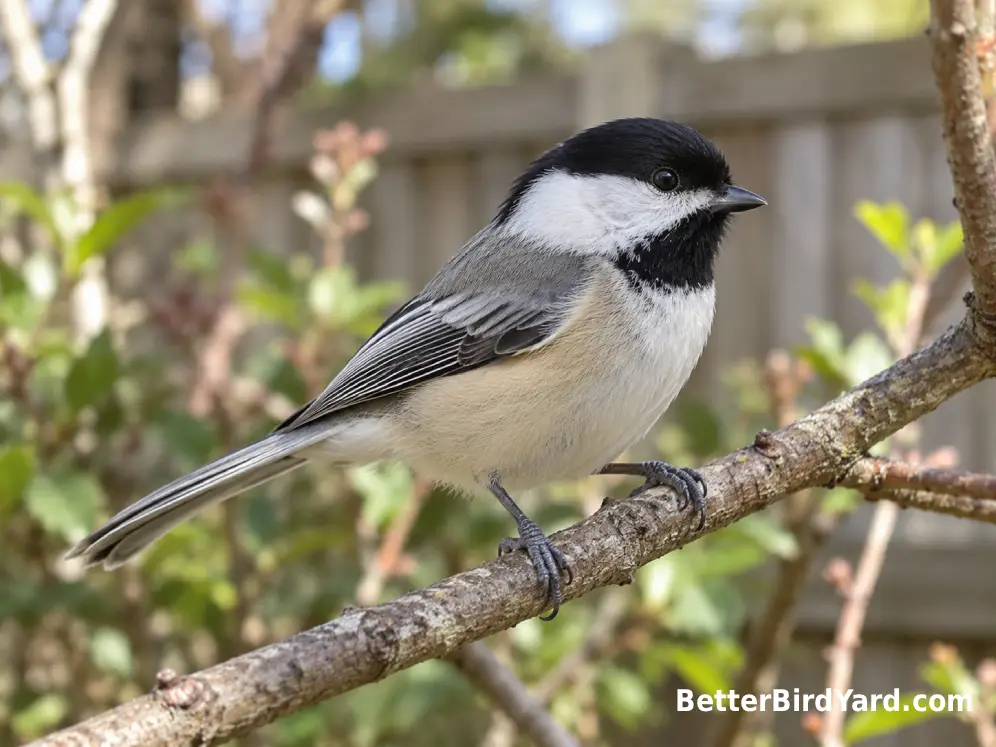
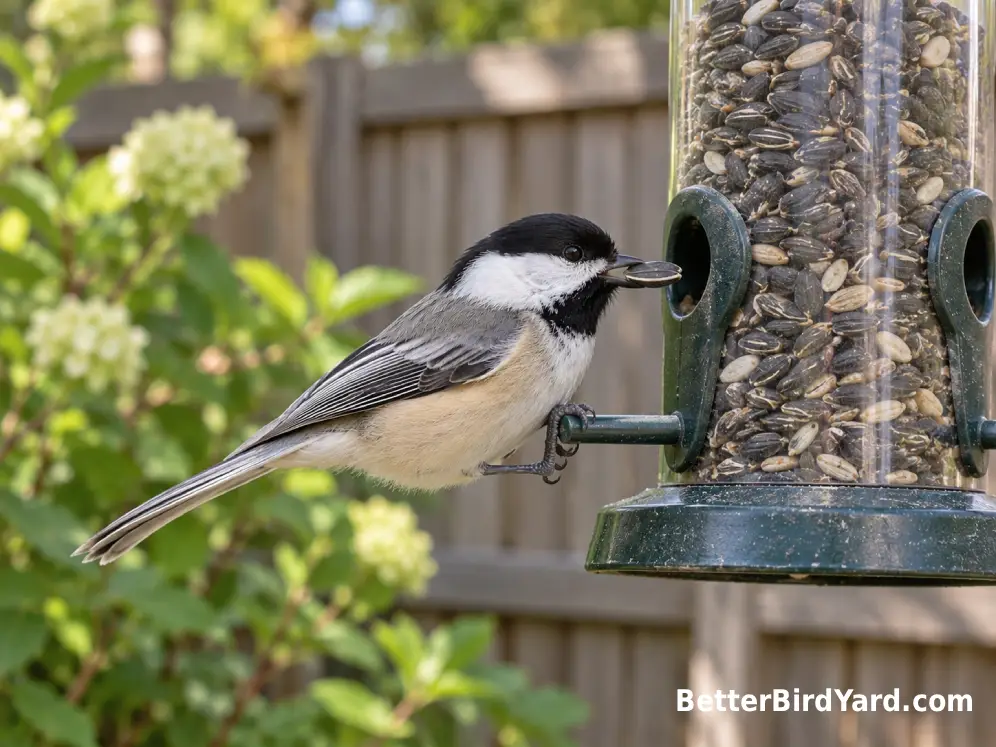
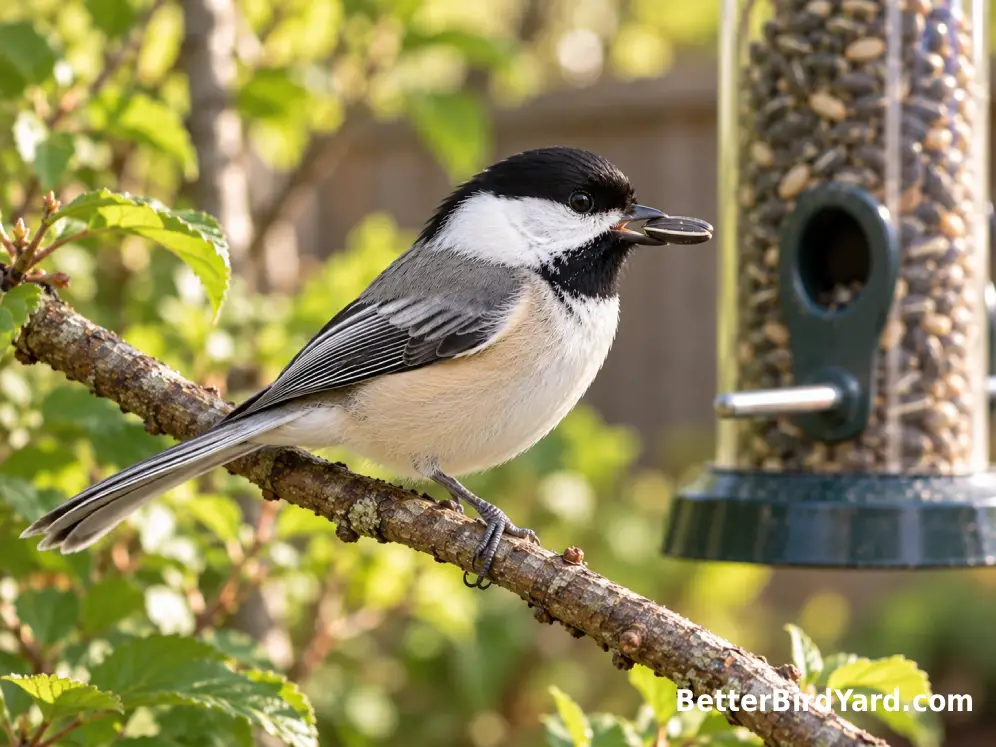
Start with the head pattern. A Black-capped Chickadee has a dark black crown and throat patch separated by large white cheeks. The back is soft gray, the wings show pale edging, and the sides of the body often have a warm buff wash. Adults are small—about 4.7 to 5.9 inches long according to the Cornell Lab—and their relatively large head, short bill, and narrow tail help create the familiar round chickadee shape.
| Field Mark | What To Look For |
|---|---|
| Head | Black cap and black throat with bright white cheeks |
| Back And Wings | Soft gray with noticeable pale or white feather edging |
| Underparts | Whitish center with buff-colored sides |
| Shape | Compact body, relatively large round head, short bill, and narrow tail |
| Movement | Quick, acrobatic hopping and hanging from twigs and branches |
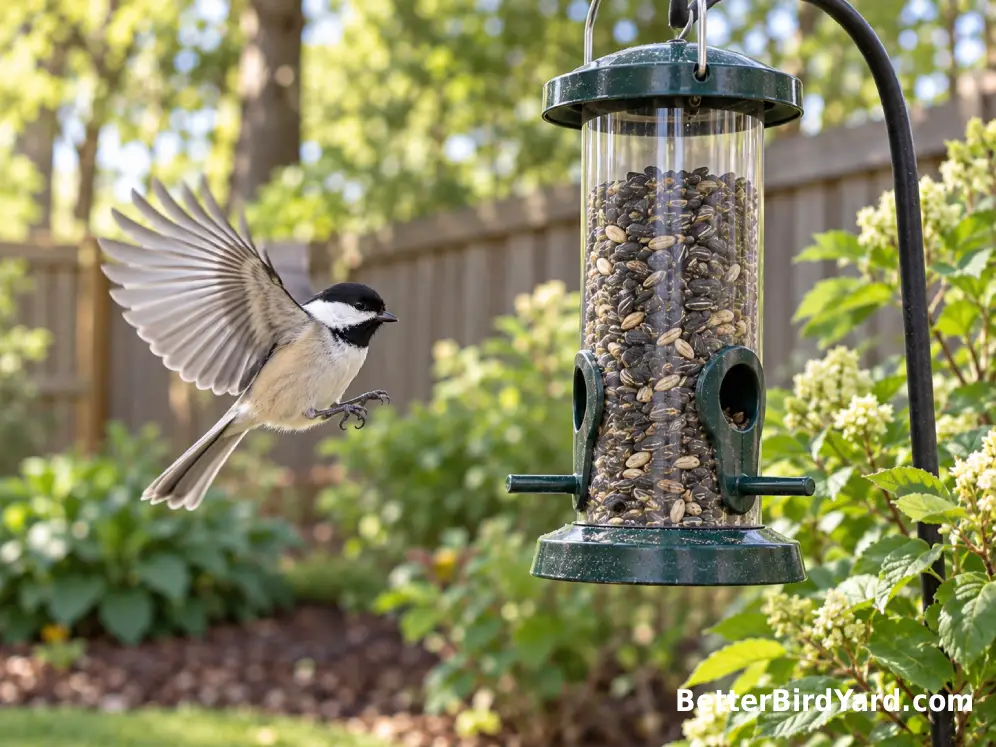
Behavior can be as useful as color. Black-capped Chickadees rarely sit at a feeder for long. A typical visit is land, choose a seed, leave, and deal with the seed on a nearby branch. They also forage actively through foliage and can hang sideways or upside down while searching branches.
Listen as well as look. Their namesake chick-a-dee call is one of the easiest backyard bird sounds to learn. They also give a clear whistled song in which the later note is lower. Once you recognize those sounds, chickadees are often easier to locate by ear than by trying to follow a tiny gray bird moving through leaves.
Where Black-Capped Chickadees Live
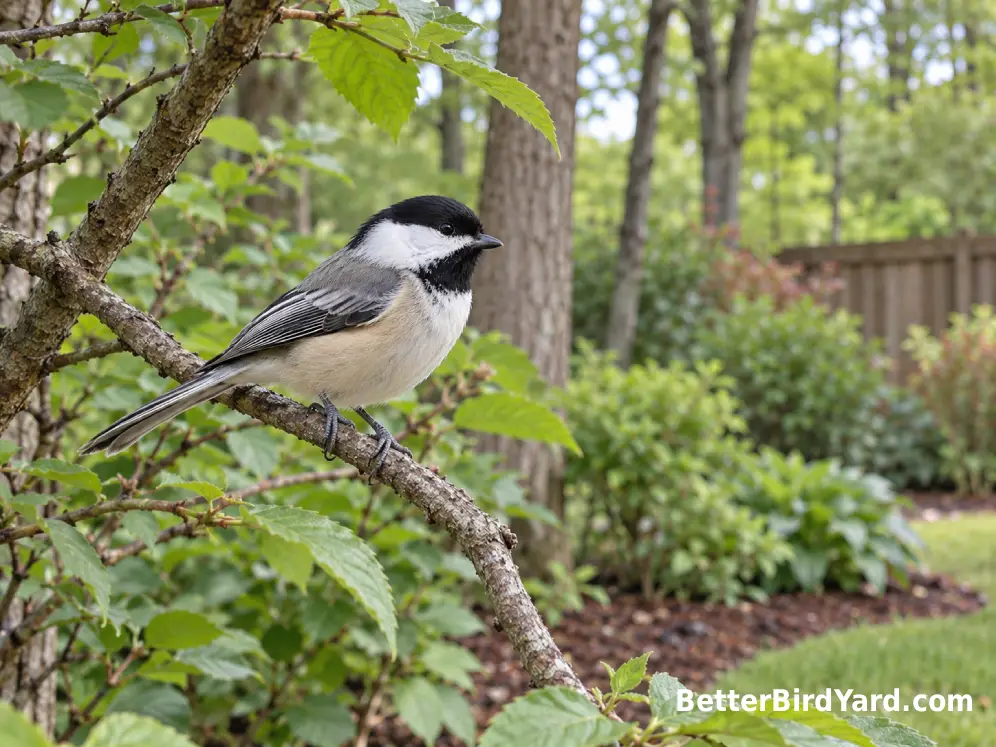
Black-capped Chickadees are birds of the northern part of the continent. In the United States, they occur widely across northern regions and extend farther south in some areas. They use deciduous and mixed forests, woodland edges, parks, shrubby areas, and residential neighborhoods where trees provide places to forage and shelter.
Most adults are year-round residents. They do not make the predictable north-south migration associated with birds such as warblers. Young chickadees can sometimes travel substantial distances during irregular movements known as irruptions, which means abundance can change from one year to another even at the same backyard.
If you live farther south, be careful about assuming every black-and-white chickadee is a Black-capped. The Carolina Chickadee occupies much of the southeastern United States and looks remarkably similar. Their ranges have only limited overlap, making location one of the most useful identification clues. Where the two species meet, they can hybridize, so identification becomes more complicated.
Black-capped Chickadees usually show more pale edging on the wing feathers than Carolina Chickadees, while the typical songs also differ. Those clues are useful, but birds in the overlap zone can learn unusual songs or have intermediate characteristics. If you live near that boundary, checking a current regional range map is more reliable than relying on a single field mark.
What Black-Capped Chickadees Eat
A feeder is only one part of a chickadee’s food supply. In warmer parts of the year, Black-capped Chickadees eat large amounts of insects, spiders, and other small invertebrates. Their diet shifts toward more seeds, berries, and other plant material during winter, although animal food remains important.
That is why a bird-friendly yard works better when it provides both feeder food and natural foraging habitat. Shrubs, trees, leaf surfaces, bark, and other vegetation can support the small creatures chickadees search for throughout the day.
Useful feeder foods include:
- Black-oil sunflower seed or hulled sunflower kernels.
- Plain, unsalted peanuts or peanut pieces.
- Suet, particularly when conditions are cool enough to keep it fresh.
- Mealworms as an optional supplemental food.
Cornell lists sunflower, peanuts, suet, and mealworms among foods Black-capped Chickadees take at feeders, while Project FeederWatch notes that black-oil sunflower is a favorite feeder food for chickadees and many other backyard birds.
You may notice a chickadee take one sunflower seed and immediately disappear. That does not necessarily mean it disliked your feeder. Black-capped Chickadees commonly carry food away, and they also cache individual food items for later use.
How To Attract Black-Capped Chickadees Responsibly
You do not need a large wooded property to make a space more useful to chickadees. A suburban lot, townhouse patio, or small rental garden can offer food and cover as long as the setup is simple enough to maintain safely.
- Start with a small hanging or tube feeder and offer quality sunflower seed.
- Place some vegetation nearby so birds have cover and natural foraging opportunities.
- Add a clean water source if you can maintain it regularly.
- Keep seed dry and remove accumulated hulls and spoiled food below the feeder.
- Reduce window-collision risks before encouraging heavy bird activity next to glass.
Cornell notes that Black-capped Chickadees readily use small hanging feeders and even window-mounted feeders. If a feeder is near a window, however, placement matters. Cornell and Audubon guidance commonly recommends keeping feeders within about 3 feet of the glass or more than about 30 feet away, along with effective exterior window treatments where needed. The goal is to reduce the chance that a startled bird can accelerate into reflective glass at dangerous speed.
For a straightforward food setup, our backyard bird seed guide can help you compare sunflower and other common feeder foods.
BetterBirdYard note: in a small space, we would rather maintain one clean feeder well than hang several feeders that become difficult to wash, refill, and monitor. Chickadees do not require a complicated feeding station.
Habitat helps too. Cornell specifically notes willow, alder, and birch as useful chickadee habitat plants. Rather than assuming one plant fits every part of the country, choose locally appropriate native trees and shrubs with help from your state extension service or native-plant resources.
How Black-Capped Chickadees Nest
Black-capped Chickadees nest inside cavities rather than building an exposed nest in the fork of a tree. They may use small natural cavities, old woodpecker holes, soft rotten wood that they can enlarge themselves, or properly designed nest boxes. Both members of a pair can participate in excavating the cavity, while the female constructs the nest inside.
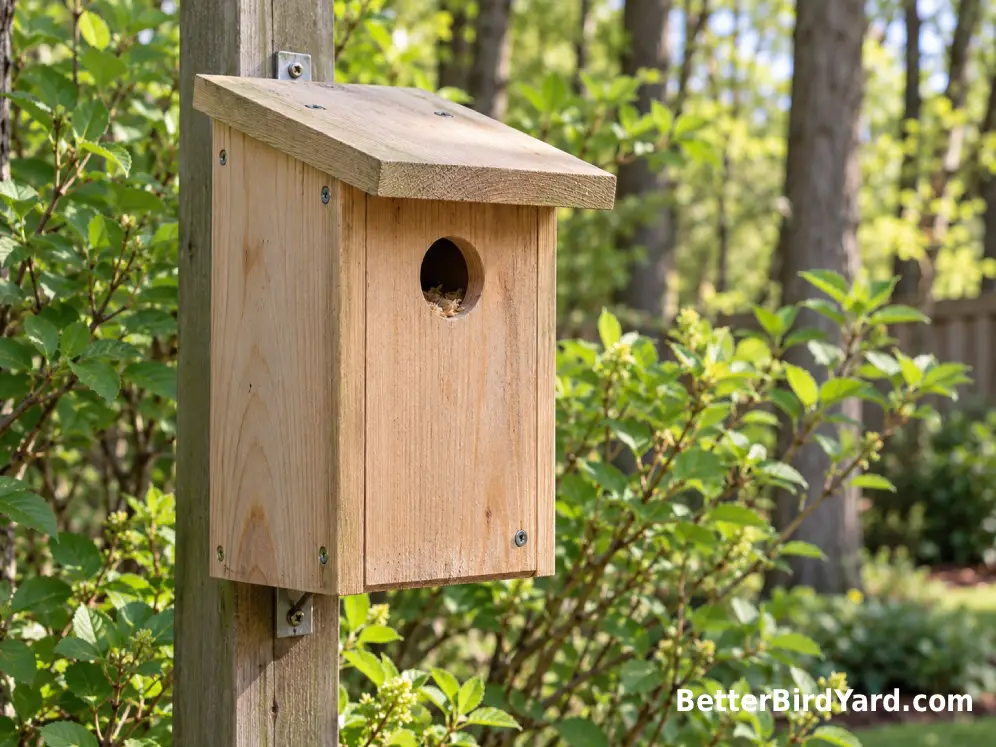
If you want to provide a nest box, use a design made specifically for chickadees instead of a decorative birdhouse. Cornell’s NestWatch guidance for Black-capped Chickadees specifies an entrance about 1 1/8 inches across, a box mounted roughly 5 to 15 feet above the ground, and about an inch of wood shavings on the floor. Cornell also recommends predator protection for nest boxes.
Do not be disappointed if a box remains empty. Nest-site selection depends on local habitat, territory, competitors, predators, and the number of suitable natural cavities already available. A chickadee visiting your feeder is not a guarantee that it will nest nearby.
Existing habitat can be just as valuable. Where it is safe to do so and does not create a property hazard, retaining suitable dead wood or decaying branches can preserve natural cavity opportunities. Cornell notes that Black-capped Chickadees frequently excavate in dead snags or rotten branches.
Common Feeder Mistakes To Avoid
Chickadees are relatively easy feeder visitors, which can tempt beginners to focus on the seed and forget the maintenance. Cleanliness matters because feeders concentrate birds around shared surfaces and food. Project FeederWatch currently recommends cleaning seed and suet feeders regularly—roughly every week or two as a general example—and more often during heavy use or wet weather. Feeders should be scrubbed, rinsed thoroughly, and allowed to dry completely before fresh food goes back in.
A few habits make a large difference:
- Do not leave wet, moldy, or spoiled seed in a feeder.
- Sweep or rake accumulated seed hulls, droppings, and old food from underneath.
- Choose feeders you can actually take apart and wash.
- Keep fresh seed protected from moisture during storage.
- Watch visiting birds closely enough to notice unusual behavior or visible signs of illness.
If birds at your feeding area appear unusually lethargic, have crusty or swollen eyes, abnormal growths, or other concerning signs, do not try to diagnose or treat them yourself. Clean feeders and baths promptly, consider temporarily reducing or removing feeding as appropriate, and check guidance from Project FeederWatch and your local or state wildlife agency. A bird that appears to need direct intervention should be referred to a licensed wildlife rehabilitator or other qualified local professional rather than casually handled.
Why Chickadee Behavior Is So Interesting To Watch
Watch a chickadee flock for a few minutes and feeder visits begin to look less random. Black-capped Chickadees are social birds outside the breeding season, and they often travel with other small woodland species such as nuthatches, woodpeckers, kinglets, and creepers.
They are also food cachers. Instead of eating every item immediately, a chickadee may hide individual seeds or other foods in separate locations and retrieve them later. That quick grab-and-go routine at a feeder is therefore part of a much larger daily search for food.
Their vocal behavior is another reason they are rewarding birds to learn. The familiar chick-a-dee call is used in social and alarm situations, and research summarized by Cornell indicates that the number of dee notes can change with perceived threat. Other birds in mixed flocks may respond to chickadee alarm calls as well.
For beginners, that makes the Black-capped Chickadee a useful bird to learn first. Recognizing its calls can help you notice an entire flock moving through a yard even before you see the first bird.
The Black-Capped Chickadee As Massachusetts’ State Bird
The Black-capped Chickadee has a special connection with Massachusetts. The Secretary of the Commonwealth records that it was adopted as the Massachusetts state bird on March 21, 1941. MassWildlife continues to identify the Black-capped Chickadee as the state’s bird and notes that it can be seen in Massachusetts throughout the year.
That designation fits a bird many Massachusetts residents can encounter without traveling to a remote wildlife area. Wooded neighborhoods, parks, mature yards, and other places with trees can all provide chickadee habitat. For someone learning backyard bird identification, a familiar year-round species is a useful reference point for recognizing size, calls, flock behavior, and feeder activity.
You may occasionally see the name written without its hyphen as black capped chickadee, but Black-capped Chickadee is the standard English spelling used by major North American bird references. Its current scientific name is Poecile atricapillus; for everyday backyard identification, the black cap, white cheeks, voice, behavior, and geographic range are considerably more useful than memorizing the Latin name.
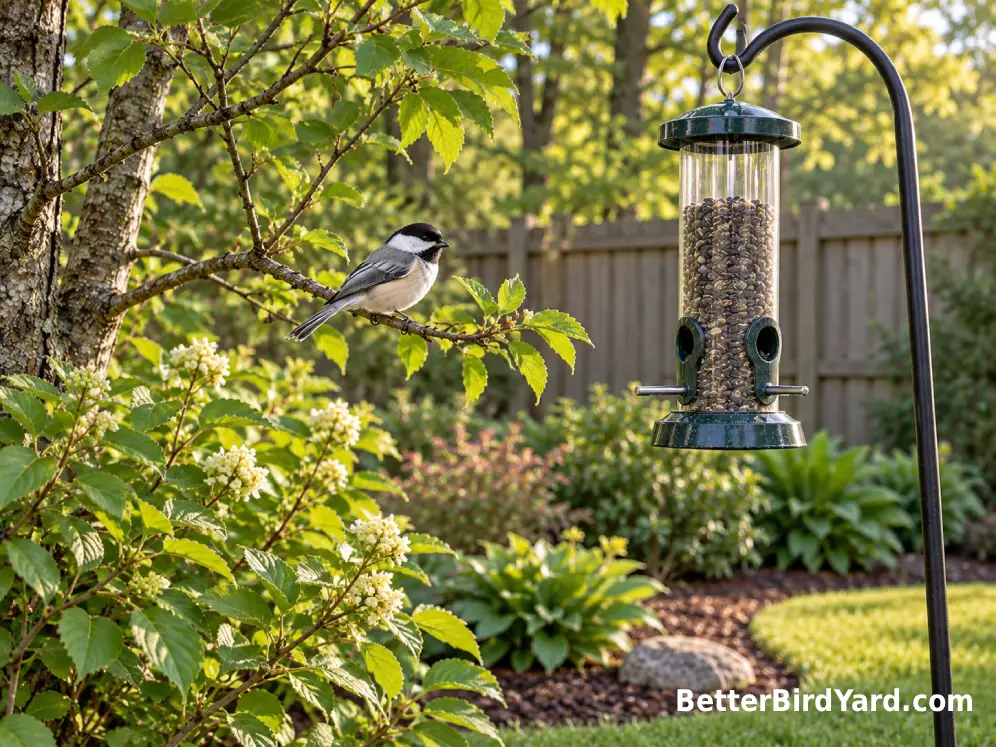
A Small Backyard Bird Worth Watching Closely
Supporting Black-capped Chickadees does not require turning your yard into a complicated feeding station. Within their range, a clean feeder with sunflower seed, suitable woody vegetation, safe water, careful window management, and good feeder hygiene can make an ordinary backyard or patio more useful to visiting birds.
Just as important, leave room for the birds to behave like wild birds. Chickadees obtain much of their food away from feeders, search bark and foliage for insects, use natural cover, form winter flocks, cache food, and choose nesting territories according to conditions that extend well beyond one property. Feeders are a supplement, not the whole habitat.
If you learn only a few clues—the bold black-and-white head, gray body, quick grab-and-go feeder visits, acrobatic movements, and familiar calls—you will have a strong starting point. From there, watching individual Black-capped Chickadees becomes one of the easiest ways to notice how much activity can be packed into one very small backyard bird.