Hummingbird Feeders With Bee Guards: What Helps
Bees on a hummingbird feeder usually mean one thing: sugar water is easy to smell, reach, or leak. The best way to keep bees away from hummingbird feeders is not to spray, trap, or fight the insects. It is to make the nectar harder for them to access while keeping the feeder clean, shaded, and easy for hummingbirds to use.
That matters because bees, wasps, and hummingbirds are all part of a living backyard. Honey bees and native bees help pollinate plants. Wasps can be beneficial too, although some become a real sting concern when nests are close to people. The goal is a practical balance: protect the feeder experience for hummingbirds, reduce insect pressure around patios and walkways, and avoid harming pollinators unnecessarily.
For the nectar itself, keep the recipe simple. Audubon recommends a one-to-four solution of refined white sugar to water and advises against red dye, honey, brown sugar, molasses, or artificial sweeteners. For a full refresher, see our hummingbird nectar recipe.
Quick Answer: The Best Ways To Keep Bees Away
If bees are covering your hummingbird feeder, start with the feeder design and the leak problem. Most bee trouble gets worse when nectar drips onto the outside of the feeder, pools in decorative flower ports, or sits close enough to the opening that insects can reach it.
Here is the simple order we would try in an ordinary backyard, balcony, or patio:
- Switch to a saucer-style feeder or another design where nectar sits below the feeding ports.
- Use intact bee guards or built-in bee-resistant ports that do not let insects reach the nectar.
- Fix leaks, cracks, loose bases, and warped lids before refilling.
- Hang the feeder in bright shade instead of hot direct sun.
- Move a problem feeder to a nearby new spot after cleaning it.
- Keep nectar fresh and clean the feeder often, especially in warm weather.
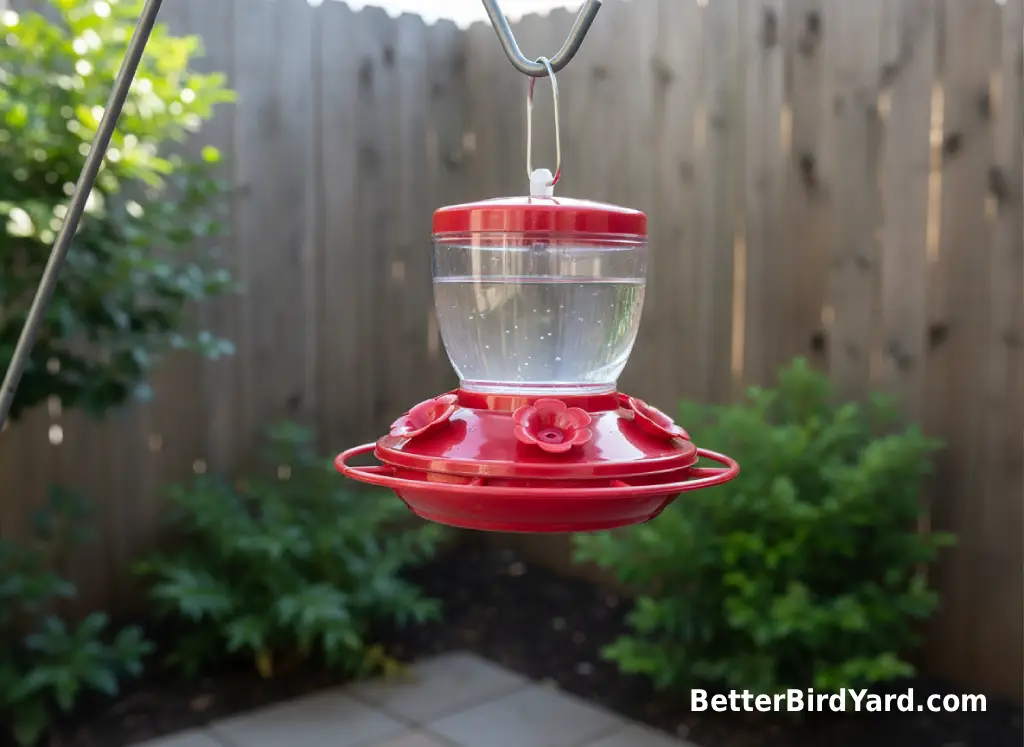
Why Bees And Wasps Find Hummingbird Feeders
Bees and wasps are not visiting your feeder because they are trying to bother hummingbirds. They are finding a concentrated sugar source. If nectar is exposed, leaking, or drying into a sticky film on the outside of the feeder, insects may keep returning even after you refill it.
Late summer can be especially frustrating in many areas. Natural flower nectar may be less abundant, yellowjackets and other wasps may be more noticeable around sweet foods, and a feeder that was peaceful in May can suddenly look busy in August. Local conditions matter, so the pattern is not the same in every region or every year.
There is also a difference between a few insects and a true feeder takeover. A bee or two exploring the outside of a feeder is usually manageable. A thick cluster that blocks the ports, keeps hummingbirds away, or creates a sting risk near a patio needs a reset.
| What You See | Likely Cause | Best First Fix |
|---|---|---|
| A few bees checking the feeder | Normal exploration or a small nectar smell | Wipe the feeder exterior and watch for leaks |
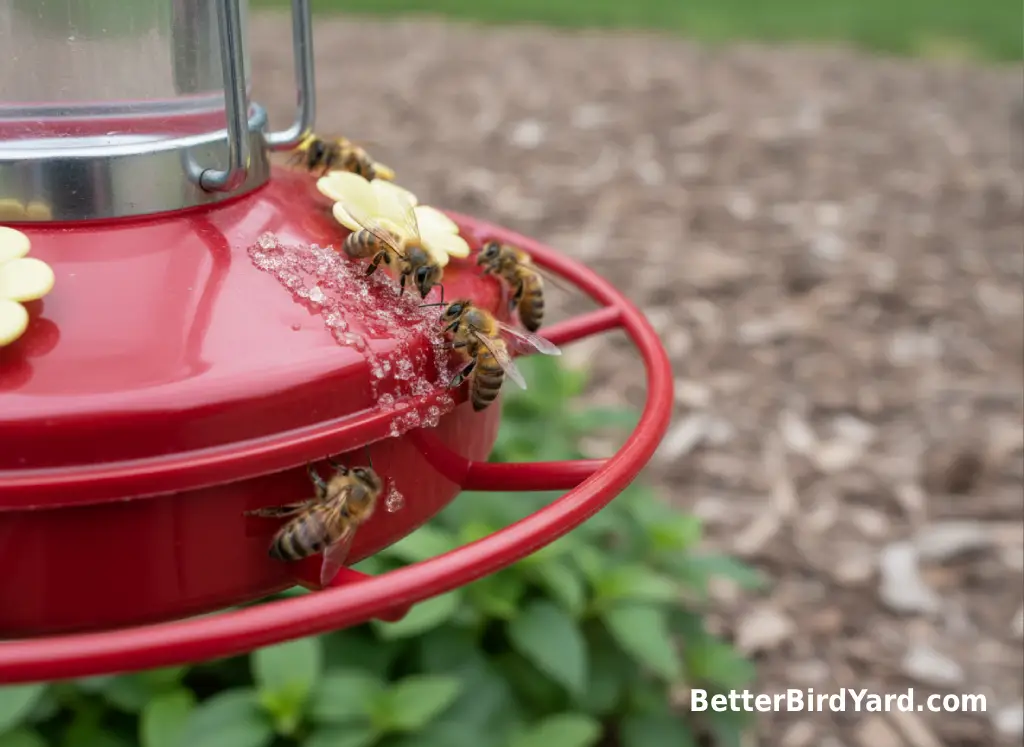
| Bees clustered at one port | Nectar is reachable through that opening | Check the bee guard or replace the damaged port |
| Wasps around the base or seam | Sticky nectar on the outside or a small leak | Empty, wash, reassemble, and move the feeder |
| Insects return immediately after refilling | They learned the feeder location | Clean the feeder and hang it in a nearby new spot |
Choose A Feeder That Makes Nectar Hard To Reach
The most useful hummingbird feeders with bee guards share the same basic idea: hummingbirds can reach the nectar with their long bills and tongues, while bees and wasps cannot reach far enough through the port.
Cornell Lab’s All About Birds notes that bottle-style hummingbird feeders can leak when sun warms the air trapped inside the bottle, while saucer-style feeders with ports on top are often fairly bee- and wasp-proof. That is one reason many backyard bird watchers switch to a saucer feeder when bees and hummingbird feeders become a repeated problem.
When comparing bee proof hummingbird feeders, look for practical features rather than dramatic claims:
- A shallow saucer or tray design with nectar below the ports.
- Feeding ports that do not let nectar sit exposed on top.
- Removable bee guards that are easy to clean and replace.
- A tight-fitting lid and base that do not warp or drip.
- Simple parts you can scrub without special tools.
- An ant moat, either built in or easy to add above the feeder.
Glass hummingbird feeders with bee guards can work well if the base seals tightly and the ports stay clean. Plastic feeders can also work well when they are sturdy, shaded, and easy to disassemble. The best choice is the one you will actually clean thoroughly and inspect for leaks.
Be cautious with brand-specific replacement parts. A bee guard for hummingbird feeders may fit one model but not another, even if the color and shape look similar. If a guard sits loose, cracks, or falls out during cleaning, insects may reach the nectar again.
A Simple Step-By-Step Fix For A Bee-Covered Feeder
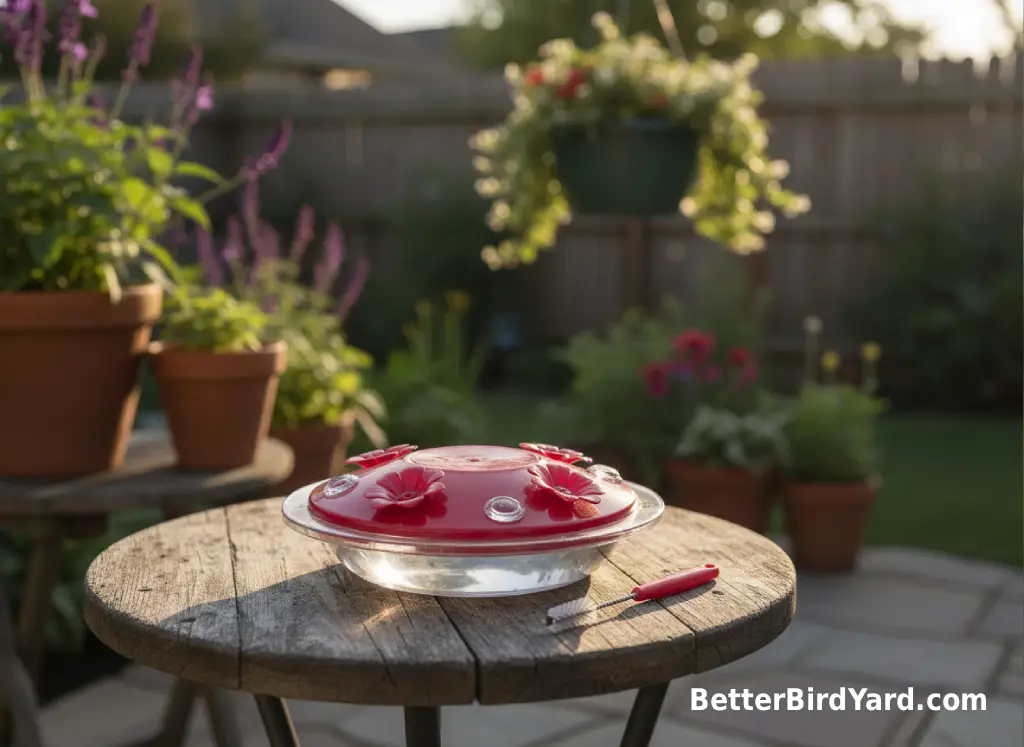
When bees are already covering the feeder, the safest fix is to remove the attraction, clean the feeder, and restart with a better setup. Avoid waving, swatting, or spraying around the feeder. That can make the area more chaotic for people, hummingbirds, and insects.
- Take the feeder down when hummingbirds are not actively feeding, if you can do so safely.
- Empty old nectar and rinse away sticky residue from the outside.
- Take the feeder apart and scrub ports, seams, bee guards, and the underside of the lid.
- Check for cracked plastic, warped seals, loose bee guards, and ports that hold puddles.
- Refill with fresh one-to-four sugar water after the feeder is clean and cool.
- Move the feeder to a nearby new location in light shade.
- Watch for the first drip. If nectar appears outside the feeder, fix the leak before rehanging.
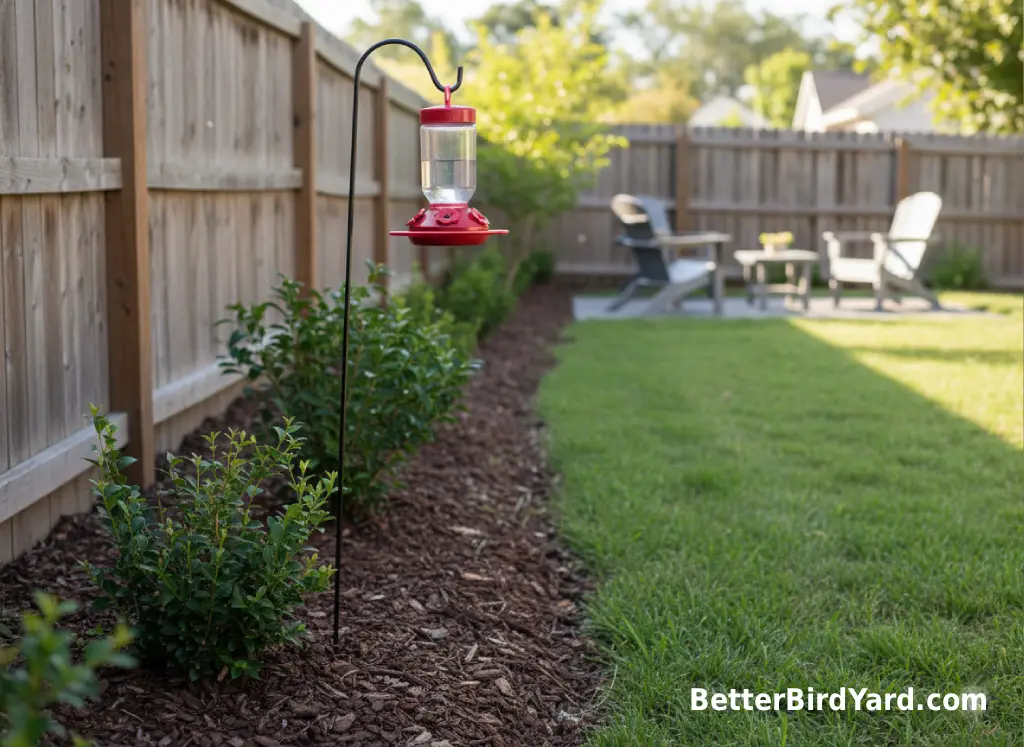
Moving the feeder only a short distance can help because insects often return to the old spot first. In a small yard, that might mean shifting it from a porch rail to a shepherd’s hook near shrubs. On a balcony, it may mean moving it from one side of the railing to the other while keeping it away from doors and seating.
Use Bee Guards, Ant Moats, And Placement The Right Way
Bee guards for hummingbird feeders are small barriers that sit over or inside the feeding ports. They are useful when they are clean, intact, and matched to the feeder. They are less useful when nectar leaks around them or dries into the guard openings.
Ant moats solve a different problem. They stop ants from crawling down the hook or hanger into the feeder. Cornell notes that some saucer feeders include small moats that can be filled with regular tap water. Keep the moat filled, but do not add oil, sticky substances, or pesticides where birds could contact them.
Placement also matters. A feeder in hot, direct afternoon sun is more likely to spoil quickly and may be more likely to leak if it is a bottle style. Bright shade is usually a better compromise: visible enough for hummingbirds, cooler for nectar, and less likely to create sticky drips.
Good placement looks like this:
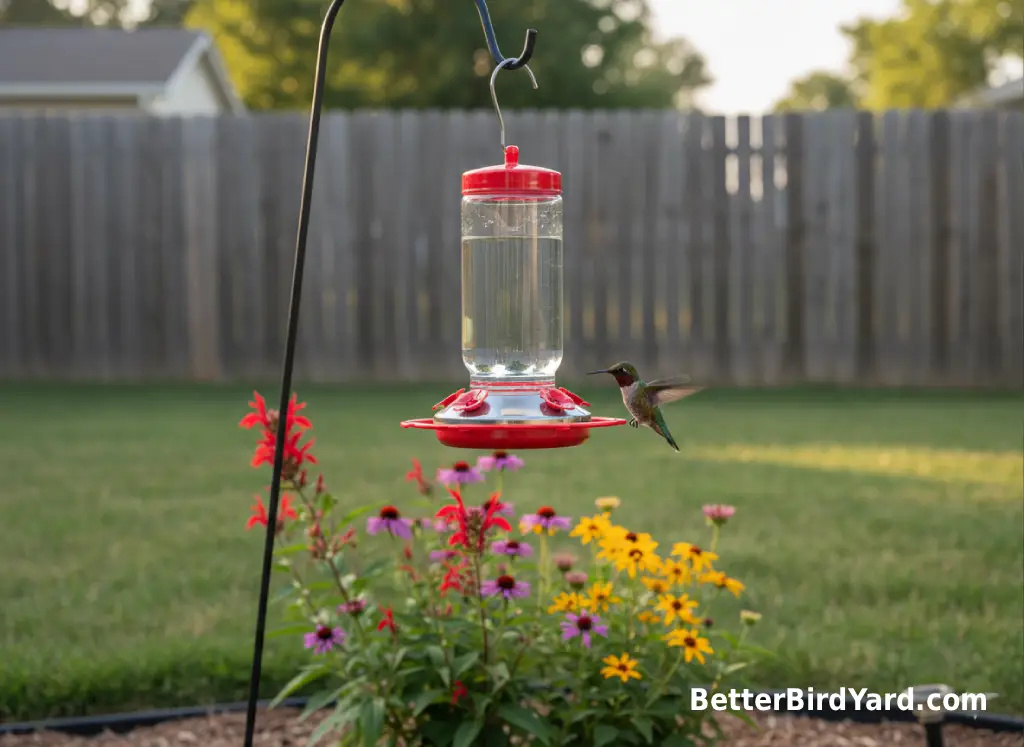
- Near shrubs or small trees where hummingbirds have cover, but not buried inside dense foliage.
- Away from doors, grills, trash cans, compost bins, and outdoor dining tables.
- Far enough from windows that you can treat risky glass if birds fly toward reflections.
- Easy for you to reach for cleaning every few days in warm weather.
If your yard has heavy bee activity near blooming plants, do not hang the hummingbird feeder directly inside the busiest flower patch. Let the flowers serve pollinators, and place the feeder a little apart so hummingbirds have a clearer approach.
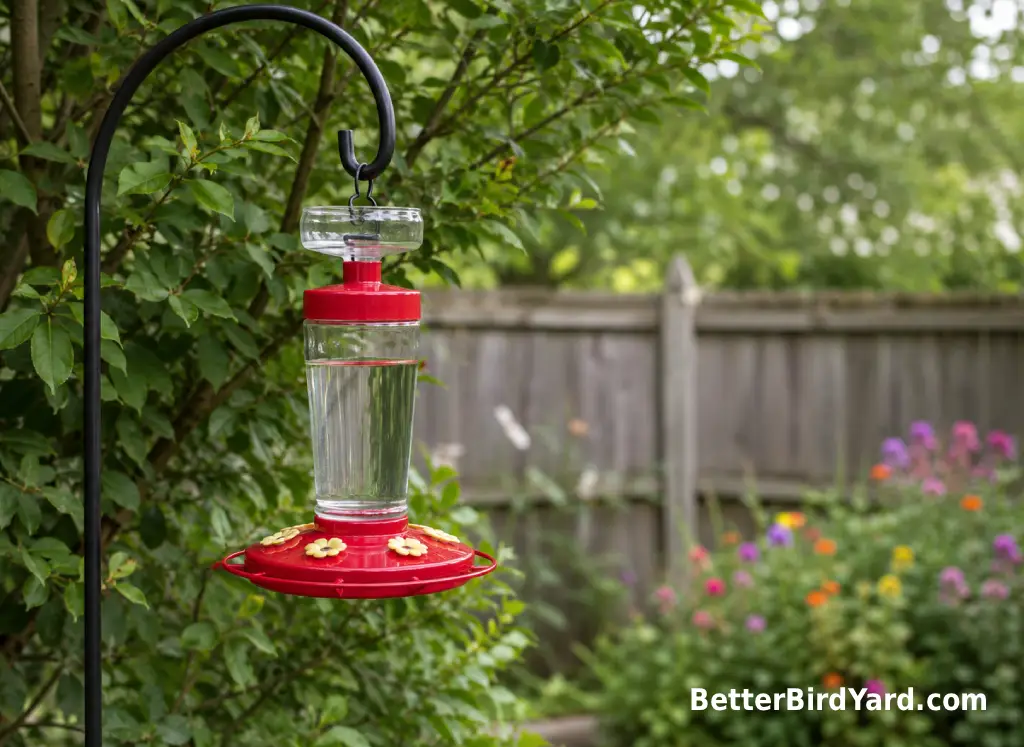
Keep Nectar Fresh And The Feeder Clean
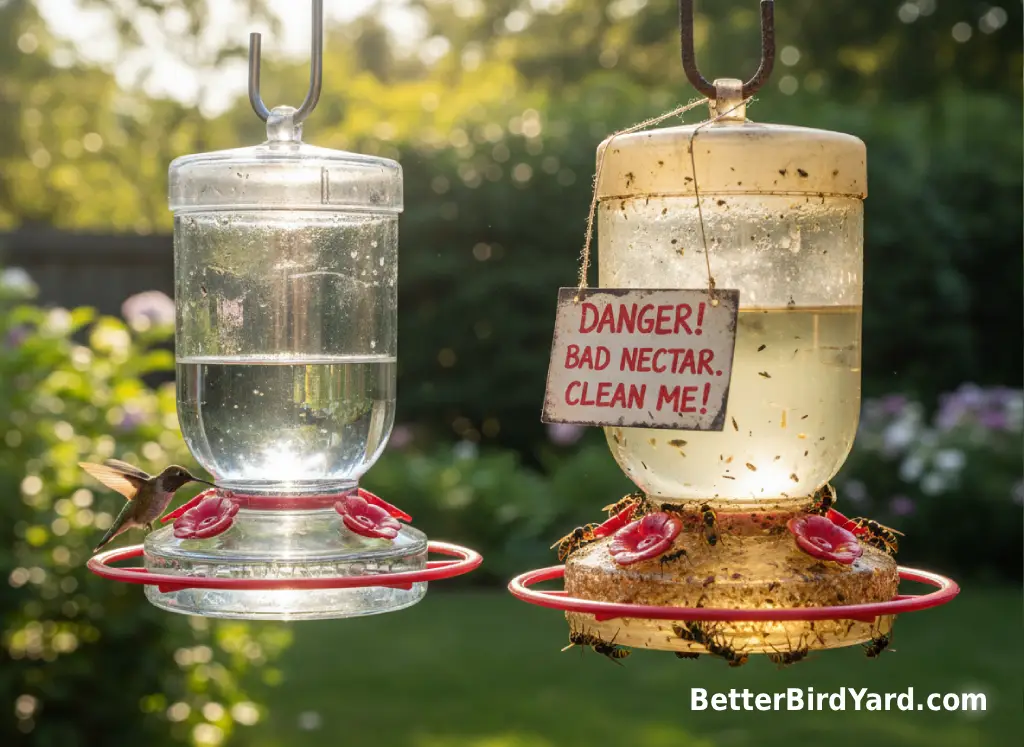
Fresh nectar is not just about hummingbird health. It also helps with insect control. Old, cloudy, fermented, or spilled nectar smells stronger and leaves more residue around ports and seams.
Cornell Lab’s All About Birds advises changing sugar water every three to five days to prevent mold and fermentation, and more often when temperatures are over 90 degrees Fahrenheit. It also recommends taking feeders apart for cleaning and scrubbing with hot water and a brush. For a deeper cleaning routine, see our guide to cleaning hummingbird feeders.
In real backyard use, the schedule depends on heat, sun, feeder size, and how fast the birds drink. A big feeder that sits half-full for days is not better than a small feeder you refill often. For many homes, especially beginners, a smaller feeder is easier to keep fresh and less likely to turn into a sticky insect stop.
Clean sooner if you notice any of these signs:
- Cloudy nectar.
- Black specks, stringy residue, or visible mold.
- Sticky ports or a shiny sugar film outside the feeder.
- A sour or fermented smell.
- Bees or wasps returning to the same seam or port repeatedly.
Do not use honey to make nectar for hummingbirds. Cornell warns that diluted honey can encourage bacteria and fungus, and Audubon recommends refined white sugar rather than honey, brown sugar, molasses, or artificial sweeteners.
What Not To Do Around Bees, Wasps, And Hummingbirds
It is understandable to feel annoyed when bees or wasps take over a feeder. Still, the wrong fix can harm pollinators, contaminate the feeder, or create more risk around the patio.
Avoid these common mistakes:
- Do not spray insecticide on or near hummingbird feeders.
- Do not coat feeder hooks, ports, or lids with oil, grease, petroleum jelly, or sticky products where birds may touch them.
- Do not make extra-strong nectar to distract insects or attract more hummingbirds.
- Do not add honey, red dye, flavoring, or commercial additives to homemade nectar.
- Do not leave a leaking feeder up because hummingbirds are still visiting it.
- Do not swat at bees or wasps around a feeder near children, pets, or seating areas.
If ants are part of the problem, use a water-filled ant moat rather than sticky barriers. If wasps are also attracted to fallen fruit, spilled drinks, or open trash nearby, clean those up first. University of Minnesota Extension notes that dropped and decaying fruit can attract wasps and bees.
Small-Yard And Patio Tips For Renters
Renters and small-space bird watchers often have less room to experiment. A bee-covered feeder on a balcony can be much more stressful than one at the back edge of a large yard. The fix is to go smaller, cleaner, and more controlled.
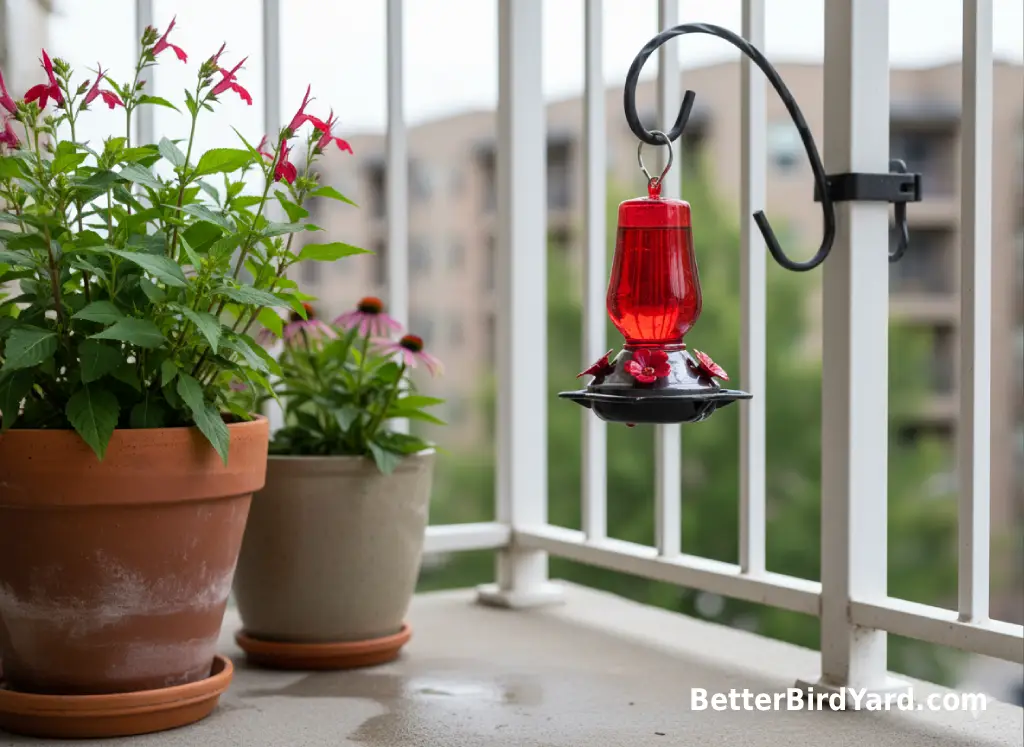
Use a small saucer feeder instead of a large bottle feeder. Fill it with only the amount hummingbirds are likely to drink before the next cleaning. Hang it where you can reach it without leaning dangerously over a railing, and keep it away from the door you use most often.
On patios and balconies, a few details make a big difference:
- Choose a feeder with fewer parts and no decorative crevices that trap sugar water.
- Place potted flowers a little away from the feeder so pollinators have a separate nectar source.
- Rinse sticky patio surfaces after spills.
- Keep trash, recycling, fruit scraps, and sweet drinks covered.
- Check lease, HOA, balcony, or building rules before adding hooks or exterior hardware.
In a small space, do not try to run several hummingbird feeders close together unless you can clean all of them well. One tidy feeder in the right place usually beats three sticky feeders that create more insect traffic than hummingbird activity.
When Bees Or Wasps Become A Safety Issue
Most bee visits to hummingbird feeders are a nuisance, not an emergency. But safety comes first if someone in the household has a serious sting allergy, if wasps are nesting near a doorway or play area, or if insects are concentrating where people have to walk.
University of Minnesota Extension notes that wasps generally do not bother people when nests are away from human activity, but nests close to active areas may need to be eliminated to reduce sting risk. The same source says honey bee and bumble bee nests are not usually a problem and should be preserved when possible.
If you suspect a nest in a wall, roofline, shed, ground hole, or dense shrub near the feeder, do not poke it, hose it, or try to seal the entrance while insects are active. Move the hummingbird feeder away from that area and contact a qualified local pest professional, beekeeper, extension office, landlord, property manager, or local authority as appropriate for your situation.
For honey bees specifically, a local beekeeper or bee removal professional may be a better call than a general spray treatment, especially if the colony is accessible and not creating an immediate safety issue. For aggressive wasps near daily activity areas, professional guidance is often the safer choice.
Final Thoughts
Keeping bees away from hummingbird feeders is mostly about removing easy sugar access. Use a feeder that does not leak, choose ports or bee guards that keep nectar out of reach, hang the feeder in light shade, and clean it before sticky residue builds up. Those small habits usually solve more problems than any gadget by itself.
If you are shopping for the best bee proof hummingbird feeders, focus on saucer-style designs, tight seals, easy cleaning, replaceable bee guards, and a size you can maintain in warm weather. If you already own a feeder, inspect it carefully before replacing it. A cracked base, missing guard, or sun-warmed bottle may be the real reason bees keep coming back.
Most importantly, keep the solution bird-safe and pollinator-aware. Hummingbirds get a cleaner feeder, bees and wasps are not needlessly harmed, and your yard stays calmer for everyone using the space.