Hummingbird Nest And Eggs: What Backyard Birders Should Know
A hummingbird nest is one of the easiest backyard wonders to miss. It is tiny, camouflaged, and often tucked on a slender branch where most people would never think to look. If you find a hummingbird nest and eggs in your yard, the best response is usually simple: admire from a distance, avoid touching anything, and let the female hummingbird do her work.
In the United States, the exact nesting season, nest location, and timing vary by species and region. Ruby-throated Hummingbirds are the familiar breeding hummingbirds for much of the eastern U.S., while Anna’s, Black-chinned, Allen’s, Rufous, and other species nest in parts of the West and Southwest. Across species, though, the pattern is similar: a female builds a small cup nest, lays tiny white eggs, incubates them, and raises the young without help from the male.
This guide explains what hummingbird nests and eggs look like, where hummingbirds nest, how big hummingbird eggs are, how long eggs take to hatch, and what responsible backyard bird watchers should do if they discover a nest close to home.
Hummingbird Nest And Eggs: The Quick Backyard Answer
A hummingbird nest is a small, flexible cup built mostly by the female from plant fibers, plant down, spider silk, and camouflage materials such as lichen or bits of leaves, depending on the species and location. Ruby-throated Hummingbird eggs are tiny, white, and about 0.5 to 0.6 inches long, with an incubation period of about 12 to 14 days, according to the Cornell Lab of Ornithology.
| Backyard Question | Practical Answer |
|---|---|
| What does a hummingbird nest look like? | A tiny cup, often camouflaged with lichens, plant fibers, and spider silk. |
| How big are hummingbird eggs? | Often about half an inch long in common North American species. |
| How many eggs do hummingbirds lay? | Usually two, though some species accounts list one to three. |
| How long do hummingbird eggs take to hatch? | Often about two to three weeks, depending on species and conditions. |
| Should you touch a hummingbird nest? | No. Observe quietly from a distance and avoid handling nests, eggs, or chicks. |
The U.S. Fish and Wildlife Service explains that most native bird nests, eggs, and young are protected under the Migratory Bird Treaty Act, and active nests with eggs or chicks should not be destroyed, moved, or collected without proper authorization.
What Does A Hummingbird Nest Look Like?
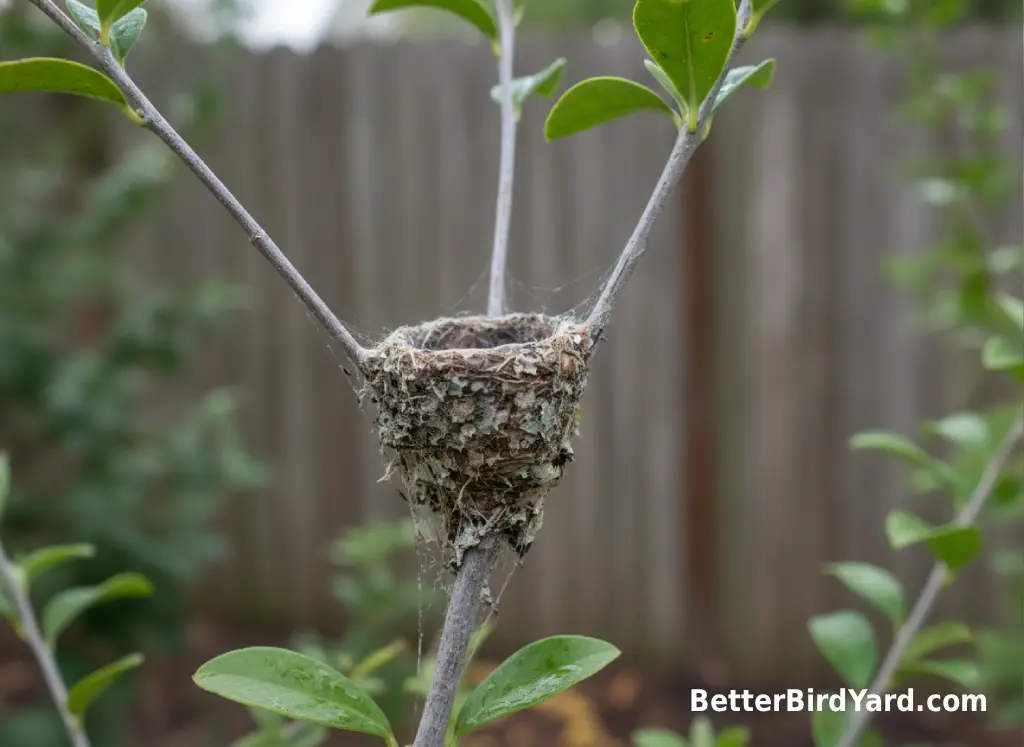
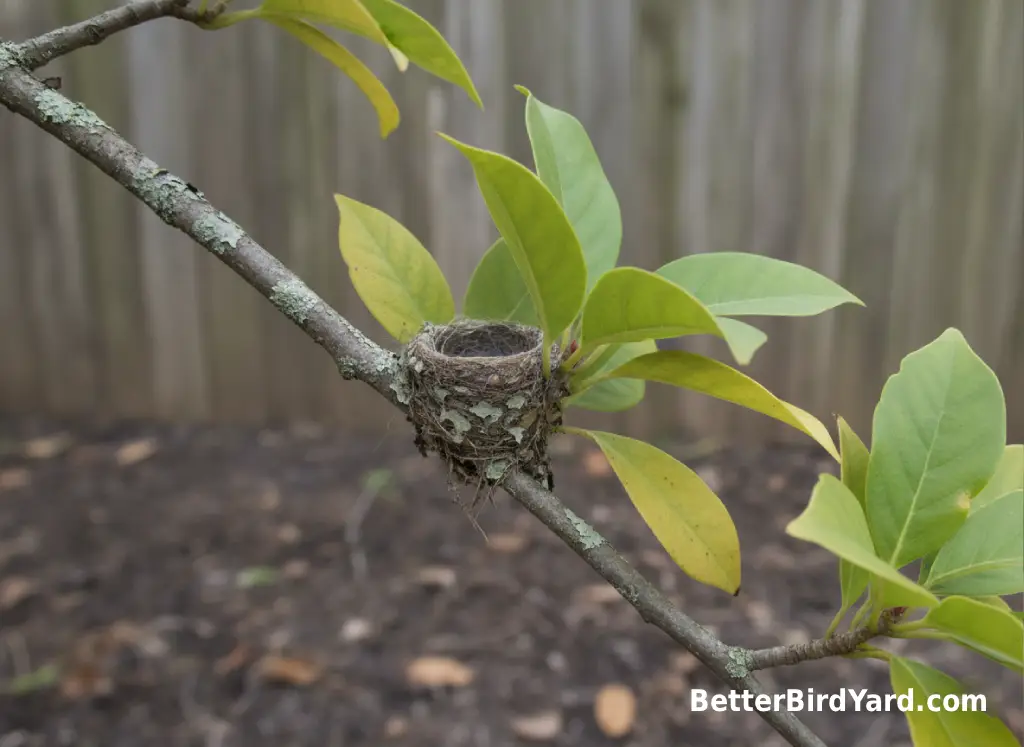
A hummingbird nest looks more like a small natural knot on a branch than a typical twig nest. Many are compact cups with a soft inner lining and an outer layer that blends into bark, leaves, and lichen. Audubon describes the Ruby-throated Hummingbird nest as a compact cup built by the female from grasses, plant fibers, spider webs, and plant down, with the outside camouflaged by lichens and dead leaves.
The spider silk matters. It helps bind the nest materials together and gives the nest some stretch as the chicks grow. Cornell notes that Black-chinned Hummingbird nests start as deep cups and stretch into wider, shallower cups as nestlings grow.
In real backyard viewing, the nest may look like a tiny gray-green bump on a branch. You may notice it only after seeing a female hummingbird return to the same spot again and again. A nest with eggs may sit lower than you expect in some western species, but it can also be well above eye level or hidden by leaves. That is why “hummingbird nest images” online can be helpful for learning the general shape, but the real thing is often much harder to spot in a living shrub or tree.
Where Do Hummingbirds Nest In Yards And Small Spaces?
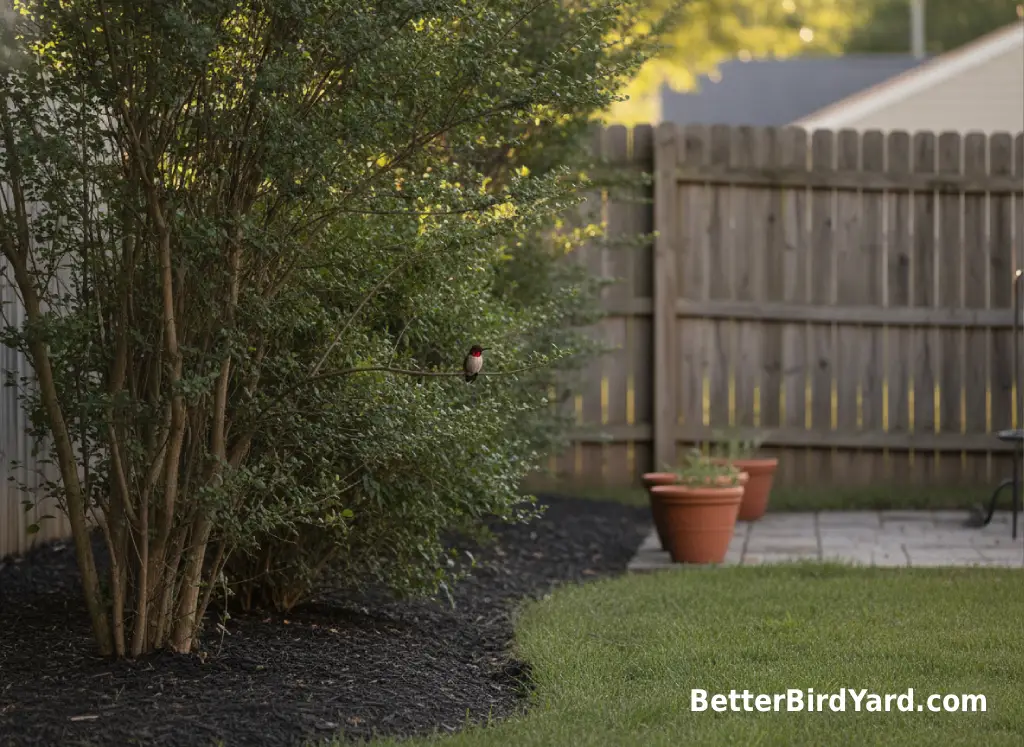
Hummingbirds usually nest in trees, shrubs, vines, or other sheltered supports rather than in birdhouses. Ruby-throated Hummingbirds often place nests in trees or large shrubs, commonly on horizontal or downward-sloping branches with leafy cover, while Anna’s Hummingbirds may nest on branches, shrubs, vines, wires, or under eaves within their range.
For a suburban homeowner or renter, the most likely nesting spots are not always dramatic. A small ornamental tree, a vine-covered fence, a sheltered shrub near a patio, or a leafy side yard can all offer the kind of cover a female may inspect. Audubon notes that hummingbirds are drawn to suburban and rural gardens that offer a mix of trees, shrubs, meadow or lawn openings, flowering plants, water, nesting sites, and perches.
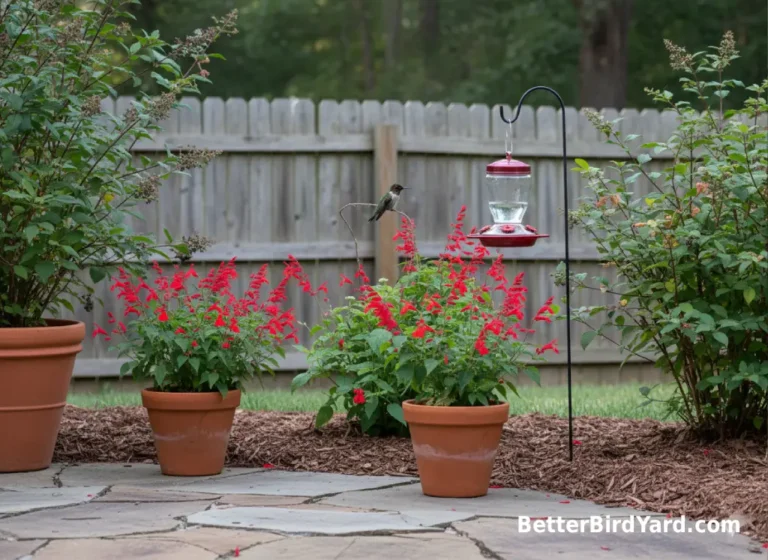
In a small outdoor space, think in layers rather than size. A balcony with a few nectar-rich pots may attract passing hummingbirds, but a yard with shrubs, small trees, perches, and nearby flowers is more likely to offer nesting cover. No yard can guarantee nesting, and results vary by region, species, predators, weather, and the surrounding habitat.
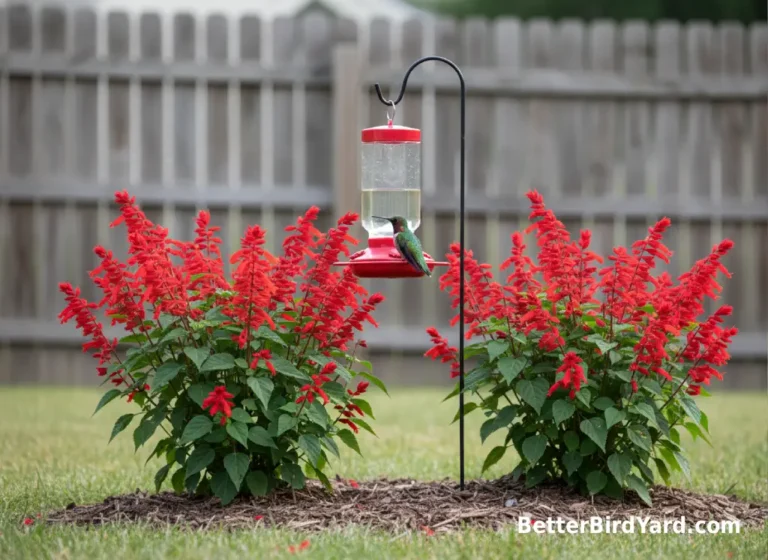
A practical BetterBirdYard approach is to provide safe habitat and then step back. Plant native nectar flowers where you can, keep shrubs from being over-pruned during nesting season, avoid broad insecticide use, and give any active nest a quiet buffer.
Hummingbird Egg Size, Color, And Clutch Basics
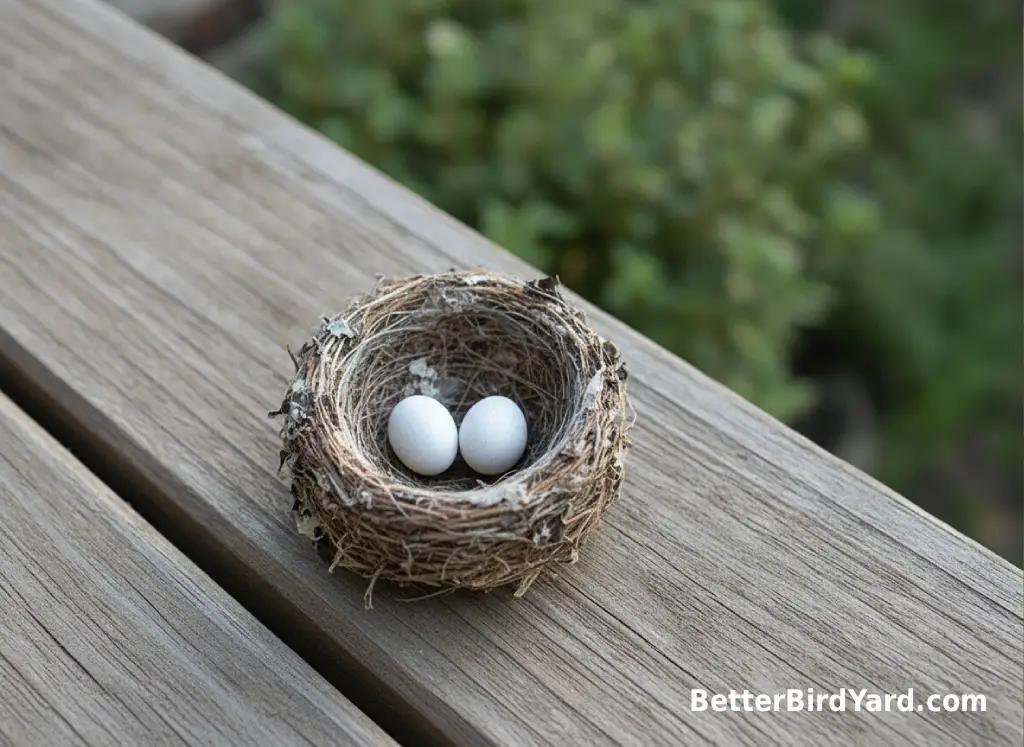
Hummingbird eggs are white, smooth-looking, and very small. For Ruby-throated Hummingbirds, Cornell lists egg length at 0.5 to 0.6 inches and egg width at about 0.3 inches. Black-chinned and Anna’s Hummingbird egg measurements are similar in Cornell’s species accounts, though exact sizes vary by species.
Most North American hummingbirds lay two eggs per clutch. Ruby-throated Hummingbirds are listed by Cornell as laying one to three eggs, while Anna’s and Black-chinned Hummingbirds are commonly listed at two eggs.
Readers sometimes ask about the bee hummingbird egg because the bee hummingbird is the world’s smallest bird. It is not a U.S. backyard hummingbird; it is native to Cuba. Animal Diversity Web lists hummingbird egg sizes across the family as ranging from about 8 by 11 millimeters in bee hummingbirds to about 12 by 20 millimeters in giant hummingbirds.
Never pick up, measure, move, or photograph wild hummingbird eggs at close range. If you are curious about hummingbird egg size, use reputable field guides, museum resources, or educational images rather than approaching an active nest.
When Do Hummingbirds Lay Eggs?
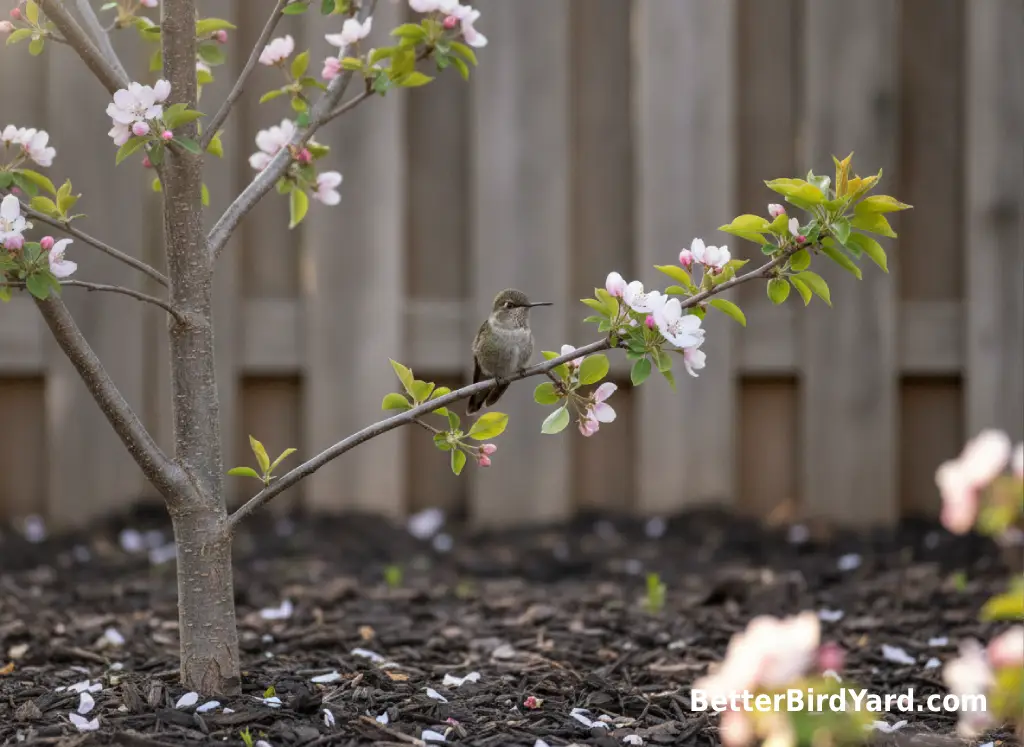
Hummingbirds lay eggs when local conditions support nesting, and timing varies widely across the United States. In much of the East, Ruby-throated Hummingbird nesting follows spring arrival and local food availability. In parts of the West and Pacific Coast, Anna’s Hummingbirds can nest much earlier; Audubon notes that Anna’s may begin nesting in December or even earlier within its range.
That regional variation is important. A backyard birder in Georgia, Ohio, Arizona, Oregon, or coastal California may see very different nesting schedules. Weather, elevation, food availability, and species all matter. A warm spell does not mean every hummingbird nearby is nesting, and one active nest does not mean all local nests are at the same stage.
For a practical backyard cue, watch behavior instead of the calendar alone. A female repeatedly visiting the same shrub, carrying fine fibers, collecting spider silk, perching near one sheltered branch, or returning to a hidden spot may be nesting. Keep your distance, avoid trimming that shrub or tree, and do not try to “help” by adding materials directly to the nest.
How Long Does It Take For Hummingbird Eggs To Hatch?
For many familiar North American hummingbirds, eggs hatch after roughly two to three weeks, but the exact timeline depends on species and conditions. Cornell lists Ruby-throated Hummingbird incubation at 12 to 14 days, Black-chinned Hummingbird incubation at 12 to 16 days, Anna’s Hummingbird incubation at 16 days, and Allen’s Hummingbird incubation at 17 to 22 days.
After hatching, young hummingbirds remain in the nest until they are developed enough to leave. Cornell lists Ruby-throated Hummingbird nestlings at 18 to 22 days and Allen’s Hummingbird nestlings at 22 to 25 days, while Audubon lists young Anna’s Hummingbirds taking their first flight at about 18 to 23 days.
From the ground, it can be hard to tell whether eggs have hatched. The female may still sit, return to feed, or leave briefly to forage. Avoid checking the nest just to satisfy curiosity.
Cornell’s NestWatch guidance recommends minimizing disturbance, avoiding early morning checks, avoiding nests during the first days of incubation, and never handling birds or eggs without proper permits.
What To Do If You Find A Hummingbird Nest
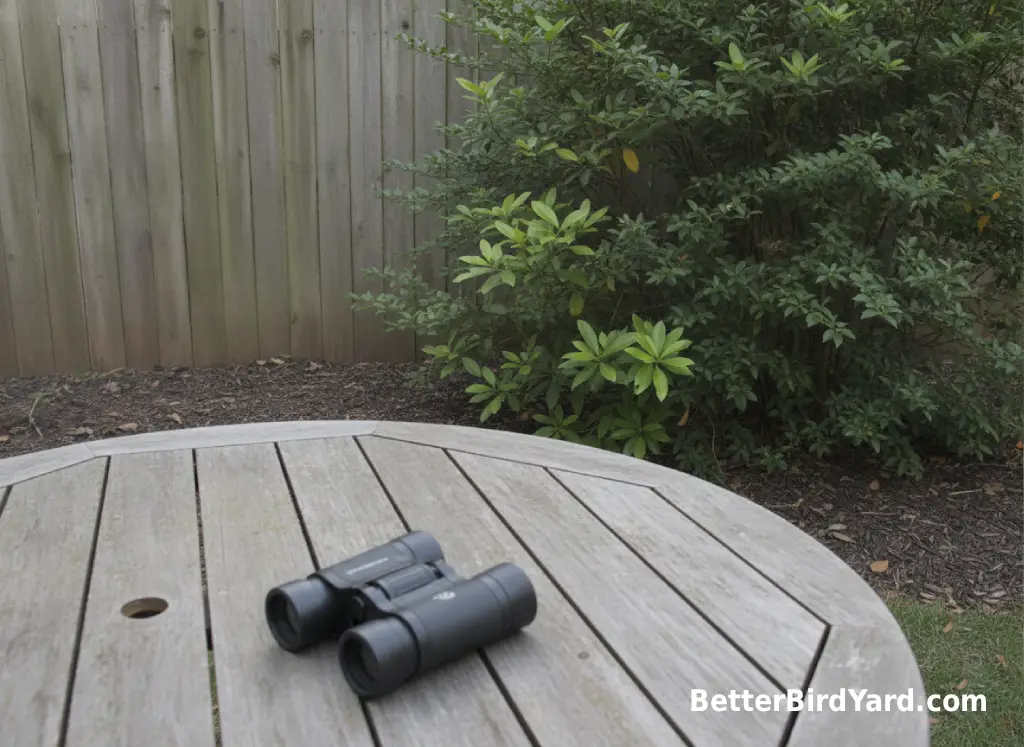
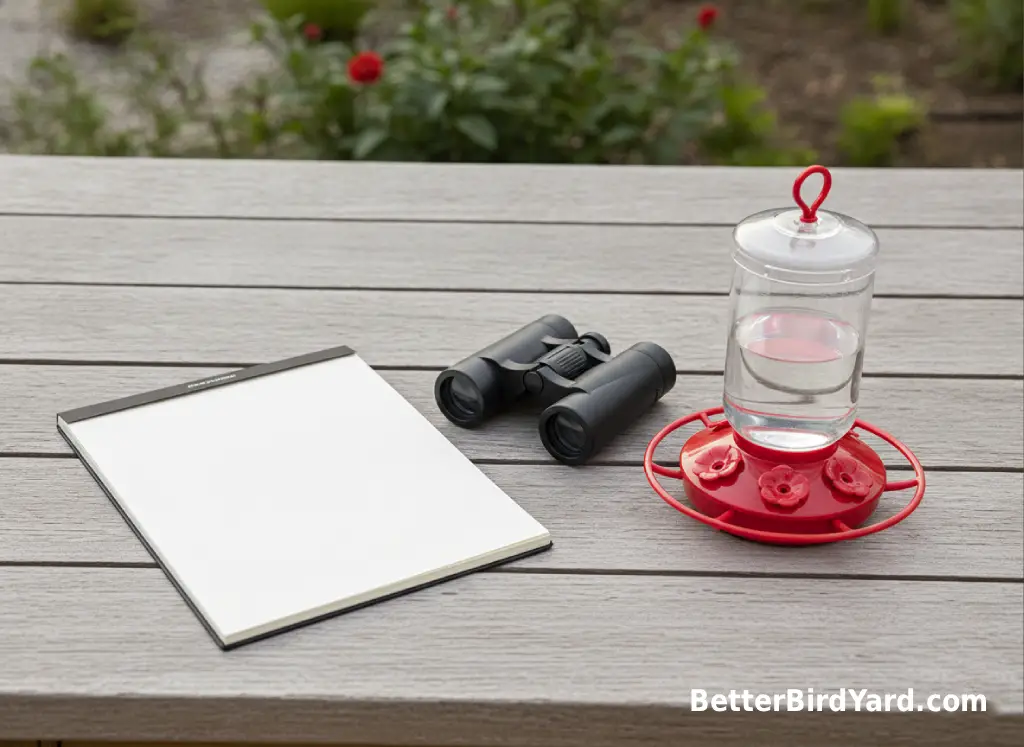
If you find a hummingbird nest, the safest routine is quiet observation from a distance. Use binoculars from a patio, window, or path rather than leaning into the shrub. Keep children and pets away from the nest area, and avoid creating a repeated footpath that could draw attention from predators.
- Do not touch the nest, eggs, or chicks.
- Do not move the nest to a “better” spot.
- Do not trim, prune, or water directly into the nest area.
- Do not use flash photography, ladders, or repeated close visits.
- Do not assume a nest is abandoned just because you do not see the female for a short time.
If a nest has fallen, a chick appears injured, or you find a very young bird on the ground and you are unsure what to do, contact a licensed wildlife rehabilitator, your state wildlife agency, or local animal control for guidance. The U.S. Fish and Wildlife Service notes that fledglings often do not need help because parents are nearby, but animals that truly need help should be handled through a licensed rehabilitator, with arrangements made before transport.
How To Support Nesting Hummingbirds Responsibly
You cannot make hummingbirds nest in your yard, but you can make your space safer and more useful. The goal is not to interfere with the nest. It is to provide a cleaner, quieter, more bird-friendly setting around it.
Start with habitat. A few nectar-rich native flowers, a small tree or shrub, and safe perches can be more useful than a bare patio with only a feeder. Audubon recommends selecting native plants for hummingbird gardens and notes that even a flower box or trellis can help in a small space.
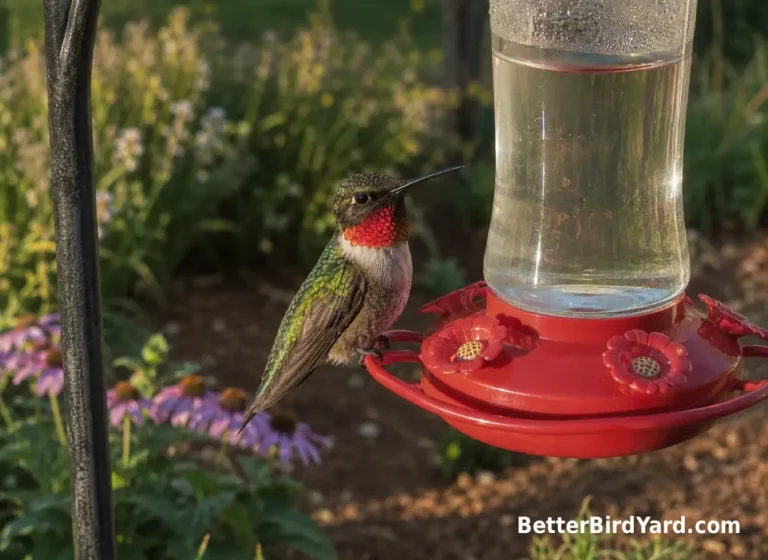
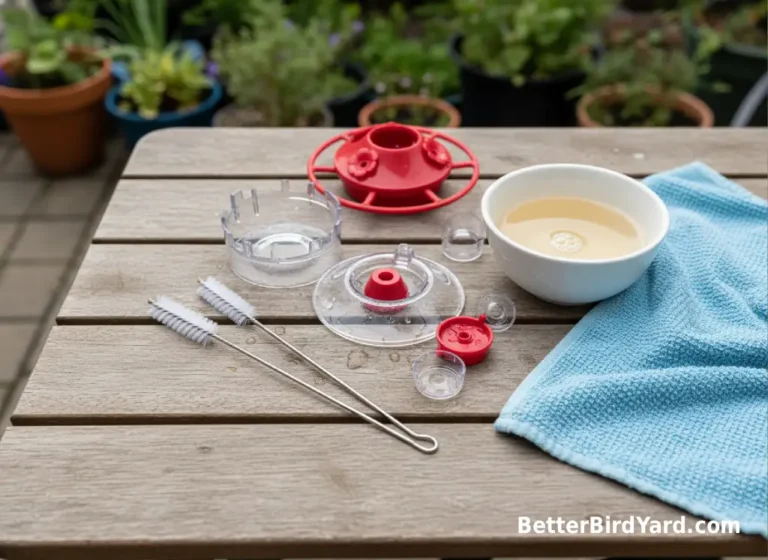
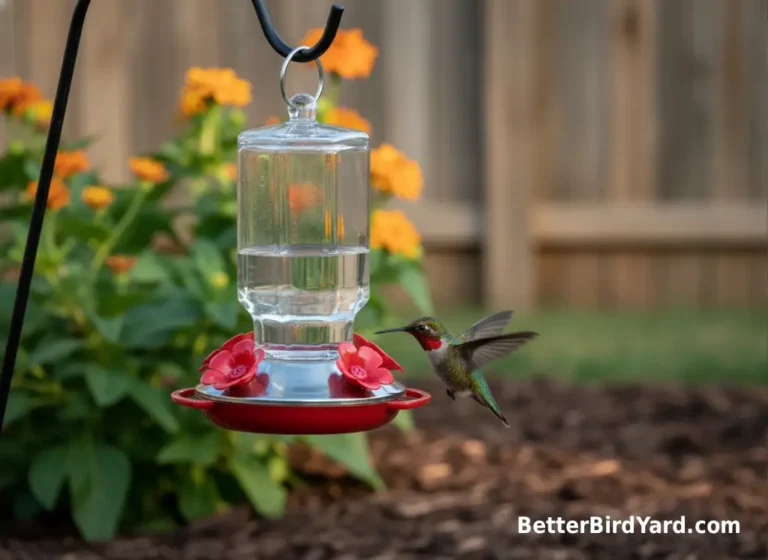
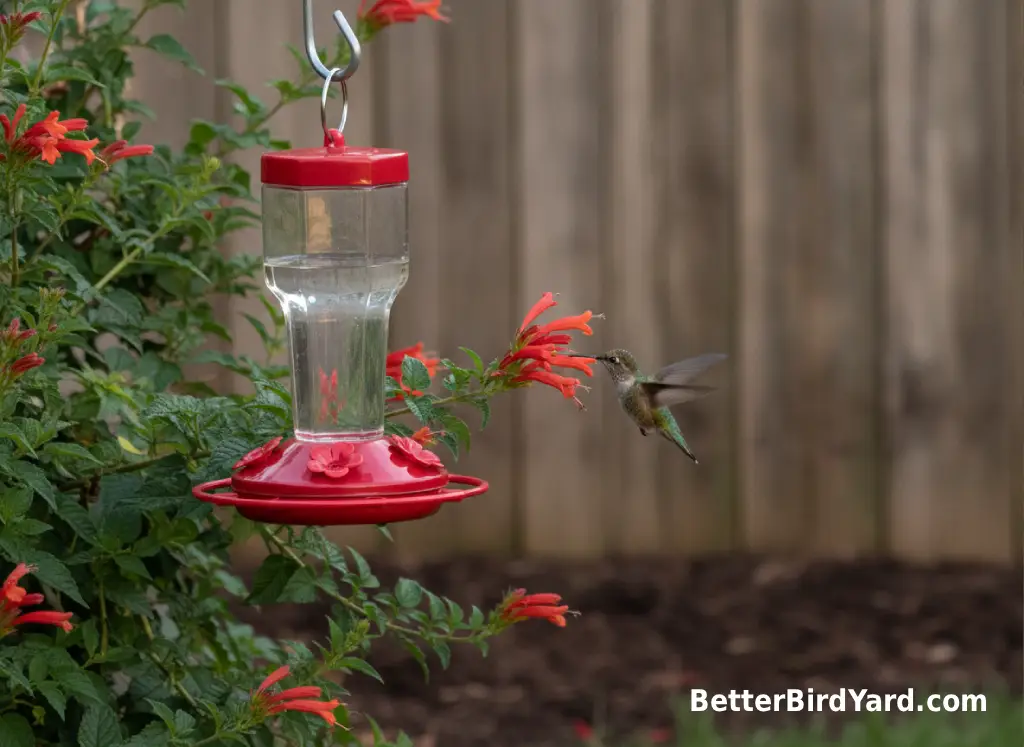
Then keep feeders clean if you use them. The Smithsonian’s National Zoo recommends a nectar mix of one part refined white sugar to four parts water, no red dye, and regular cleaning to prevent mold growth. Cornell also cautions that red coloring is unnecessary and that sugar water should be changed often, especially in hot weather.
A simple support plan:
- Plant nectar flowers suited to your region, especially native tubular blooms where practical.
- Keep hummingbird feeders small enough that nectar is used or replaced quickly.
- Clean feeders thoroughly and replace homemade nectar more often in hot weather.
- Avoid red dye, honey, raw sugar, corn syrup, and cloudy or moldy nectar.
- Reduce broad insecticide use, since hummingbirds also eat tiny insects and spiders.
- Keep cats indoors or away from nesting and feeding areas.
- Place feeders and plants where birds are less likely to collide with reflective windows.
BetterBirdYard editorial note: if you only change one thing during nesting season, make it feeder hygiene. A clean feeder near good flowers is helpful; a neglected feeder with cloudy nectar is not.
For more feeder details, see our guide to Cleaning Hummingbird Feeders.
Common Mistakes To Avoid Around Hummingbird Nests
The biggest mistake is usually loving the nest too closely. Hummingbird nests are delicate, and the female is already doing what she is built to do. Close visits, repeated photography, pruning, or trying to improve the nest can cause more harm than help.
Avoid these common backyard mistakes:
- Getting close for daily hummingbird nest images instead of using binoculars from a distance.
- Assuming the nest is abandoned because the female leaves to feed.
- Touching or repositioning a nest that looks crooked or exposed.
- Trimming a hedge, vine, or small tree before checking carefully for active nests.
- Putting feeders so close to the nest that they create traffic, territorial fights, or predator attention.
- Using pesticides around the same shrubs and flowers where hummingbirds feed and collect insects.
Local rules can also matter. Federal protection is important, but city, county, state, HOA, and property rules may affect trimming, construction timing, or wildlife conflicts.
FAQs About Hummingbird Nesting
Do Hummingbirds Reuse Their Nests?
Some hummingbirds may build near an old nest, build on top of an old nest, or reuse materials, but you should not expect the same nest to be used repeatedly every year. Cornell notes that female Allen’s Hummingbirds may build new nests on top of old ones or take material from old nests for a new site.
Do Male Hummingbirds Help With Eggs Or Chicks?
In the familiar species covered by Cornell and Audubon accounts, the female does the nest building, incubation, and feeding of the young. Audubon notes this female-only incubation and feeding pattern for Ruby-throated, Anna’s, Black-chinned, and Allen’s Hummingbirds.
Will A Hummingbird Use A Birdhouse?
No, hummingbirds are not cavity-nesting birds in the way bluebirds, chickadees, or some wrens are. They build small open cup nests on branches, shrubs, vines, or other supports, depending on species and local conditions.
How Often Do Hummingbirds Lay Eggs?
Many hummingbirds can raise more than one brood in a season where climate and food supply allow it, but this varies by species and region. Cornell lists Ruby-throated Hummingbirds at one to two broods, Anna’s Hummingbirds at two to three broods, and Black-chinned Hummingbirds at one to three broods.
Should I Add Nesting Material For Hummingbirds?
The safest help is usually habitat, not hand-delivered material. Leave natural spider webs where they are not a household hazard, grow native plants, and avoid harsh pesticide use. Do not place string, synthetic fibers, dryer lint, or treated pet hair near nests. For a broader yard plan, see our guide to Plants That Attract Hummingbirds .
Conclusion: Give The Nest Space And The Yard Support
A hummingbird nest and eggs are a rare privilege to notice, not a project to manage. The nest may be no bigger than a small cup, the eggs may be only about half an inch long, and the entire nesting cycle can pass quietly while most of the yard looks unchanged.
The best backyard response is calm and simple. Watch from a distance. Keep pets and heavy yard work away from the nest area. Do not touch the nest, eggs, or chicks. Keep feeders clean if you use them, skip red dye and unsafe sweeteners, and build a yard with flowers, shrubs, small trees, and fewer chemical shortcuts.
Hummingbirds do not need us to raise their young. They do benefit when our yards are safer, cleaner, quieter, and richer in natural food. That is the real backyard win: not getting closer to the nest, but creating the kind of space where wild birds can do what they already know how to do.