Carolina Chickadee: A Backyard Guide to This Tiny Southern Regular
The Carolina Chickadee is one of those backyard birds that can seem almost fearless without ever sitting still for long. A tiny black-and-white bird may appear on a branch, inspect your feeder, grab a sunflower seed, and disappear into nearby cover before you have finished reaching for your binoculars.
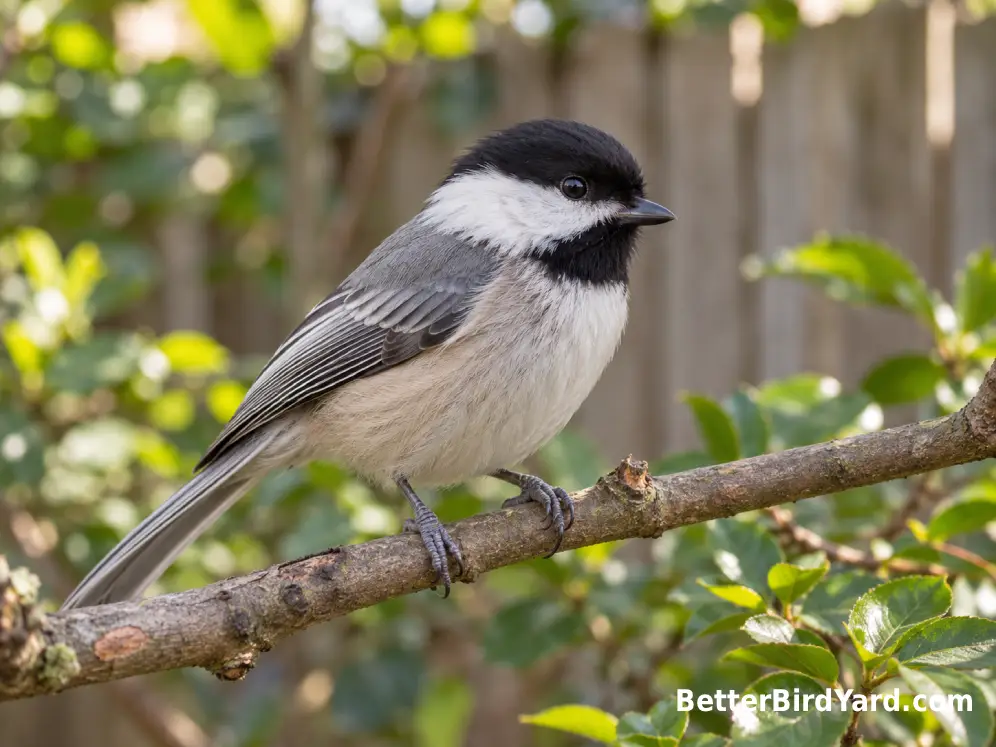
For backyard bird watchers in much of the southeastern United States, this is a familiar year-round bird rather than a seasonal visitor. Carolina Chickadees live in wooded habitats as well as parks, neighborhoods, and suburban yards with mature trees. They are small—roughly 3.9 to 4.7 inches long—with a black cap and throat, bright white cheeks, a gray back, and a relatively long narrow tail.
You do not need a large property to make your outdoor space more useful to them. A clean feeder, a little cover, fresh water, locally appropriate native plants, and possibly a well-designed nest box can all contribute. The key is thinking beyond simply putting out seed.
How to Identify a Carolina Chickadee
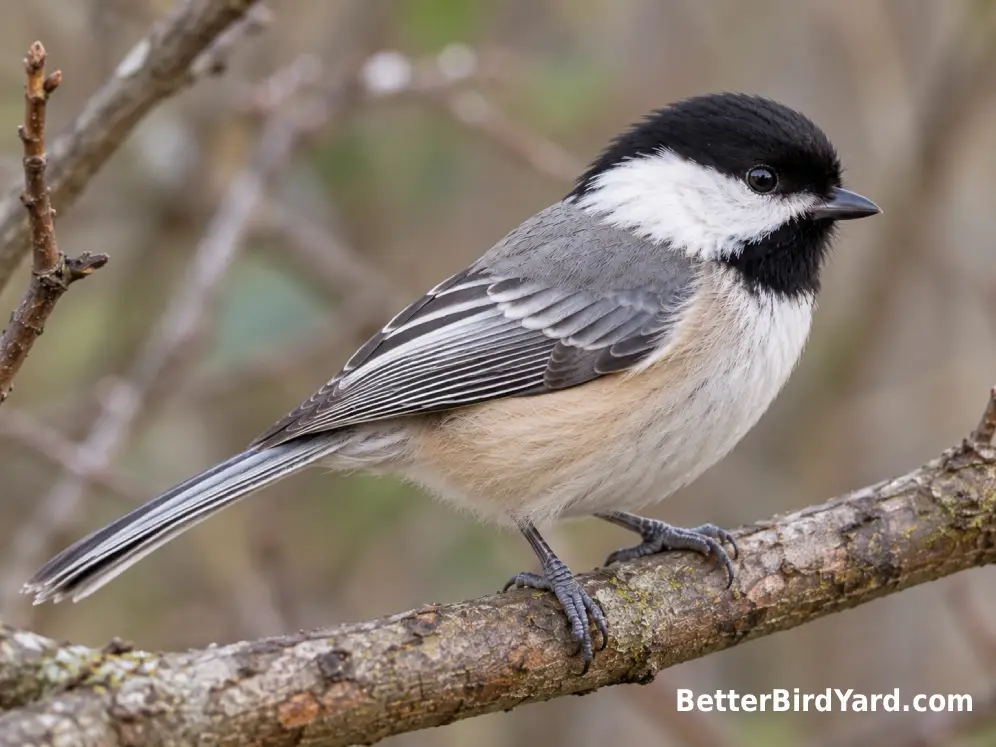
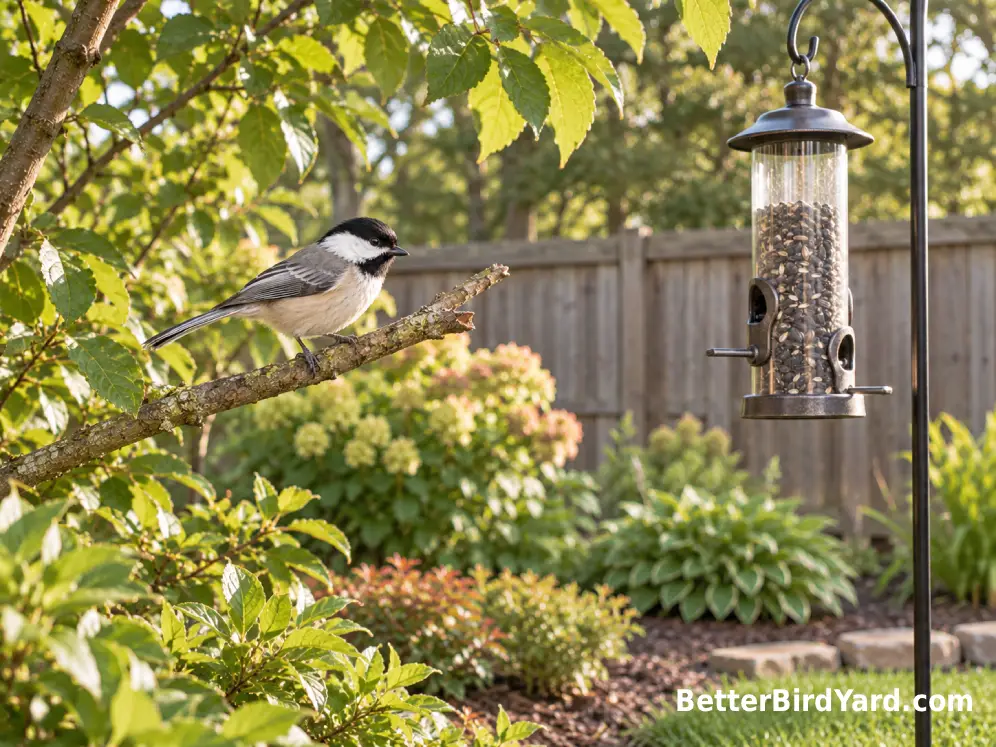
Start with the head pattern. Carolina Chickadees have a solid black cap, a black throat patch or bib, and conspicuous white cheeks between the two. The back, wings, and tail are mostly soft gray, while the underside is pale. Their compact body, short neck, small bill, and relatively large-looking head give them the rounded appearance typical of chickadees.
Behavior is just as useful as plumage. Carolina Chickadees move quickly through branches, picking insects from leaves and bark and sometimes hanging sideways or upside down while searching. At feeders, they often make short visits rather than settling down for a long meal. A bird may take one seed and fly to a nearby branch to open it.
Listening helps too. The familiar chickadee family calls can reveal birds hidden in foliage, and Carolina Chickadees also give a clear, multi-note whistled song. Cornell notes that their typical song is longer than that of other chickadees.
For beginners, the useful combination is simple: black cap, white cheeks, black bib, tiny gray body, quick acrobatic movements, and chickadee-like calls.
Where Carolina Chickadees Live
The Carolina Chickadee is principally a bird of the southeastern United States, extending west into Texas and north toward the zone where its range meets that of the Black-capped Chickadee. Unlike many familiar songbirds that appear only during migration or winter, Carolina Chickadees are considered resident birds.
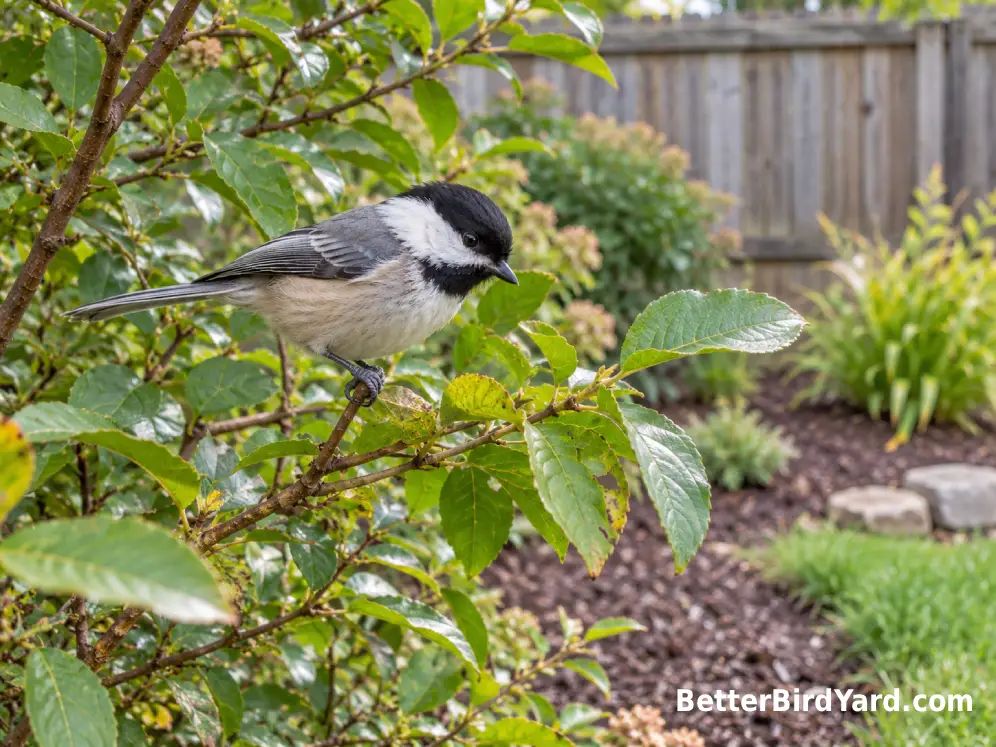
They are not limited to deep forest. Cornell lists deciduous woodland, mixed deciduous-evergreen forest, swamps, streamside areas, open woodland, parks, and urban or suburban areas among their habitats. Large trees and woody vegetation are especially useful because these birds spend much of their time searching branches, bark, and foliage for food.
That matters for backyard expectations. A feeder on an exposed patio with no nearby vegetation may occasionally get a visit, but a small yard with shrubs and trees around it provides more of what a chickadee naturally uses throughout the day.
Renters and people with small spaces still have options. A compact feeder near existing tree cover, a bird-safe water source, and containers planted with locally native species can add useful resources without requiring a large garden.
What Carolina Chickadees Eat And How They Forage
Carolina Chickadees may be enthusiastic feeder visitors, but birdseed is only supplemental food. Insects and spiders make up a large part of their natural diet. Cornell reports that animal foods dominate much of the year, while the winter diet shifts toward a more even mix of animal and plant material.
Watch one in a tree and you can see why landscaping matters. Chickadees inspect leaves, twigs, and bark rather than simply waiting around for seed. During the nesting season, insect-rich habitat becomes especially important because growing songbird chicks depend heavily on invertebrate prey.
Audubon highlights native plants as valuable bird habitat partly because locally adapted trees and shrubs support insect communities. Its guidance specifically identifies chickadees and titmice as birds that benefit from plantings such as locally native birches and sumacs where appropriate. Because native ranges vary, choose plants native to your own region rather than treating one southeastern plant list as universal.
This is one of those details that matters more than beginners expect: the feeder is easy to notice, but much of a Carolina Chickadee’s day happens in the vegetation around it.
How to Attract Carolina Chickadees to Feeders
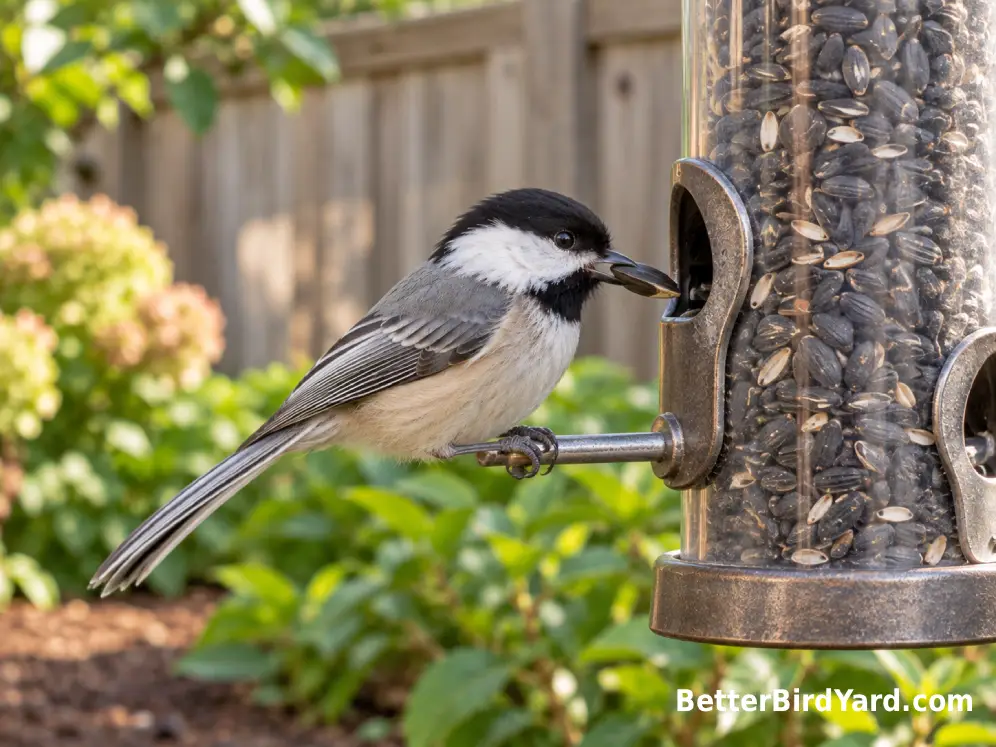
If Carolina Chickadees already occur in your neighborhood, a simple feeder setup may be enough to bring them into view. Cornell lists sunflower seed, peanut pieces, and suet among foods Carolina Chickadees take from feeders. Project FeederWatch also identifies black-oil sunflower as a favorite feeder food for chickadees and notes that small tube feeders, small hopper feeders, and secure suet cages can accommodate smaller birds well.
A practical beginner setup can stay very simple:
- Use a small tube or hopper feeder that is easy to dismantle and clean.
- Start with black-oil sunflower seed rather than buying a complicated seed blend.
- Offer shelled, unsalted peanuts or peanut pieces occasionally if you want a second food option.
- Use a secure suet cage if offering suet, and watch for spoilage during warm weather.
- Keep all food dry and discard anything wet, moldy, rancid, or spoiled.
Chickadees often arrive, take one item, and retreat to a branch. A feeder close enough to shrubs or trees to provide convenient cover may therefore feel more useful to them than one placed in the middle of a completely open lawn.
If seed shells and waste begin accumulating below the feeder, clean them up rather than simply adding more food. For less mess on a patio, hulled sunflower can reduce discarded shells, although Project FeederWatch notes that shelled seed can spoil more quickly and needs to stay dry.
For a deeper maintenance routine, see our bird feeder cleaning guide.
Build a Better Chickadee Yard With Water And Native Plants
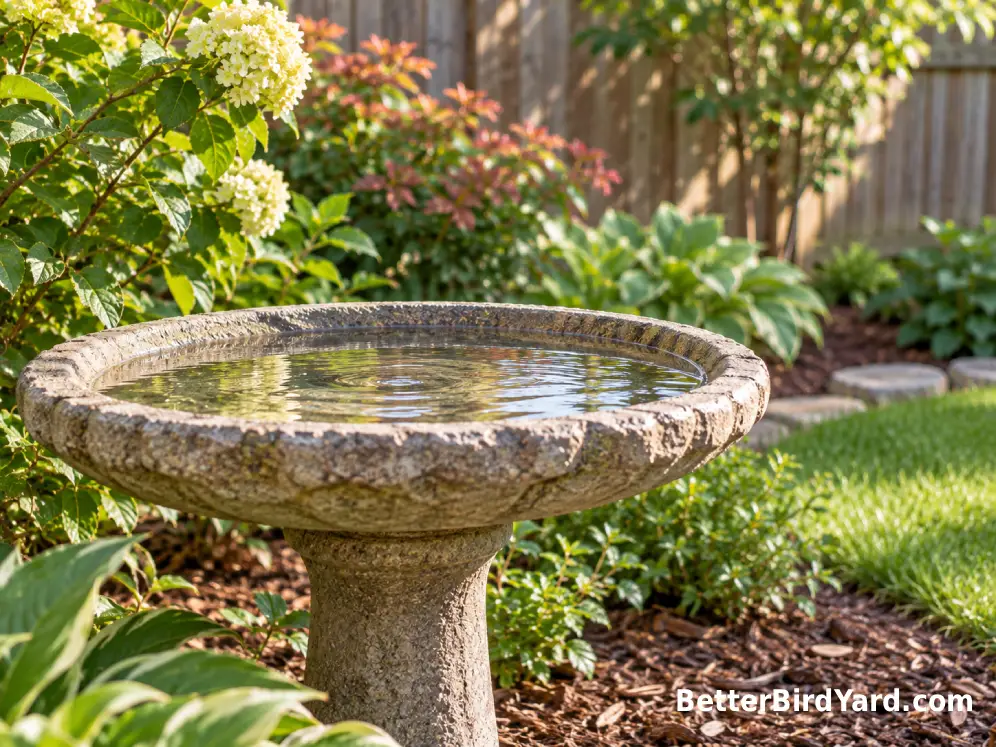
Seed can bring Carolina Chickadees into view, but habitat gives them reasons to keep using a yard. Think in layers: trees or large shrubs for foraging and cover, smaller vegetation for additional shelter, and clean water within reasonable reach of that cover.
Native plants can be particularly useful because they support insects as well as providing shelter and, depending on the species, seeds or fruit. Audubon recommends selecting plants native to your specific area rather than relying on a single nationwide plant list. Its native plant resources include options for yards, containers, and other small spaces.
In a small yard, I would keep this simple:
- Add one locally native shrub before trying to redesign the whole garden.
- Keep some dense vegetation where small birds can retreat from open areas.
- Provide a shallow water source that is easy to empty and scrub.
- Avoid routine pesticide use around bird-friendly plantings where possible, especially when your goal is to support insect-eating birds.
Editorial note: a bird bath is useful only if you can maintain it. Fresh water in a small, washable basin is more practical than an elaborate feature that becomes difficult to clean.
Nest Boxes Can Add Another Kind of Habitat
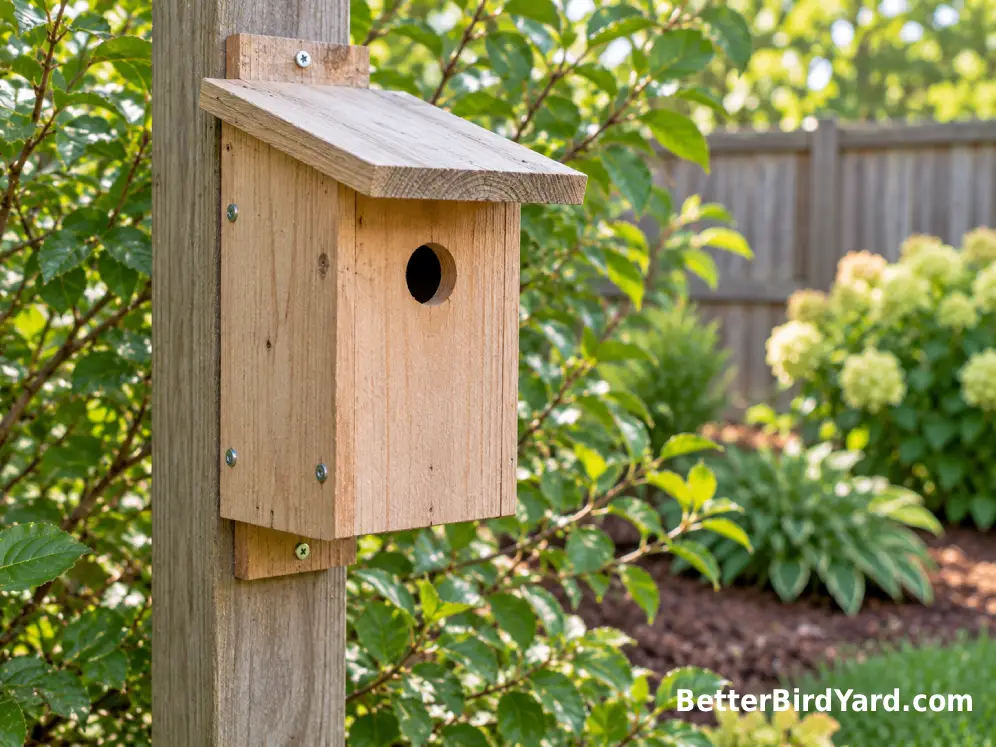
Carolina Chickadees are cavity nesters and may use natural cavities or properly designed nest boxes. A box is not guaranteed to attract a pair, but it can add nesting habitat where suitable natural cavities are scarce.
Cornell’s NestWatch specifications for Carolina Chickadees call for a 1 1/8-inch entrance hole, an interior floor about 5 1/2 by 5 1/2 inches, and a box roughly 8 inches deep. NestWatch lists a placement range of about 4 to 15 feet above ground.
A few practical details matter more than decorative design. Choose a box that can be opened for inspection and seasonal cleaning, drains properly, and can be mounted securely. Cornell also recommends predator protection for nest boxes. Avoid adding an exterior perch beneath the entrance; cavity nesters do not need one.
Put the box up before you expect nesting activity rather than waiting until you see a pair searching for a cavity. Once birds are actively nesting, minimize disturbance and follow NestWatch guidance if you plan to monitor the box.
If an old dead tree or snag provides natural cavities, it may also be valuable wildlife habitat when it can be safely left in place. Safety comes first around homes, walkways, roads, and neighboring property; have a hazardous tree assessed by a qualified professional rather than keeping it solely for bird habitat.
Carolina Chickadee Vs. Black-Capped Chickadee
This is the identification problem that catches many backyard bird watchers. Carolina and Black-capped Chickadees look remarkably similar, and there is no single dramatic plumage mark that makes every individual easy to separate.
Black-capped Chickadees generally show more obvious pale edging in the wings, while Carolina Chickadees tend to have grayer, less strongly patterned wings. Songs can also help: Cornell describes the Carolina’s typical song as a longer four-note whistle, while the Black-capped’s familiar song is shorter.
Location is often the most useful first clue. Carolina Chickadees occupy the southeastern part of the country, while Black-capped Chickadees occur farther north. The situation becomes trickier near the contact zone because the two species can hybridize, and hybrids may produce songs resembling either species or something intermediate.
For a difficult bird near that overlap zone, avoid forcing an identification from one blurry photograph. Compare several features, listen to vocalizations, check current range information, and accept that some birds may remain uncertain.
Common Backyard Mistakes to Avoid
The easiest mistake is treating a feeder as something you fill but rarely maintain. Project FeederWatch recommends cleaning seed and suet feeders regularly—often about every week or two—and more frequently during heavy use or wet weather. Old hulls, droppings, damp seed, and food debris should not be allowed to accumulate underneath.
Other common problems include:
- Leaving wet food in place. Discard seed, peanuts, or suet that becomes moldy, spoiled, or rancid.
- Offering salted or flavored peanuts. Project FeederWatch recommends plain peanuts rather than salted or coated versions.
- Ignoring summer suet condition. Conventional suet can spoil in heat, so check it carefully or choose an appropriate warm-weather product.
- Creating heavy seed buildup on a patio or lawn. Besides becoming unsanitary, spilled food can attract rodents and other unwanted wildlife.
- Relying only on feeders. Carolina Chickadees spend much of their time eating naturally occurring insects and other foods away from feeders.
- Expecting guaranteed results. Local chickadee activity depends on range, surrounding habitat, season, food availability, and conditions beyond one backyard.
If you see birds that appear unusually lethargic, have swollen or crusted eyes, or otherwise seem ill, do not try to diagnose or treat them yourself. Clean feeding and watering equipment, consider temporarily reducing or removing the affected feeding setup, and check current guidance from Project FeederWatch or your state wildlife agency. A wild bird that appears to need intervention should be referred to a licensed wildlife rehabilitator or other qualified local professional.
Supporting Carolina Chickadees Year-Round
A Carolina Chickadee-friendly yard does not have to be elaborate. Within the species’ range, a clean feeder with sunflower seed may help you see these birds more often, but the stronger setup combines supplemental food with trees, shrubs, insects, water, and safe nesting opportunities.
If you only change one thing, start with the part of your yard you can maintain consistently. That might be a washable tube feeder outside an apartment window, one locally native shrub beside a patio, a shallow bird bath you refresh regularly, or a properly built chickadee nest box.
Then watch how the birds use the space. A chickadee carrying a seed into cover, searching the underside of leaves, moving through a mixed flock, or investigating a cavity tells you more about its needs than feeder visits alone.
That is part of what makes the Carolina Chickadee such a useful backyard bird to know. Once you recognize its shape, head pattern, sounds, and restless foraging style, you begin noticing not just the bird itself, but the small pieces of habitat that let it live alongside us.